Select Language:
Shares of a Chinese pharmaceutical company increased after it granted a major U.S. pharmaceutical firm worldwide rights outside of China for two treatments aimed at chronic obstructive pulmonary disease, a long-lasting inflammatory lung condition that hampers breathing. The agreement could be worth up to $745 million.
The company’s stock climbed 2.9% to CNY57.77 (approximately $8.46) per share as of 10:35 a.m. in Shenzhen.
The U.S. firm will have rights to develop, produce, and market two Nav1.8 inhibitors, named HSK55718 and HSK51155. These are designed to block pain signals at their source and are intended for developing treatments related to pain.
Under the terms, the U.S. company will pay an initial $30 million and may pay up to $715 million in milestone payments. It will also cover certain research and development expenses to support the drugs’ development through the proof-of-concept stage.
Nav1.8 is considered a critical target for creating non-opioid painkillers. HSK55718 is being developed as an intravenous medication and is currently in Phase I trials in China. Meanwhile, HSK51155 is being developed as an oral form and is still in the preclinical stage.
This collaboration marks a significant step for the Chinese company in expanding globally and speeding up the commercial launch of its innovative medicines. It is expected to positively influence the company’s future performance and profitability.
On the same day, the company announced that it forecasts net profits to have soared by roughly 923% to 1,095% last quarter, reaching between CNY477 million and CNY557 million compared to the previous year. This increase was mainly driven by proceeds from an exclusive licensing deal for a COPD drug signed with a U.S. firm earlier in January. Based on non-GAAP accounting, net profits are projected to have increased by approximately 792% to 951%, amounting to between CNY449 million and CNY529 million.
Last year, the company’s net profit grew 34% to CNY260 million, with revenue rising 18% to CNY4.4 billion (around $644.4 million).
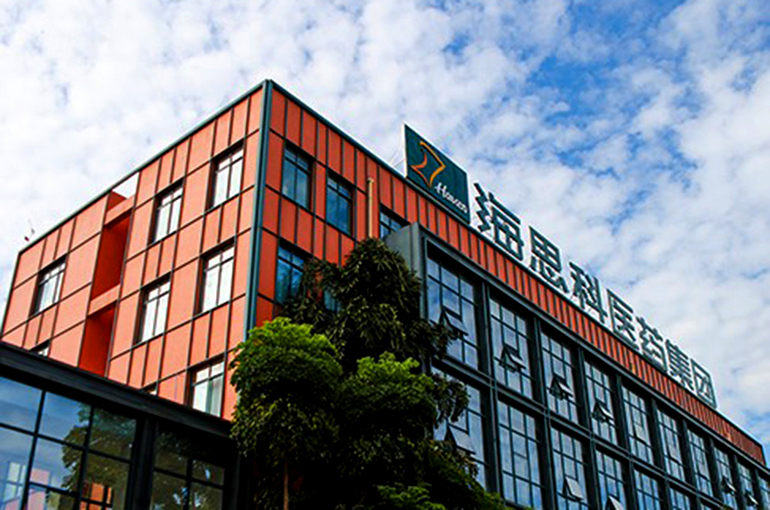
Based in Shannan, in China’s Tibet Autonomous Region, the company specializes in pharmaceutical research, development, manufacturing, and commercialization. It operates research centers and production facilities in Chengdu, Sichuan Province.
The U.S. firm involved in this deal branched off from a larger healthcare company in 2013 and is known for its focus on research and development in biopharmaceuticals.
 ChatGPT
 Perplexity
 Gemini AI
 Grok AI