
Select Language:
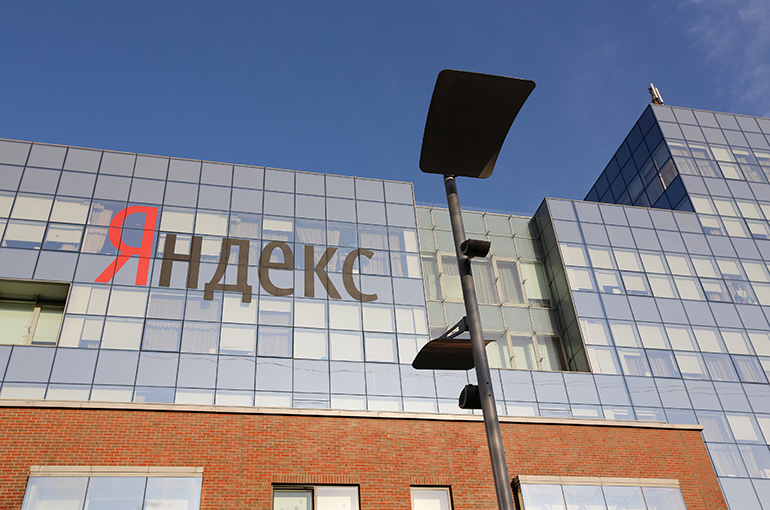
An increasing number of Chinese companies, particularly from the gaming and electric vehicle sectors, have begun utilizing a major Russian internet and technology firm to expand into Russian-speaking markets. They are offering localized services through its advertising and in-car platform to establish a foothold in these regions.
Last year, Chinese firms invested approximately $35 million on this platform’s advertising services, with their numbers growing over 50 percent compared to the previous year, according to the company’s recent ecosystem innovation conference held in China. Half of these advertisers were game developers, with the rest comprising electronics, home appliances, industrial equipment, information technology, healthcare, and automotive companies.
Chinese game developers are praised for their creativity in content and gameplay, as well as their quick experimentation and adaptive strategies, which help them rapidly enter new markets. However, they still face hurdles such as language localization and regulatory compliance when expanding globally, noted a company executive overseeing the Asia-Pacific region.
To support these companies, the platform introduced a Chinese-language operational interface earlier this year, aiming to assist in overcoming expansion challenges in Russian-speaking areas, including Central Asia. It also offers comprehensive services like advertising enhancement tools that facilitate data analysis and ad monetization.
In addition, an in-vehicle platform provides Chinese automakers with tools for cross-scenario data sharing, allowing direct integration with local systems. This platform also incorporates AI features, enabling users to interact with an AI assistant—from their cars to their homes.
Building a localization system from the ground up is costly for Chinese electric vehicle manufacturers entering international markets. They prefer to tap into an established ecosystem that is deeply integrated into daily life, allowing for the swift deployment of localized navigation, voice commands, and media services, which accelerates their growth from initial market entry to scaled operations.
Trade between China and the five Central Asian nations—Kazakhstan, Kyrgyzstan, Tajikistan, Uzbekistan, and Turkmenistan—surpassed $100 billion last year, reflecting a 12 percent increase from the previous year. This marked the first time the trade volume exceeded this level, with continued growth over five consecutive years. Exports reached $71.2 billion, driven mainly by strong sales of machinery, electrical products, and high-tech goods.
Russian remains one of the official languages in Kazakhstan, Kyrgyzstan, and Tajikistan, and is widely spoken in Uzbekistan and Turkmenistan.
 ChatGPT
 Perplexity
 Gemini AI
 Grok AI