
Select Language:
China’s orders for instant delivery surpassed 60 billion in 2025 for the first time, marking a 25% increase compared to the previous year, according to a recent industry report.
This milestone reflects the swift expansion of the instant retail market, which has expanded beyond food delivery to include supermarkets, fresh produce, and pharmaceuticals, according to the latest report from the Instant Logistics Branch of the China Federation of Logistics & Purchasing.
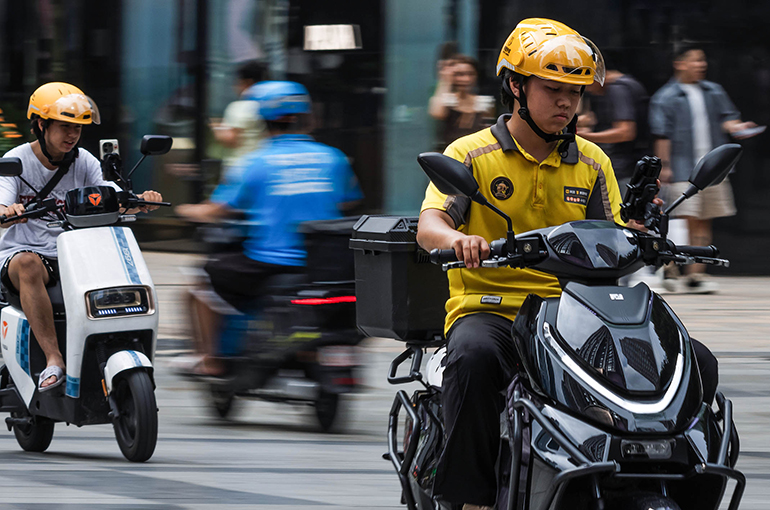
The report also highlights emerging growth in categories such as consumer electronics, clothing, and other non-food items. Additionally, the recognition of delivery riders as a distinct profession is on the rise. Data from surveys show that over the past four quarters, more than 50% of delivery riders have been local residents, encompassing both urban and rural households within the same city.
A chief analyst from a leading market research firm explained that their data indicates the fastest growth in instant retail is driven by non-food items, including pharmaceuticals, beauty products, accessories for consumer electronics, alcohol, and products for mothers, babies, and pets. The new demand primarily comes from younger consumers, the elderly, and increasing spending in smaller cities.
Despite the rapid growth, the industry faces significant hurdles. The analyst pointed out challenges such as high fulfillment costs, inconsistent supply and quality control, and intense pressure on profit margins. Major companies like a prominent ride-hailing and food delivery platform, a global e-commerce giant, and popular short-video app are boosting investments in instant retail. Competition is shifting focus from price battles to strengthening supply chains and enhancing overall operational efficiency.
Since March, leading firms have reported ongoing investments in their food delivery segments. Although this sector continues to expand, profitability remains a concern. This indicates that while instant retail is experiencing rapid growth, companies need to improve efficiency and better demonstrate how this segment can support broader e-commerce development.
Overall, instant retail is becoming a key driver of e-commerce growth, but maintaining this momentum will depend on building more resilient supply chains, smarter fulfillment strategies, and increased collaboration across the industry, the analyst added.
 ChatGPT
 Perplexity
 Gemini AI
 Grok AI