Select Language:
Most and Least Common Birthdays in 2025
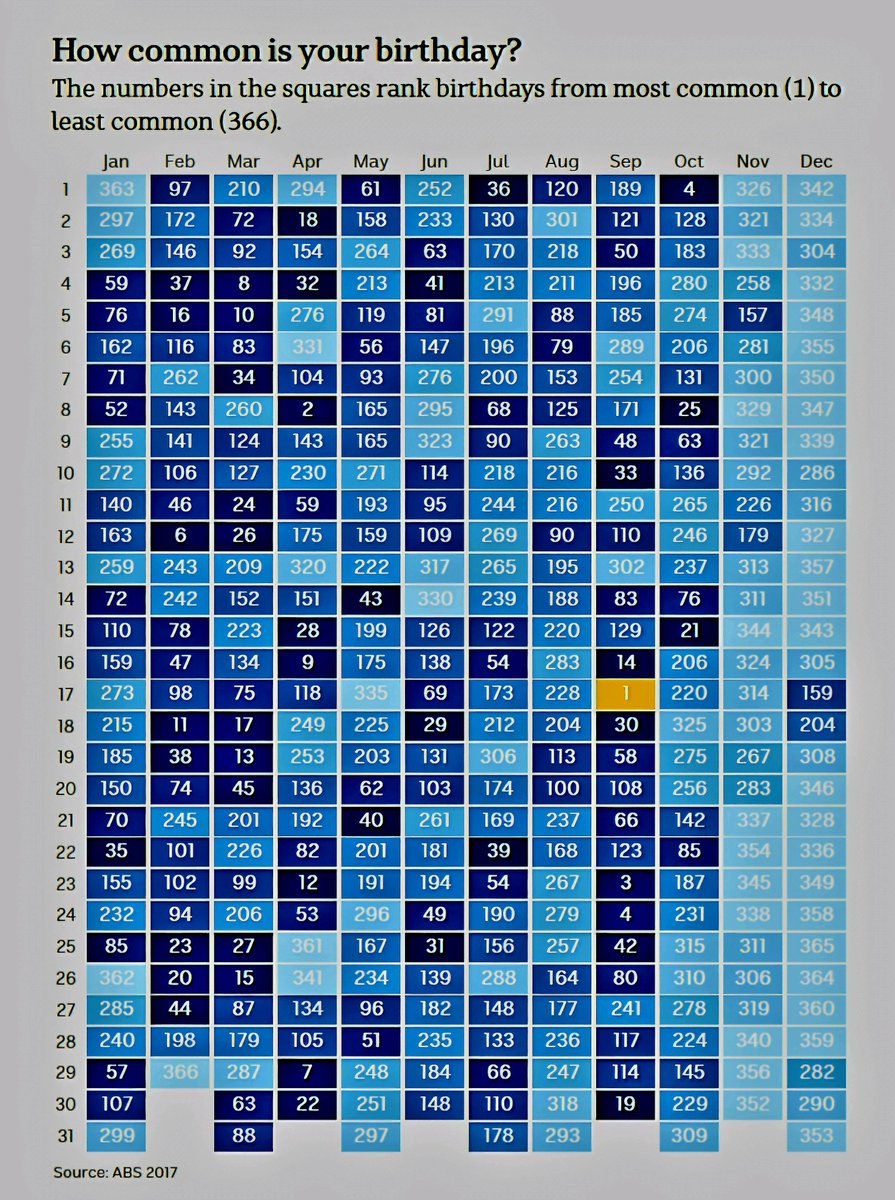
When examining birth statistics from 2025, certain dates stand out as particularly popular for birthdays, while others remain surprisingly uncommon. Here’s a detailed look at the most and least common birthdays, giving insight into trends, cultural influences, and possible explanations behind these patterns.
1. The Most Popular Birthday: September 16th
Unsurprisingly, September 16th tops the list as the most common birthday in 2025. This date is thought to be favored for a variety of reasons—perhaps children born in September are often conceived during the holiday season, which includes Christmas and New Year celebrations when families tend to spend more time together. Additionally, the timing aligns well with the typical nine-month pregnancy period, making late December and early January prime conception months.
Statistics reveal a notable surge of birthdays on September 16th, with hospitals reporting up to 20% more births than neighboring days. This trend remains consistent across many states, hinting at broader cultural and seasonal influences.
2. Popular Dates in Early Fall
Following September 16th, birthdays around September 9th and September 23rd are also highly prevalent. The reasons are similar—the late summer and early fall months often see conception peaks, possibly due to holidays, vacations, or other seasonal activities that foster intimacy and planning.
The pattern indicates a cultural tendency to conceive during the late fall and winter months, resulting in increased birth rates in early fall. Notably, September continually ranks as a favorite birth month among parents in the United States.
3. Least Common Birthday: December 25th
Christmas Day marks the lowest point on the list—fewer babies are born on December 25th than on any other day of the year. Several factors contribute to this rarity. Hospitals often avoid scheduling inductions or C-sections on major holidays like Christmas, to respect staff and patient preferences. Additionally, many doctors recommend avoiding elective procedures on holidays due to limited staffing.
Furthermore, babies born on Christmas may face social and cultural challenges, which could influence their birth scheduling. Interestingly, some parents prefer to avoid giving their children a birthday overshadowed by the holiday itself, leading to fewer births on December 25th.
4. Less Common Dates: Early Holidays and Major Festivities
Other dates with notably low birth rates include December 24th and December 26th, as well as New Year’s Day (January 1st). Like Christmas, these days often see fewer scheduled deliveries. The Holiday Season’s impact on hospital operations and personal choices significantly reduces the birth counts during these days.
The pattern suggests that both medical practices and personal preferences influence the distribution of birthdays across the calendar year.
5. Additional Notable Trends
-
Leap Year Effect: February 29th remains one of the rarest birthdays, occurring only every four years. For those born on this date, birthdays are often celebrated on February 28th or March 1st in non-leap years.
ADVERTISEMENT -
Summer Birthdays: June and July also witness a spike in births, possibly due to conception trends during the holiday season and early fall. This has implications for planning birthday parties and school enrollment.
-
September and October Clusters: Birthdays clustered in early fall suggest that many parents plan conceptions around the winter holidays, making September and October months particularly popular for new arrivals.
6. Implications for Healthcare and Planning
Understanding these patterns aids hospitals and healthcare providers in resource planning. For example, expecting an influx of births around September enables hospitals to allocate staff and resources effectively. Similarly, knowing when birth rates dip can optimize scheduling for elective procedures and staff rotations.
This knowledge also influences commercial sectors like baby product manufacturing, marketing campaigns, and educational planning, which all tailor their strategies based on likely birth date trends.
In conclusion, the 2025 data continues to affirm long-standing patterns—peaking of births in early fall and a significant drop during major holidays. These trends highlight how a mix of cultural, medical, and biological factors shape birth seasons in America, offering fascinating insight for parents, healthcare, and society at large.
[Image Source: Twitter]
 ChatGPT
 Perplexity
 Gemini AI
 Grok AI