Select Language:
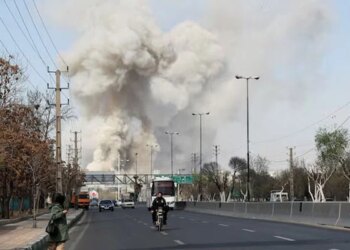
Despite pledges to end U.S. involvement in costly and destructive foreign conflicts, President Donald Trump, alongside Israel, has initiated a significant military strike against Iran, aiming at its leadership and its nuclear and missile capabilities.
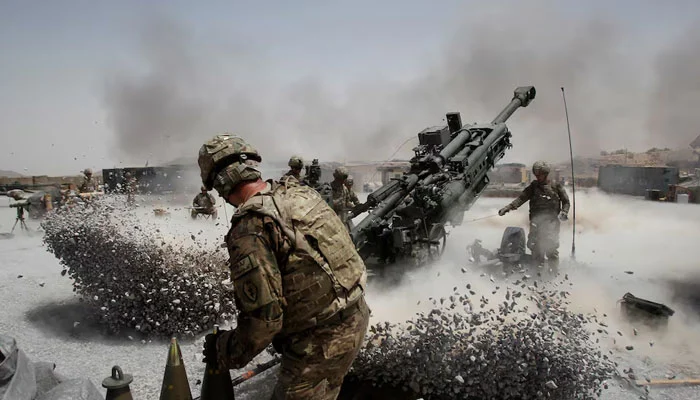
Since the September 11, 2001 attacks on New York and Washington, D.C., the U.S. has been involved in three full-scale wars and has conducted bombing operations in at least ten countries. These actions have ranged from large invasions to precise airstrikes and drone missions, often spanning multiple years.
Immediately following 9/11, then-President George W. Bush announced a “war on terror,” launching a worldwide military campaign that drastically altered U.S. foreign policy. The conflicts in Afghanistan and Iraq were succeeded by military operations in Pakistan, Syria, Yemen, and other regions, as successive administrations continued or intensified counterterrorism efforts.
Research by Brown University’s Watson Institute for International and Public Affairs estimates that U.S.-led wars since 2001 have resulted in roughly 940,000 direct deaths across Afghanistan, Pakistan, Iraq, Syria, Yemen, and other conflict zones, according to Al Jazeera. This number does not account for indirect fatalities caused by displacement, infrastructure destruction, limited healthcare access, and food shortages.
The report also indicates that the United States has spent approximately $5.8 trillion on post-9/11 military actions. This includes $2.1 trillion allocated by the Department of Defense, $1.1 trillion by the Department of Homeland Security, $884 billion added to the Pentagon’s base budget, $465 billion for veterans’ healthcare, and nearly $1 trillion in interest on war-related borrowing.
Looking ahead, the U.S. is projected to spend at least another $2.2 trillion on veterans’ care over the next 30 years, bringing the total estimated cost of these post-2001 conflicts to nearly $8 trillion.
 ChatGPT
 Perplexity
 Gemini AI
 Grok AI