Select Language:
Venezuela’s oil sector received a major update as the National Assembly approved significant reforms to the country’s primary oil law. Shortly after, the US Treasury Department authorized a broad range of activities for American energy companies, marking a shift in sanctions policy. The license permits transactions involving Venezuelan-origin oil, including refining, export, sale, and transportation.
Venezuelan acting President Delcy Rodriguez called the reform a “historic leap,” emphasizing that “important steps” are being taken. She made the remarks after speaking with President Donald Trump.
Following the Congressional vote, Trump exerted pressure on Caracas to open its oil fields to U.S. investors, especially after the overthrow of Nicolas Maduro in a US-led military operation on January 3. The US-backed interim leader, Rodriguez, expressed a willingness to cooperate, arguing that foreign investment is essential to revitalize Venezuela’s struggling economy.
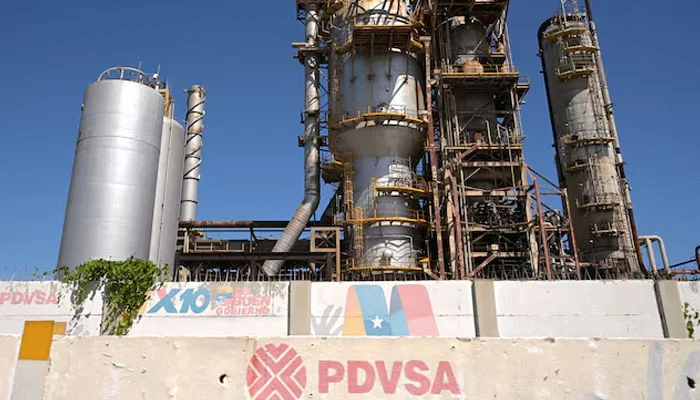
The new law revises the 2006 regulations that compelled foreign firms to partner with PDVSA with majority control. This overhaul will facilitate the return of major US energy companies to Venezuela for the first time in two decades—a move that signals a significant departure from Hugo Chavez’s socialist policies which nationalized the country’s oil assets.
Jorge Rodriguez, the parliament leader and brother of the interim president, highlighted that the reforms aim to help Venezuela recover from years of US sanctions. He stated, “Better days are ahead after the hardships,” as he approved the measure “for history and our future.” Trump claimed that the US now governs Venezuela’s oil market, asserting Rodriguez would be responsible for selling millions of barrels at market prices. Additionally, Rodriguez has already allocated $300 million from initial US crude sales to support the national currency, the bolivar.
Venezuela holds roughly 20% of the world’s oil reserves, a former key crude supplier to the US. American firms operated there until Chavez’s nationalizations in 2007. The industry is slowly rebounding after years of neglect, corruption, mismanagement, and US sanctions, reaching a production level of 1.2 million barrels per day in 2025—up from 300,000 in 2020 but still well below the 3 million barrel-per-day output at the start of the century.
Despite Trump’s praise for Rodriguez and his push for US investments, ExxonMobil and ConocoPhillips exited Venezuela in 2007 for refusing to cede majority control. Chevron remains the sole US company operating there under a special exemption. The revamped law provides more guarantees to private investors, relaxes exploration restrictions, and reduces taxes and royalties—marking a clear departure from Chavez’s oil model, though the state retains some control over contract issuance.
The US Department of Energy has already announced plans to develop Venezuela’s oil resources and has begun marketing its crude. Rodriguez states that the reforms will facilitate investments in new and underdeveloped fields lacking infrastructure. These changes offer hope amid economic collapse and extensive migration, with workers like Karina Rodriguez from PDVSA expressing optimism about restoring national dignity through hydrocarbon development.
 ChatGPT
 Perplexity
 Gemini AI
 Grok AI