Select Language:
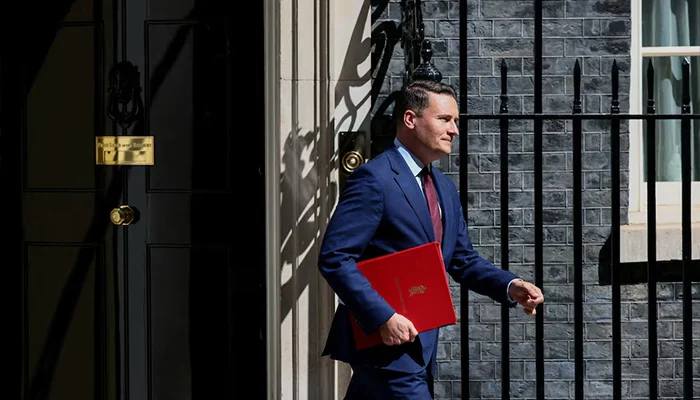
Labour’s Wes Streeting resigned as health minister on Thursday, calling for a leadership race to remove Keir Starmer, accusing the British Prime Minister of political stagnation and blaming others for his government’s shortcomings.
Disappointing results for the Labour Party in last week’s local elections have plunged Britain into another crisis, just under two years after Starmer secured a strong majority with promises of stability and an end to a decade of political chaos.
After days of growing demands from Labour MPs for Starmer to resign or set a timeline for stepping down, Streeting became the first senior official to speak out, announcing his departure because “it’s now clear you will not lead the Labour Party into the next general election.” However, he did not initiate a formal leadership challenge.
“In light of the situation, Labour MPs and trade unions want a debate centered on ideas, not personalities or factional disputes,” he stated in his resignation letter. “It should be broad, with the best possible candidates.”
His statement did not trigger an official contest but added pressure on Starmer, who has thus far withstood ongoing calls for his resignation.
Streeting’s critique was pointed.
“Where we need vision, we have a vacuum. Where we need direction, we’re drifting,” he said, criticizing Starmer’s speech on Monday, which the leader hoped would quell the calls for his departure.
“Leaders are expected to take responsibility, but too often that means others are left to fall on their swords.”
A source close to Streeting revealed he has enough support to challenge Starmer officially but chose not to move forward immediately, believing an organized timetable was the proper way to proceed.
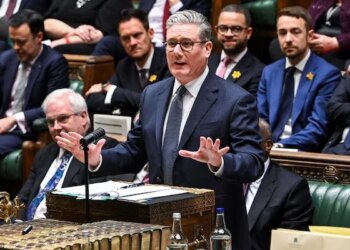
Starmer has consistently stated he intends to fight to keep his position, and insiders say he’s determined to contest any leadership bid, potentially facing rivals like Streeting and other senior left-wing figures in the party.
Following Streeting’s resignation, the pound dipped slightly.
“His departure brings us closer to a leadership challenge within Labour. The distance remaining is still uncertain,” said Nick Rees, head of macro research at Monex Europe in London.
Potential contenders
Earlier on Thursday, Angela Rayner, Starmer’s former deputy, announced she had been cleared of any misconduct over her tax affairs—an obstacle that previously hindered her chances of leading. She stopped short of confirming a bid, however.
Other possible candidates from the “soft left” — who favor increased government involvement in industries and advocate for workers’ rights — include Greater Manchester Mayor Andy Burnham and Ed Miliband, the minister for energy security and net zero.
Burnham currently lacks a parliamentary seat, which would complicate a leadership challenge, and even if a lawmaker stepped down to clear the way, the process could take weeks or months, possibly disqualifying him from contesting.
Another potential contender is Al Carns, a relatively unknown ex-Royal Marine now serving as armed forces minister, seen by some Labour insiders as a fresh face to energize the party.
Meanwhile, Starmer retains some backing. The 63-year-old former lawyer has taken a “business as usual” stance. On Thursday, his Finance Minister, Rachel Reeves, cautioned lawmakers against destabilizing the country further, especially now that Britain’s struggling economy showed signs of recovery in March.
Business concerns amid instability
Although calls for Starmer’s resignation diminished Wednesday, when his government formally presented its agenda to King Charles, Thursday proved to be another challenging day.
The prospect of another leadership vote—potentially making Starmer Britain’s seventh prime minister in roughly a decade—has annoyed business leaders, who warn that political turmoil could deter investment, vital for improving the country’s fortunes.
The ongoing instability has also caused borrowing costs to rise, with some investors wary of a possible shift to a more left-wing, tax-and-spend Labour government.
A recent poll by Survation indicated that if Labour’s leader stepped down, a left-leaning candidate would likely win any leadership race.
Amanda Blanc, CEO of Britain’s insurance giant Aviva, expressed frustration:
“There have been too many changes in government strategy and leadership in just my six years as CEO,” she told Reuters. “That kind of volatility damages the UK’s reputation and affects how we are viewed abroad.”
 ChatGPT
 Perplexity
 Gemini AI
 Grok AI