

Select Language:
Iran announced on Tuesday that it reached an agreement with the United States during talks in Geneva on foundational principles for a potential conflict avoidance deal. However, Vice President JD Vance stated that Tehran hasn’t fully acknowledged all of Washington’s core red lines yet. These discussions, mediated by Oman, aimed to prevent US military intervention against Iran’s nuclear program, especially in the wake of recent brutal crackdowns on mass protests that resulted in thousands of casualties.
Earlier in the day, Iran’s Supreme Leader issued a warning that the country could potentially sink a US warship recently deployed to the region, amid threats from President Donald Trump about possible consequences if a deal isn’t reached.
Foreign Minister Abbas Araghchi conveyed that a broad consensus on guiding principles had been achieved, which will serve as a foundation for future negotiations on the text of a possible agreement. He mentioned plans to exchange draft texts once both sides have prepared them and to schedule a third round of talks.
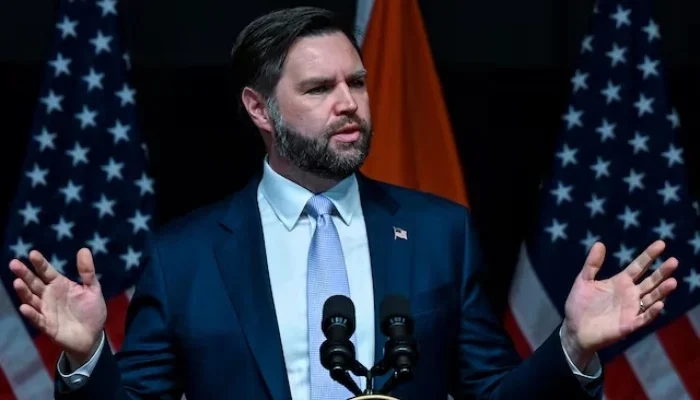
In the United States, Vance indicated that diplomatic efforts are ongoing but shared a more cautious outlook. He noted that while some aspects of the negotiations went well and additional meetings are planned, the President’s red lines remain unacknowledged by Iran. Vance emphasized that the U.S. will continue working on diplomacy but reserved the right to determine when it has exhausted all options.
Araghchi acknowledged that bridging the gap between the two nations will require time, particularly after subsequent discussions involving Trump’s confidantes, Steve Witkoff and Jared Kushner. Iran has been seeking relief from extensive sanctions imposed by the U.S., including restrictions on its oil exports.
Oman’s Foreign Minister, Badr Albusaidi, remarked that progress has been made but cautioned that much work remains. Meanwhile, the U.S. has dispatched two aircraft carriers to the region to exert pressure— the USS Abraham Lincoln, carrying around 80 aircraft, was positioned roughly 435 miles from Iran’s coast, with at least a dozen F-35 and F-18 fighter jets nearby, and a second carrier has been sent over the weekend.
Supreme Leader Khamenei warned that warships are dangerous, but the real threat lies in weapons capable of sinking them. Iran insists that negotiations focus solely on its nuclear program, despite continued U.S. efforts to include discussions on Iran’s ballistic missile capabilities and support for regional armed groups.
Simultaneously, Iran has begun military exercises in the Strait of Hormuz, testing its readiness against potential threats. The country has also repeatedly threatened to block this critical maritime route, vital for the global flow of oil and gas. A failed diplomatic effort last year ended with surprise Israeli strikes on Iran, sparking a brief 12-day conflict that saw U.S. involvement in bombing Iranian nuclear sites.
 ChatGPT
 Perplexity
 Gemini AI
 Grok AI

