Select Language:
Japanese researchers have introduced an AI-powered robot monk claiming it can provide spiritual guidance and potentially help address shortages of human monks in the future.
This robot, called “Buddharoid,” is a small two-legged humanoid trained on even the most obscure Buddhist scriptures. The University of Kyoto states it can respond to delicate questions that individuals might feel uncomfortable asking humans. Besides voice interactions, Buddharoid can also offer a sense of presence during religious ceremonies at sanctuaries.
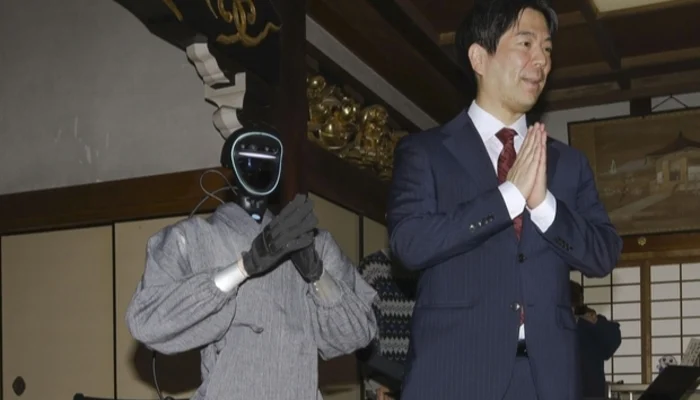
The university explained that, looking ahead, such robots could assist with or even replace some traditional rituals performed by human monks. The robot’s latest version, “BuddhaBotPlus,” was mounted on a Chinese-made “Unitree G1” robotic platform, creating an AI-driven humanoid monk.
During a demonstration at a Kyoto temple, Kumagai showcased the robot—currently without a face—wearing simple grey robes. It held its gloved hands in a prayer position and moved around before the audience, performing various tasks. Sitting on a chair, Buddharoid offered advice to a young local journalist, who admitted to overthinking and worrying excessively.
The robot’s response was calming: “Buddhism teaches that it’s important not to blindly follow your thoughts or rush into things. One way to cope is to calm your mind and let go of your worries,” it said in a soothing voice.
AI-based religious chatbots are already widely used across different faiths—some are popular tools, while others stir debate. Kyoto has a non-AI android named Mindar, which preaches sermons, and in Germany in 2017, a robot with a glowing touchscreen blessed visitors in five languages.
This new machine uniquely combines AI and robotics, enabling it to dispense spiritual advice and engage in religious conversations, all while mimicking human-like physical actions. Nonetheless, ethical considerations about using such tools in religious contexts remain important, according to the university.
With Japan’s declining and aging population, and a tightening labor market, it’s anticipated that these humanoid robots might assume more roles in religious settings—possibly assisting with or conducting rituals traditionally performed by human clergy—leading to a significant shift in the landscape of religious practice.
 ChatGPT
 Perplexity
 Gemini AI
 Grok AI