Select Language:
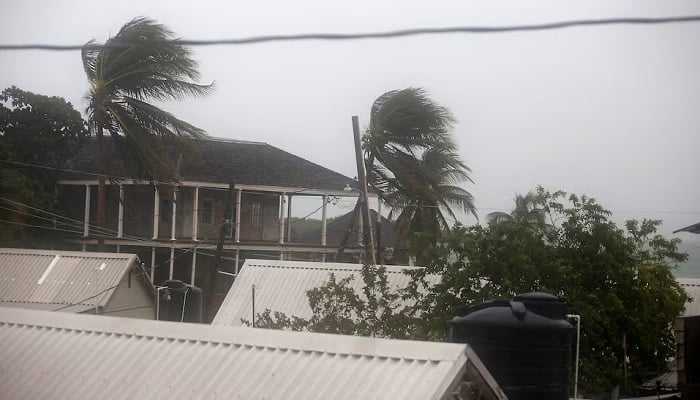
Hurricane Melissa was intensifying, with sustained winds reaching 175 mph (282 km/h) on Monday afternoon. The slow-moving Category 5 storm was expected to strike Jamaica, potentially marking the largest hurricane on record for the Caribbean island. By 2 p.m. (1800 GMT), the National Hurricane Center classified Melissa as a “catastrophic” storm—the highest category on the Saffir-Simpson scale. Forecasts indicated Melissa would hit Jamaica late Monday or early Tuesday, then pass over eastern Cuba the next night, before moving toward the Bahamas and Turks and Caicos by Wednesday.
The storm’s sluggish pace over unusually warm Caribbean waters had caused it to grow in size and intensity. Forecasters warned Jamaica could face days of unprecedented destructive winds and up to three feet of rain. Melissa’s wind field now spans a distance greater than the length of Jamaica, an island roughly the size of Connecticut, with its main airports perilously close to sea level.
Hours after mandating evacuations in southern Jamaica, including the historic Port Royal, Prime Minister Andrew Holness appealed for international support. He warned of severe damage to farms, homes, and infrastructure such as bridges, roads, ports, and airports. Despite the orders, some residents hesitated to leave fearing looting, and officials announced buses would soon transport around 28,000 people forced to evacuate.
“There’s no infrastructure capable of withstanding a Category 5 hurricane,” Holness stated. The government had prepared a $33 million emergency response fund, along with insurance and credit options for damages surpassing last year’s hurricane, Beryl. While Beryl was the earliest and fastest Atlantic hurricane to reach Category 5, scientists warn climate change is fueling stronger and faster storms due to warmer ocean waters, increasing the fuel for seasonal hurricanes.
“Thousands of families are experiencing hours of intense winds over 100 mph and days of relentless, heavy rain,” said AccuWeather Chief Meteorologist Jonathan Porter. “The slow movement of such major hurricanes often results in some of the deadliest and most destructive storms in history. This is a slow-motion disaster unfolding before our eyes.”
Jamaica has weathered many hurricanes, including the devastating Category 4 Hurricane Gilbert in 1988. However, a direct hit from a Category 5 has never occurred there, according to Evan Thompson of Jamaica’s Meteorological Service. Porter noted that Melissa is moving significantly slower than Gilbert, which hit Jamaica directly over three decades ago. Residents are advised to prepare for days indoors, with some areas potentially cut off for weeks.
Damian Anderson, a teacher from Hagley Gap in the Blue Mountains, said impassable roads had already cut off his community. “We can’t move. We’re scared. We’ve never experienced a multi-day hurricane like this before,” he admitted.
In neighboring Haiti and the Dominican Republic, days of heavy rainfall have already caused severe flooding and at least four fatalities. In Haiti’s impoverished southern regions, over 3,650 residents have sought shelter in designated safe zones, with flights suspended and maritime activities halted. Meanwhile, the Bahamas’ Prime Minister Philip Davis ordered evacuations in southern and eastern areas, and eastern Cuba prepared extensively, evacuating over 500,000 residents from vulnerable coastal and mountainous zones. Schools and transportation across eastern Cuba have been shut down, and more than 250,000 people have sought refuge in shelters around Santiago de Cuba, which is directly in Melissa’s predicted path.
 ChatGPT
 Perplexity
 Gemini AI
 Grok AI