Select Language:
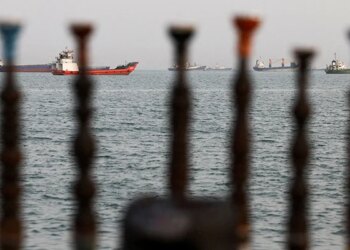
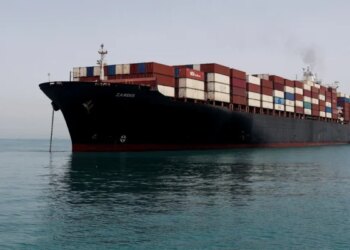
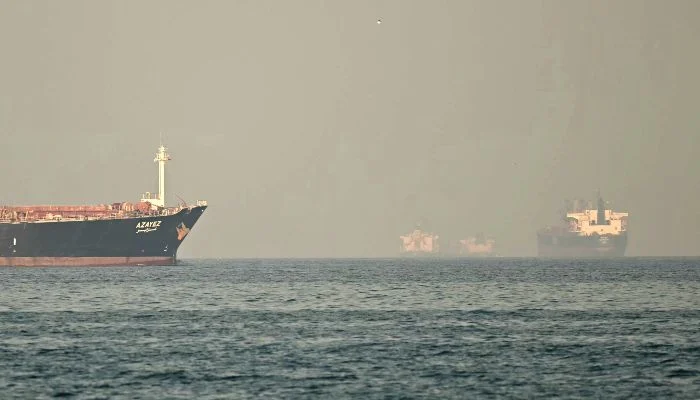
Cargo ships and tankers are visible off the coast of Fujairah, in the Strait of Hormuz, in the northern Emirates, on February 25, 2026. — AFP
Seafarers’ helpline operators report being inundated with messages from crews stranded in the Gulf due to the ongoing conflict in the Middle East, urgently requesting help with repatriation, compensation, and supplies on board.
One seafarer’s email to the International Transport Workers’ Federation (ITF) Seafarer Support team on March 24 described a “critical situation” regarding provisions and crew health. The message emphasized the immediate need for food, drinking water, and basic necessities to keep the crew afloat.
Since the conflict began with US-Israeli strikes on Iran on February 28, the ITF has received over 1,000 emails and messages from sailors stuck near the Strait of Hormuz and the surrounding region.
Some crew members seek clarification about their rights in a war zone, while others send videos of nearby bombings and ask for assistance in leaving their ships, according to ITF documents reviewed by AFP.
A handout photo from March 11, 2026, shows smoke billowing from the Thai bulk carrier ‘Mayuree Naree’ near the Strait of Hormuz after an attack.
Mohamed Arrachedi, ITF’s Network Coordinator for the Arab World and Iran, described the situation as “extraordinary,” with widespread panic and “really shocking” conditions. He receives late-night calls from sailors desperate for help: “One called in a state of panic, saying, ‘We’re bombed here. We don’t want to die. Please help us get out of here.’”
Approximately 20,000 seafarers are currently stranded in the Gulf region, according to the International Maritime Organization (IMO), with at least eight casualties involving seafarers or dock workers since February 28. All information shared with AFP is confidential to protect seafarers’ identities.
The International Bargaining Forum (IBF), which oversees global maritime labor standards, has officially designated the area a war zone. This usually grants sailors significant rights, including repatriation at the shipping company’s expense and doubled pay for ships under IBF agreements—around 15,000 vessels worldwide, according to ITF.
However, many sailors on ships without these agreements report difficulties in returning home. An email from March 18 described a crew member’s frustration with the ship operator, who refused their requests to leave, citing a lack of available flights from Iraq and denying alternative routes. “They are forcing us to carry out cargo and ship-to-ship transfers despite raising safety concerns,” the email states.
The International Seafarers’ Welfare and Assistance Network (ISWAN) has also noted a 15-20% increase in calls and messages since the conflict began, with about one-third related to difficulties in getting repatriated.
Another pressing issue is pay. Many seafarers report working in dangerous conditions for as little as $16 a day. One email questioned whether their salary would double to $32 because they were in a war zone. The ITF points out that such low wages suggest the shipowners lack labor agreements that promote fair compensation.
Seafarers on ships without proper agreements are especially vulnerable, as their contracts often exclude operations in war zones, and owners tend to ignore requests for assistance. When that happens, the ITF contacts flag states and, if needed, the vessel’s port authorities.
Arrachedi highlighted that numerous cases in the Gulf remain unresolved, with crew members anxiously awaiting responses from their employers.
 ChatGPT
 Perplexity
 Gemini AI
 Grok AI