
Select Language:
Ursula von der Leyen, the head of the European Union, announced on Wednesday that an age verification app developed by the EU is ready for implementation. This move is part of the bloc’s efforts to enhance online safety for children. The app is expected to debut in the upcoming months, serving as a modern replacement for the pop-up age confirmation banners that ask users to verify they are over 18 before accessing adult content sites. EU officials clarified that users will be able to download the app, set it up using their passport or ID card, and use it to confirm their age easily—similar to how stores verify age for alcohol purchases.
Brussels faces mounting pressure to enact stricter measures protecting minors online, especially as some EU countries plan to ban social media use under certain ages. Last year, several nations including France and Italy began testing the new age verification tool, which Ursula von der Leyen states is now “technically ready.” The app draws on a model used during the COVID-19 pandemic, where people verified vaccination status for reopening purposes.
When available, users will be able to access the app through online stores and set it up with their official ID documents, facilitating quick age verification for various online activities. EU laws mandate that websites—especially those involved in selling alcohol, gambling, or hosting adult content—must implement effective age verification methods to restrict access to minors. However, the European Commission has criticized current tools as inadequate. In March, it accused several adult websites of violating rules by allowing minors to verify their age with a simple click confirming they are over 18.
“The platforms lack proper age verification solutions, so we created our own,” stated Henna Virkkunen, the EU’s digital policy chief. The EU’s new app will serve as a benchmark to evaluate compliance, with the goal of making effective, privacy-respecting age checks more accessible. The app ensures user anonymity, operates on open-source code, and can be adopted by non-EU countries if they wish, provided they uphold similar privacy standards. “We don’t want platforms scanning passports or faces,” Virkkunen emphasized.
Initially, seven EU countries that have piloted the app—such as France, Denmark, Greece, and Spain—are expected to adopt it by year’s end. Once integrated, individuals visiting adult sites from Europe may be prompted to verify their age using this app or a similar technology. An anonymous EU official acknowledged that the verification process might be “annoying,” but assured that the safeguard for children outweighs the inconvenience. Concerns about minors bypassing checks via VPNs or asking older siblings for help have been noted, but officials say the focus is on protecting children from accidental exposure to inappropriate content, not policing adults.
This initiative is part of a broader EU push to regulate online spaces more strictly. France leads efforts alongside other nations, including Denmark and Greece, with plans to ban users under 15 from social media platforms currently under debate in the French parliament. Critics, like digital rights advocate Simeon de Brouwer, question the practicality of the app, arguing that the emphasis should be on holding platforms accountable for harm rather than restricting access based solely on age gates. He suggests that addressing root causes of online harm is more effective than implementing privacy-focused exclusion tools.
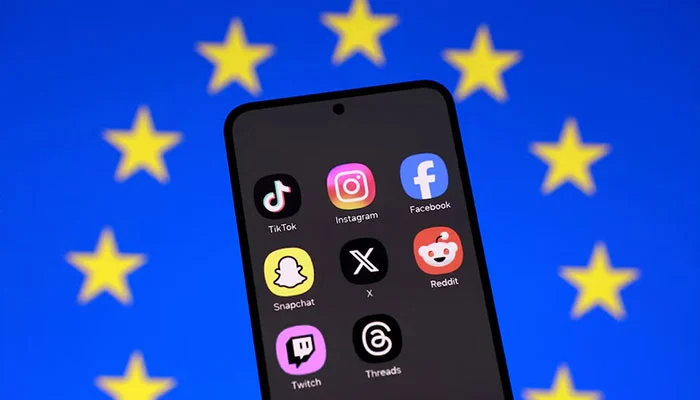
The EU’s rigorous regulatory environment continues with ongoing investigations into platforms such as Instagram and TikTok, scrutinizing their impacts on children. Von der Leyen advocates for a uniform EU-wide minimum age limit but prefers to await expert recommendations due this summer before formal proposals. “Protecting our children online is our responsibility, just as in the offline world. Achieving this requires a harmonized European strategy,” she asserted.
 ChatGPT
 Perplexity
 Gemini AI
 Grok AI