Select Language:
Qian Lin, a visitor from southwest China’s Chengdu, recently took a trip to Kuala Lumpur during Labor Day and found it surprisingly easy to navigate, noting that digital payments are broadly accepted—even at pop-up stalls and temporary festival booths.
No currency exchanges, no credit card troubles, and no worries about handling cash. What was once a novelty in Southeast Asia has quickly become standard practice for millions of Chinese outbound travelers, as mobile payment platforms from China have extended beyond sporadic merchant partnerships to integrate seamlessly with national payment systems in key overseas destinations.
This transition has not only eliminated much of the hassle for cross-border consumers but has also increased foot traffic and sales for local businesses, channeling China’s travel expenditure deeper into regional economies across Asia and beyond.
From Cash to Cashless Convenience
The momentum for cross-border mobile payment connectivity picked up ahead of the holiday, allowing Chinese travelers to avoid pre-setting daily cash limits, juggling multiple apps, or stressing over unfavorable currency rates in many countries.
Recently, Indonesia launched a cross-border QR code interoperability initiative with China, allowing users from both nations to make retail payments by simply scanning QR codes across borders.
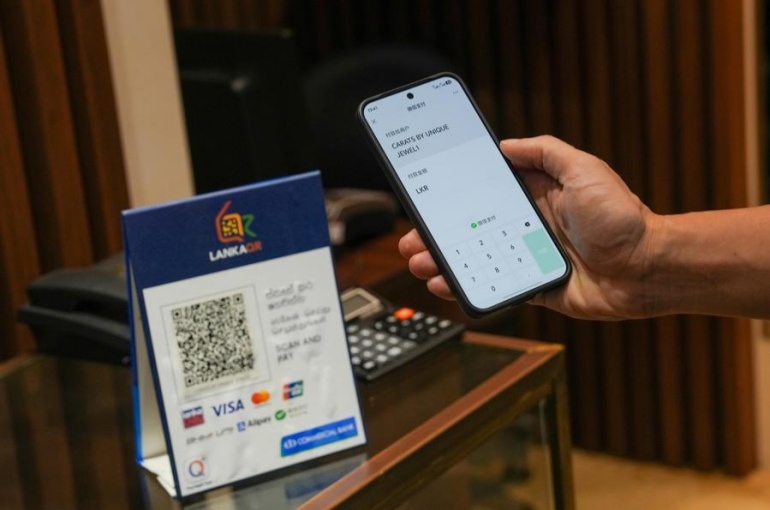
In late April, a major Chinese mobile payment provider announced that it has enabled direct compatibility with national QR-code systems in five key markets: South Korea, Sri Lanka, Thailand, Malaysia, and Singapore. Now, users can scan the same local codes as local residents, with transactions processed immediately at real-time exchange rates.
Experts say this shift from device-based store partnerships to broad national-level payment systems marks a significant upgrade. Previously, Chinese tourists had to hunt for specific branded QR codes; now, the infrastructure itself speaks their payment language.
China’s global cross-border payment network continues to grow. The service now covers 78 countries and regions, supporting payments in 36 currencies. A major global e-wallet platform integrates over 40 digital wallets worldwide. UnionPay QR payments are accepted at over 16 million merchants across the globe, and users can make tap-and-go payments at more than 2.8 million terminals in 37 countries and regions.
Expected Increase in Travel Spending
For overseas businesses, restaurants, and service providers, this integration not only enhances the tourist experience but also boosts transaction volume, shortens lines, reduces cash-handling costs, and simplifies daily operations.
Authorities project around 2.25 million border crossings daily during the holiday period, with peak numbers exceeding 2.4 million. According to a flight information platform, bookings to Southeast Asia have surged over 26% year-over-year.
Eric Zhao, vice president of a Sino-International Economic and Cultural Exchange Association, remarked that visa-free policies combined with frictionless payments are significantly accelerating both visitor numbers and spending in both directions.
The benefits are widespread. In Malaysia, Thailand, and Singapore, convenience stores, taxis, hotels, and street vendors now routinely accept Chinese mobile payments through local QR codes. Small and medium merchants, long excluded from sophisticated cross-border payment systems, are embracing digital finance and seeing a steady flow of frequent tourists.
In Bangkok’s Iconsiam mall, a dessert shop worker pointed to a PromptPay sign and shared that Chinese tourists have been able to pay directly since late last year, making shopping much easier. Meanwhile, a jewelry merchant in Colombo reported faster checkouts and smoother operations after linking local QR codes to Chinese mobile wallet services.
In Seoul’s Myeongdong district, a restaurant manager named Liu Gang explained that they used to display multiple payment codes—now, a single code serves everyone, which both customers and staff find more convenient.
Two-Way Payment Integration
While Chinese mobile payments make it easier for tourists to spend abroad, China is also working toward creating a more open, visitor-friendly digital payment environment, allowing foreigners to pay as effortlessly as they do at home, whether visiting for tourism, business, study, or work.
Earlier this year, policy guidelines were introduced to enhance digital services for international visitors. These measures aim to develop a diversified, inclusive payment system that fully supports foreign bank cards and overseas e-wallets across retail, dining, transportation, hotels, and tourism sectors.
These policies are already showing real-world results. Facilitation programs now enable foreign visitors to link their cards and digital wallets directly with Chinese platforms, mirroring the experience Chinese users have abroad. By 2025, over 10 million inbound travelers are expected to use related services, with spending more than doubling annually.
Transportation hubs, major scenic sites, and chain stores have accelerated the rollout of multilingual payment upgrades, while cities like Beijing, Shanghai, Guangzhou, and Chengdu have expanded acceptance points for international payment methods.
Wang Jianxi, a researcher at Shanghai Maritime University, noted that aligning payment standards often signals the start of regional tourism integration, paving the way for a tourism ecosystem driven by digital payments.
“In the future, competition in tourism will depend not just on attractions or destinations but also heavily on the convenience of digital services,” he added.
 ChatGPT
 Perplexity
 Gemini AI
 Grok AI