Select Language:
Robots are transitioning from initial testing phases focused on demos, such as guiding visitors and performing dance routines, to becoming essential tools in manufacturing and retail environments. Companies are rapidly accelerating efforts to bring embodied AI technologies into practical use.
This shift is evident across the industry as manufacturers move beyond simple demonstrations and pilot programs towards real-world applications. “The whole industry is making a collective move,” said a co-founder and president of an AI robotics company during a recent industry summit in Hong Kong.
Robots are increasingly being deployed in factories and stores to handle repetitive tasks. For example, a textile machinery manufacturer recently verified the effectiveness of its robots in loading and unloading operations.
The broader push towards commercialization aims to determine if humanoid and embodied AI robots can boost efficiency and lower labor costs in actual business settings. Early adopters include retail outlets and electronics manufacturing facilities.
On May 12, a robotics company introduced a new loading, unloading, and data collection system for its flagship robot. This robot has already proven its capabilities in areas like material handling at automotive parts suppliers, product assembly in furniture plants, circuit board processing in electronics factories, vegetable root removal in food processing, and textile machinery logistics.
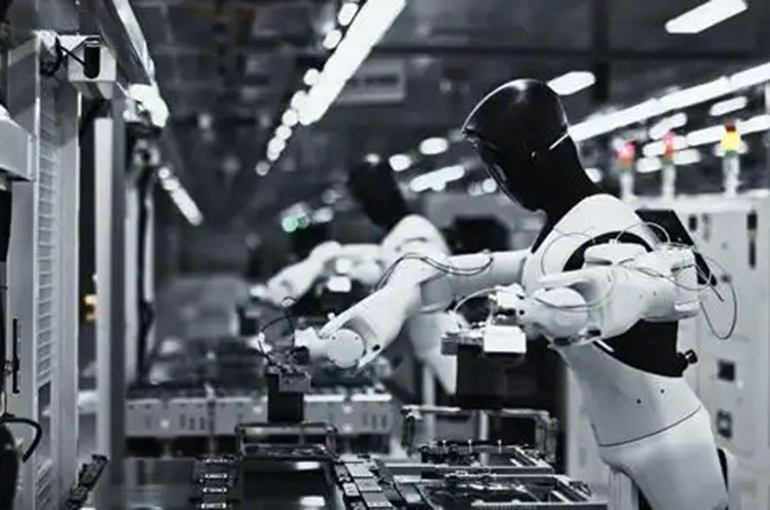
Another company has recently begun using its consumer-focused robots in electronics manufacturing. In April, they demonstrated an 8-hour continuous livestream at a tablet factory. At this site, a high-speed production line incorporated a robot that managed the handling of tablets—picking test units from the assembly line, inserting them into testing devices, and sorting them based on the results.
In Beijing, a humanoid robot made its debut at a small Food Mart located inside an office building. The store was slightly remodeled, offering fewer product options than a typical convenience store, but the robot is now actively participating in sales. It performs tasks such as selecting, placing, and delivering food items and drinks, as well as assisting with coffee preparation.
This integration highlights the evolving role of robots in everyday retail and manufacturing tasks, moving beyond prototypes to practical tools in commercial operations.
 ChatGPT
 Perplexity
 Gemini AI
 Grok AI