Select Language:
On May 21, it was reported that Chinese researchers have created a wearable rehabilitation robot designed to assist children suffering from severe muscular atrophy in regenerating muscle tissue through targeted physical training.
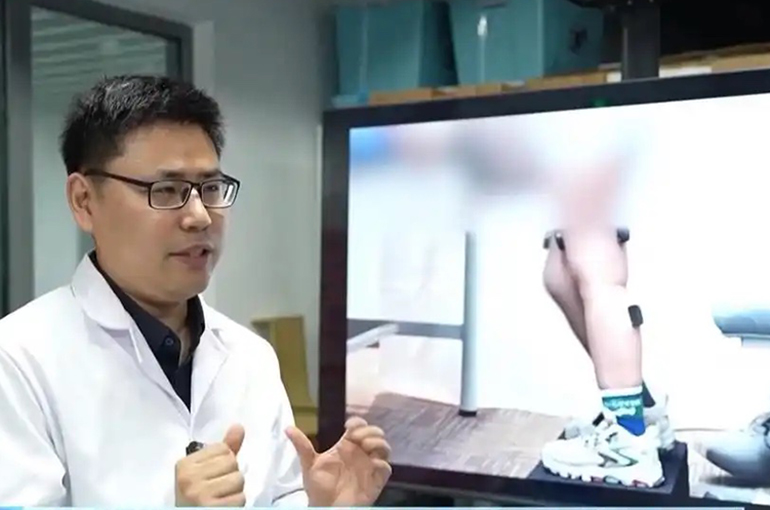
Weighing less than one kilogram, this innovative device was developed by a team led by Associate Professor Feng Yanggang from the School of Mechanical Engineering and Automation at Beihang University, in partnership with experts from the Massachusetts Institute of Technology and Peking University Third Hospital.
The isokinetic robot is designed to attach to a child’s knee, and clinical trials have demonstrated its effectiveness in helping children with spinal muscular atrophy (SMA) restore muscle function, according to a recent publication in the scientific journal Nature.
SMA is a hereditary neuromuscular disorder that is often fatal in infants. It causes progressive loss of motor abilities and can lead to death from respiratory failure due to paralysis of the breathing muscles during childhood to adolescence. While current medications and therapies can slow down the progression of the disease, they cannot reverse the damage.
Unlike conventional rehabilitation robots that typically support patient’s movements, Feng’s team took an alternative approach. The device applies precise resistance to make movement more challenging, stimulating the child’s nerves and muscles to promote recovery.
The research involved six children aged six to ten years with SMA, participating in a clinical trial that lasted approximately five and a half months. Following resistance training with the robot’s assistance, the children showed notable improvements in lower limbs motor function, with synchronized growth in muscle and nervous system responses.
Importantly, the therapeutic benefits persisted even after the children discontinued robot use and resumed daily activities.
Compared to traditional treatments that merely help maintain existing muscle mass, this isokinetic resistance training has been shown to significantly boost muscle strength and foster meaningful muscle growth. The findings offer new scientific insights into precise rehabilitation strategies for neuromuscular disorders.
 ChatGPT
 Perplexity
 Gemini AI
 Grok AI