Select Language:
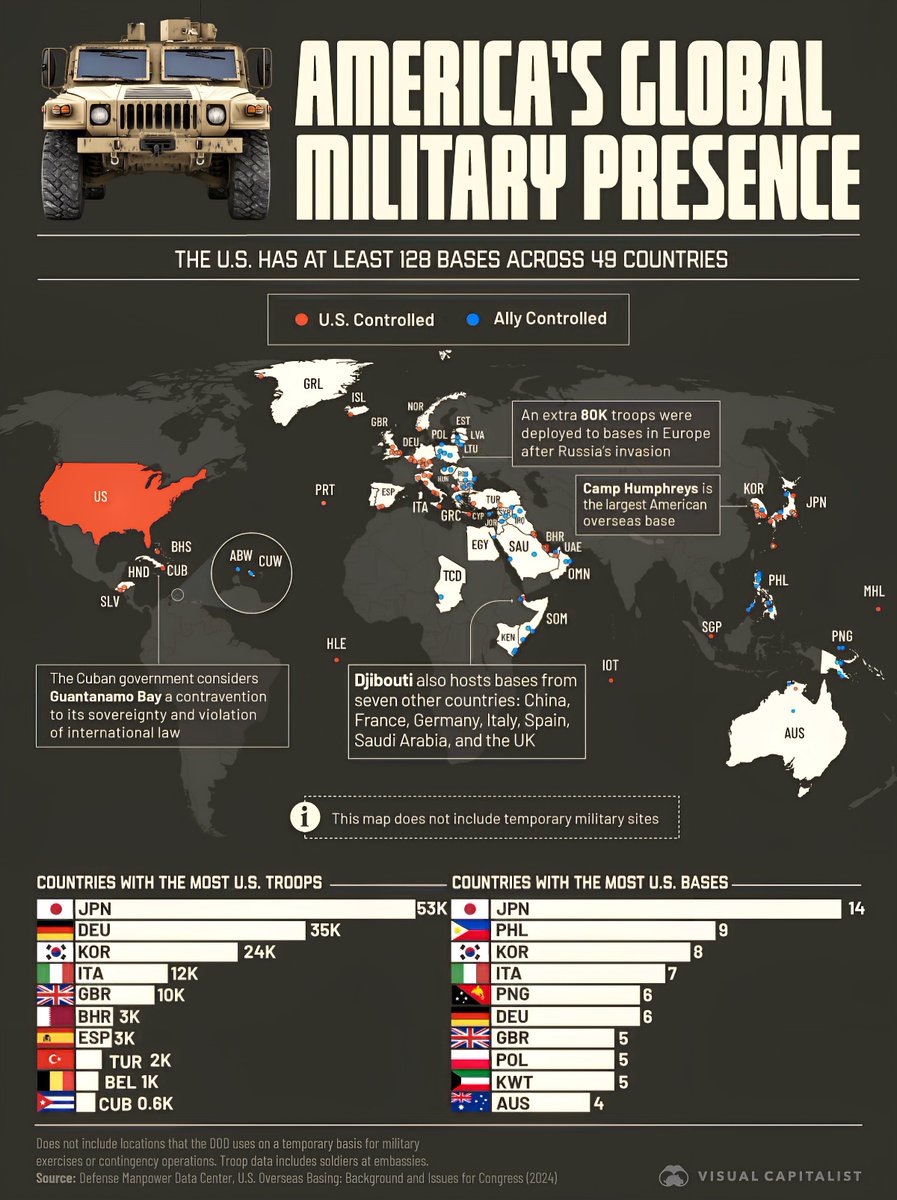
A Comprehensive Look at U.S. Military Overseas Bases in 2025
-
Japan’s Strategic Military Hubs
Japan continues to host a significant number of U.S. military bases that play vital roles in regional security. Key installations include Yokota Air Base, Camp Zama, and Misawa Air Base, among others. Yokota Air Base serves as a primary command center, while Camp Zama oversees ground operations. Misawa AB is crucial for air and missile defense. These bases enable rapid deployment throughout the Indo-Pacific region and bolster bilateral relations with Japan.
-
South Korea’s Defense Infrastructure
With an extensive military presence, South Korea remains a frontline in U.S. defense strategy. Major bases include Osan Air Base, Camp Humphreys, and Kunsan Air Base. Camp Humphreys stands out as the largest U.S. overseas military relocation in decades, offering a more flexible and secure hub to counter North Korean threats. USAG Daegu and USAG Yongsan-Casey are also central in maintaining regional stability.
-
Pacific Islands and Atlantic Outposts
In the Pacific, U.S. maintains strategic facilities like Fort Magsaysay and Basa Air Base in the Philippines, with critical operations on Palau and Papua New Guinea. The Kwajalein Atoll in the Marshall Islands is a key missile testing and tracking site. Atlantic commitments are represented by bases such as Naval Station Guantanamo Bay in Cuba and the Atlantic Undersea Test & Evaluation Center in the Bahamas, crucial for surveillance and testing.
-
Australia and Greenland’s Geostrategic Locations
Australia hosts RAAF bases including Darwin and Tindal, which serve as crucial points for operations in the Pacific and Indian Oceans. Greenland’s Pituffik Space Base is pivotal for satellite launches and missile warning systems, providing the U.S. a vantage point in the Arctic.
-
European Command Operations
Northern Europe features prominent bases such as the NATO Joint Warfare Center in Norway, Keflavik Naval Station in Iceland, and UK air bases including RAF Lakenheath and Menwith Hill. These locations support NATO operations and provide critical intelligence and surveillance capabilities across Europe.
-
Middle Eastern and North African Installations
The Middle East remains crucial for U.S. military strategy, with key bases such as Incirlik Air Base and Al Udeid Air Base in Qatar, both serving as command centers for air operations. Camp Lemonnier in Djibouti functions as a hub for Africa and Middle East engagements, while the British have bases like NSA Bahrain supporting regional security.
-
Asian and Middle Eastern Outposts
U.S. forces maintain bases across the Middle East, including Muwaffaq Salti Air Base in Jordan, Rumalyn in Syria, and Erbil and Al Assad Air Bases in Iraq. These stations are essential for counterterrorism and regional stability operations.
-
Strategic Locations in Africa
Djibouti remains a key strategic point for U.S. military operations in Africa. Camp Lemonnier serves as a critical base for various counterterrorism missions across the Horn of Africa.
-
Emerging and Support Bases Worldwide
Smaller but strategically important facilities like the Al Mubarak Air Base in Kuwait, and the U.S. Naval Station Guantanamo Bay in Cuba, continue to support logistical, training, and surveillance operations across different regions. These bases demonstrate the U.S. military’s global reach and readiness.
-
Future Developments and Expanding Presence
The U.S. military’s overseas footprint continues to evolve with new installations and upgrades. Efforts to modernize existing bases and explore emerging locations like Oman’s Duqm or additional facilities in Southeast Asia signal long-term strategic planning beyond 2025. This widespread network allows the U.S. to command rapid response capabilities, maintain regional stability, and project power worldwide.
The extensive list underpins the U.S. military’s commitment to global security, showcasing its preparedness and strategic partnerships across continents.
Note: Image sourced from Visual Capitalist confirms the widespread presence and strategic distribution of U.S. military bases worldwide.
 ChatGPT
 Perplexity
 Gemini AI
 Grok AI