Select Language:
The Greater Chilean Empire: A Fascinating Map of Ambition and Heritage
1. Redefining Borders: The Concept of a Greater Chilean Empire
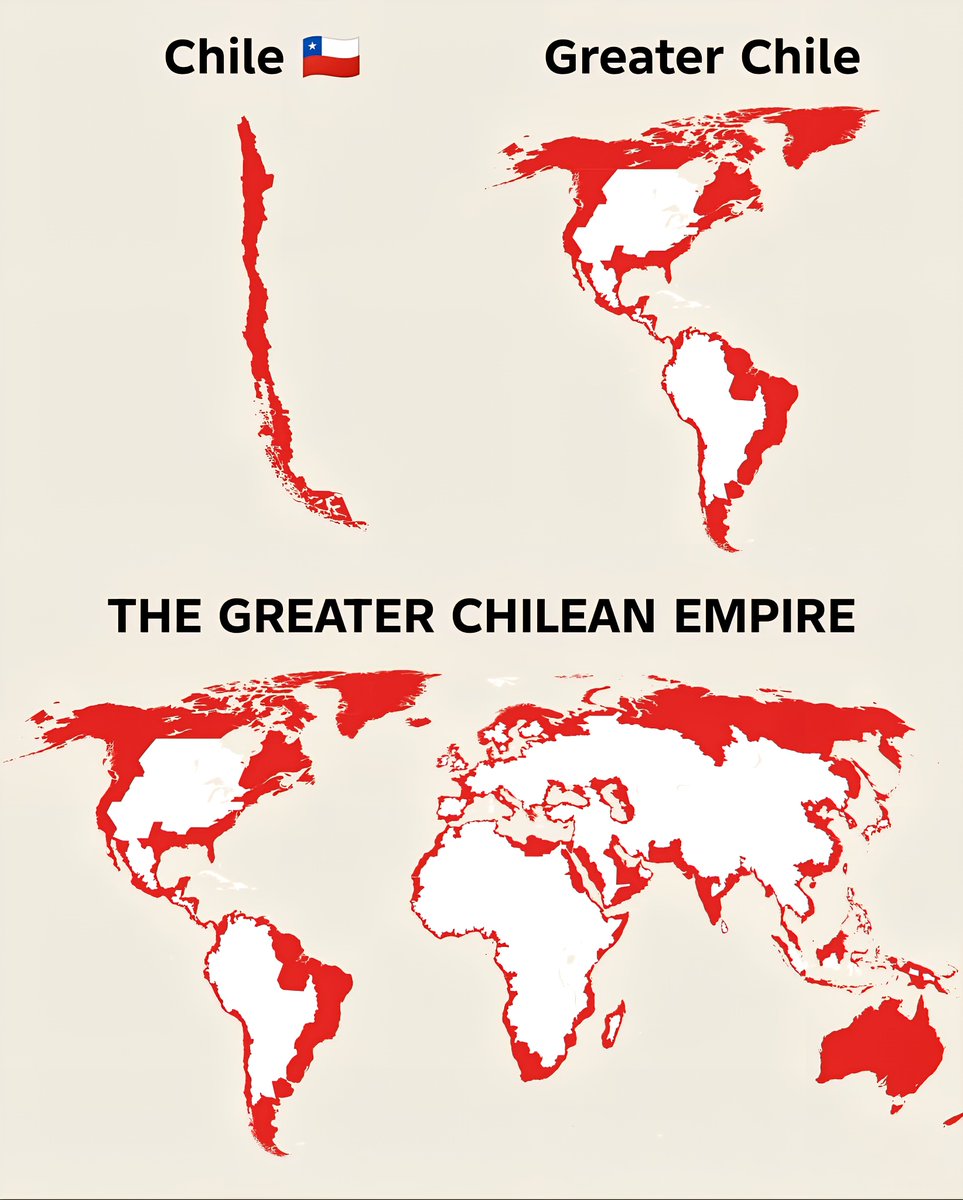
The map titled “The Greater Chilean Empire” stirs conversations about regional history and national identity. It visually expands the current borders of Chile, illustrating a concept where the nation’s territory hypothetically extends to encompass neighboring regions. This ambitious depiction serves as a reflection of Chilean cultural pride, historical aspirations, or political commentary, depending on the perspective.
The map’s design integrates modern territorial boundaries with historical claims and cultural ties, offering viewers a glimpse into what could have been under different geopolitical circumstances. It emphasizes the importance of understanding regional history and the potential influences of past imperial ambitions.
2. Historical Roots and Influences
Chile’s history is deeply rooted in independence movements, territorial disputes, and cultural amalgamation. The idea of a “Greater Chile” draws inspiration from historical periods when territorial boundaries fluctuated due to wars, treaties, or colonization. For instance, during the Chilean War of Independence and subsequent conflicts, borders shifted, and national identity was shaped by these tumultuous events.
The map’s exaggerated borders might also nod toward the Chilenization movement, which sought to expand Chilean influence and identity over neighboring territories during the late 19th and early 20th centuries. While purely hypothetical today, these historical moments continue to influence cultural narratives within the country.
3. Cultural and Political Implications
Imagining a Greater Chile connects to contemporary discussions about national sovereignty, regional influence, and identity. Some advocates view such maps as a celebration of multicultural heritage, highlighting shared histories with neighboring nations like Argentina, Bolivia, and Peru. Others see it as a symbol of territorial ambitions that could stir political debates on sovereignty and regional diplomacy.
In 2025, the map has garnered attention from both historians and political analysts. It sparks conversations about historical claims, modern borders, and the importance of respecting current international agreements. It also evokes broader questions around cultural identity, nationalism, and regional cooperation in South America.
4. The Significance of the Map in Popular Culture
The map’s vivid design has made it a popular visual among social media users, artists, and historians who find it both intriguing and provocative. Its stylized depiction invites viewers to think critically about history’s role in shaping today’s borders and identities.
Some digital creators use the map for satirical memes or political commentary, emphasizing the role of imagination and history in shaping perceptions. Meanwhile, educators and historians employ it as a teaching tool to discuss the complex history of territorial changes and national belonging in South America.
5. Perspectives from the Local Community
While the map is speculative and artistic, it has sparked real-world reactions in Chile and neighboring countries. Some local residents see it as a symbol of pride and cultural unity, fostering a sense of connection to a broader historical narrative. Others caution against the dangers of territorial ambitions, advocating for respect of existing borders and peaceful regional relations.
The map reminds citizens of Chile’s rich history and prompts reflection on what national borders truly mean in terms of identity, sovereignty, and regional harmony. Discussions continue on how historical narratives influence current policies and societal perceptions.
Final Thoughts
The “Greater Chilean Empire” map remains a compelling piece of visual storytelling—blurring the lines between history, imagination, and modern geopolitics. Whether viewed as a tribute to Chile’s past or a symbol of aspirations, it invites everyone to consider the complex tapestry of cultural identity and territorial boundaries that define South America today. As regional dynamics evolve in 2025, such imagery underscores the importance of dialogue, understanding, and respect among neighboring nations.
 ChatGPT
 Perplexity
 Gemini AI
 Grok AI