Select Language:
Top Countries with the Largest Oil Reserves in 2025
- Venezuela Dominates the Global Oil Reserve Chart
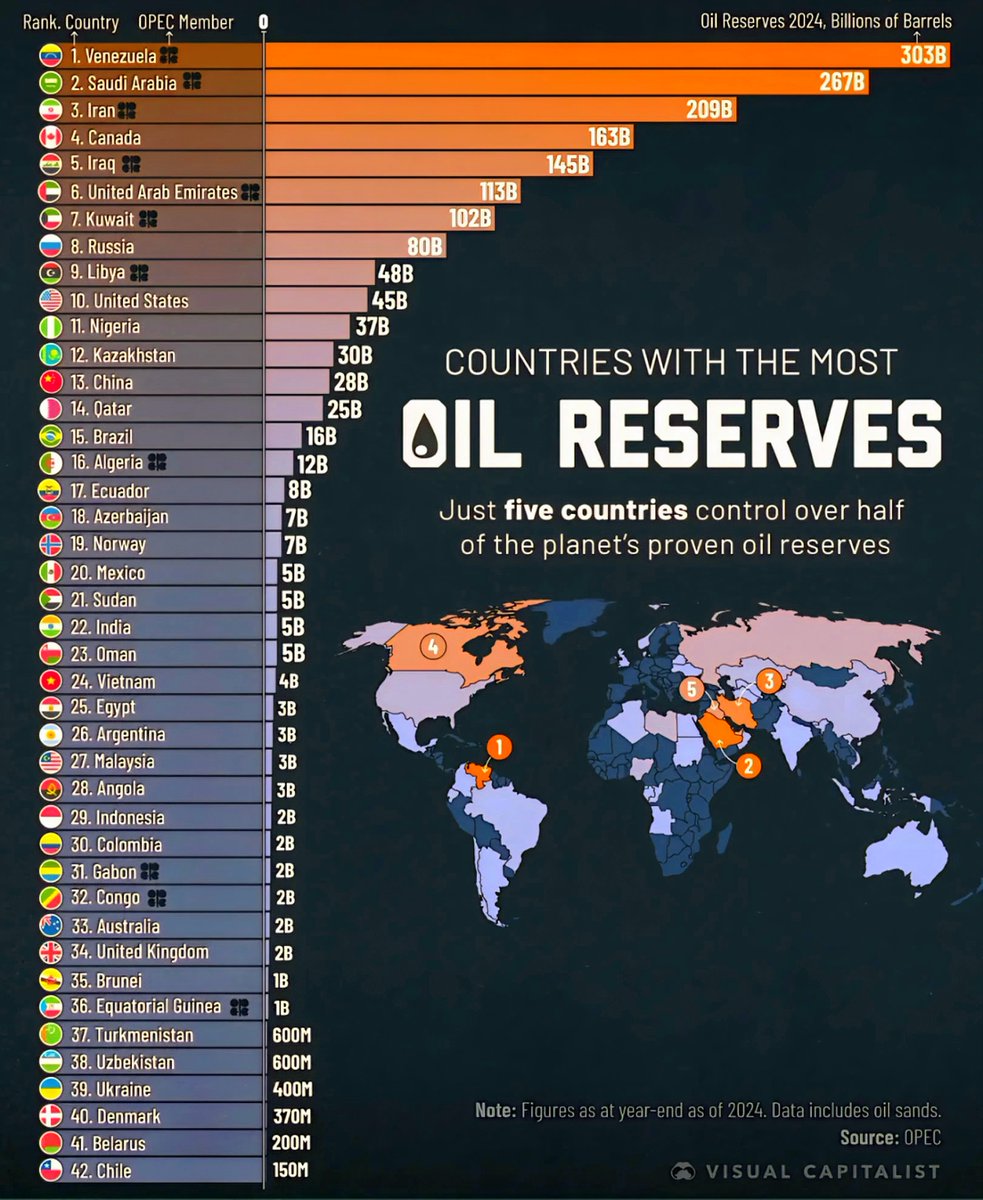
Venezuela holds the world’s largest oil reserves with an estimated 303 billion barrels as of the end of 2024. Despite political and economic challenges, its vast oil deposits continue to position it as a giant in the energy sector. The country’s reservoirs are primarily located within the Orinoco Belt, rich in heavy crude oil, which presents unique refining and extraction challenges but also signifies potential for future energy development.
- Saudi Arabia: The Middle East Powerhouse
Saudi Arabia maintains its status as a top oil reserve holder with approximately 267 billion barrels. Its strategic geographic location and vast reserve capacity make it a critical player in global oil markets. The kingdom’s relatively low-cost extraction methods and significant production capacity underpin its influence over global oil prices.
- Iran and Canada: Significant Reserves on Different Continents
Iran boasts an estimated 209 billion barrels, making it the third-largest holder of oil reserves. Its extensive oil fields, particularly in the southern regions, position Iran as a key energy exporter in Asia. Meanwhile, Canada features around 163 billion barrels, mainly in the Alberta Oil Sands, offering a substantial domestic resource base despite environmental concerns and high extraction costs.
- Iraq and the United Arab Emirates: Middle Eastern Oil Titans
Iraq’s reserves stand at about 145 billion barrels, with its rich fields in Basra and the Kurdistan Region. The country continues to rebuild its oil infrastructure post-conflict, aiming to increase production and exports. The UAE, holding approximately 113 billion barrels, leverages advanced technology in its desert oil fields, particularly in Abu Dhabi, to maximize extraction.
- Kuwait and Russia: Diverse Reserves with Global Reach
Kuwait contains approximately 102 billion barrels, with vast fields like Burgan fueling its economy. Despite geopolitical tensions, Kuwait remains committed to maintaining and increasing production capacity. Russia, with 80 billion barrels, stands out as a key energy superpower, with a mix of traditional and frontier fields spread across Siberia and the Arctic, positioning it as a central player in energy geopolitics.
- Libya and the U.S.: North African and North American Oil Reserves
Libya’s reserves are approximately 48 billion barrels, primarily accessed from the prolific Sirte Basin. Political instability has historically hampered full utilization. Conversely, the United States holds around 45 billion barrels, mainly from shale formations across Texas, North Dakota, and other states, reflecting the country’s significant role in global energy markets due to advancements in fracking technology.
- Emerging and Developing Countries’ Reserves
Nigeria, Kazakhstan, China, and Qatar all possess notable reserves, with Nigeria holding about 37 billion barrels, primarily in the Niger Delta. Kazakhstan’s reserves total around 30 billion barrels, primarily in the Caspian Sea region. China has approximately 28 billion barrels, mostly in its northeastern and western provinces, reflecting its growing energy needs amid economic expansion.
- South American Reserves and Other Notables
Brazil contains approximately 16 billion barrels, with recent offshore discoveries boosting its potential. Ecuador, Argentina, and Malaysia have reserves ranging from 3 to 8 billion barrels, indicating notable reserves but less influence on the global stage. Australia, the UK, and a handful of African nations hold smaller reserves, each with unique opportunities and challenges.
- Emerging Economies and Their Energy Outlook
India, with about 5 billion barrels, is actively developing its domestic resources to meet the energy demands of its rapidly growing population. Countries like Oman and Vietnam also hold around 4 to 5 billion barrels, signaling potential for regional energy security despite limited reserves compared to the giants.
Note: All figures are estimates as of year-end 2024 and include oil sands and unconventional sources where applicable.
Source: OPEC via Visual Capitalist
In 2025, the global landscape of oil reserves remains dominated by Middle Eastern countries, with Venezuela leading the pack. However, technological advances, geopolitical shifts, and environmental concerns are reshaping strategies around reserves and extraction.
Image source: Twitter – Image
 ChatGPT
 Perplexity
 Gemini AI
 Grok AI