Select Language:
Countries Facing Severe Poverty Challenges in 2025
1. Nigeria Continues to Struggle with Widespread Poverty
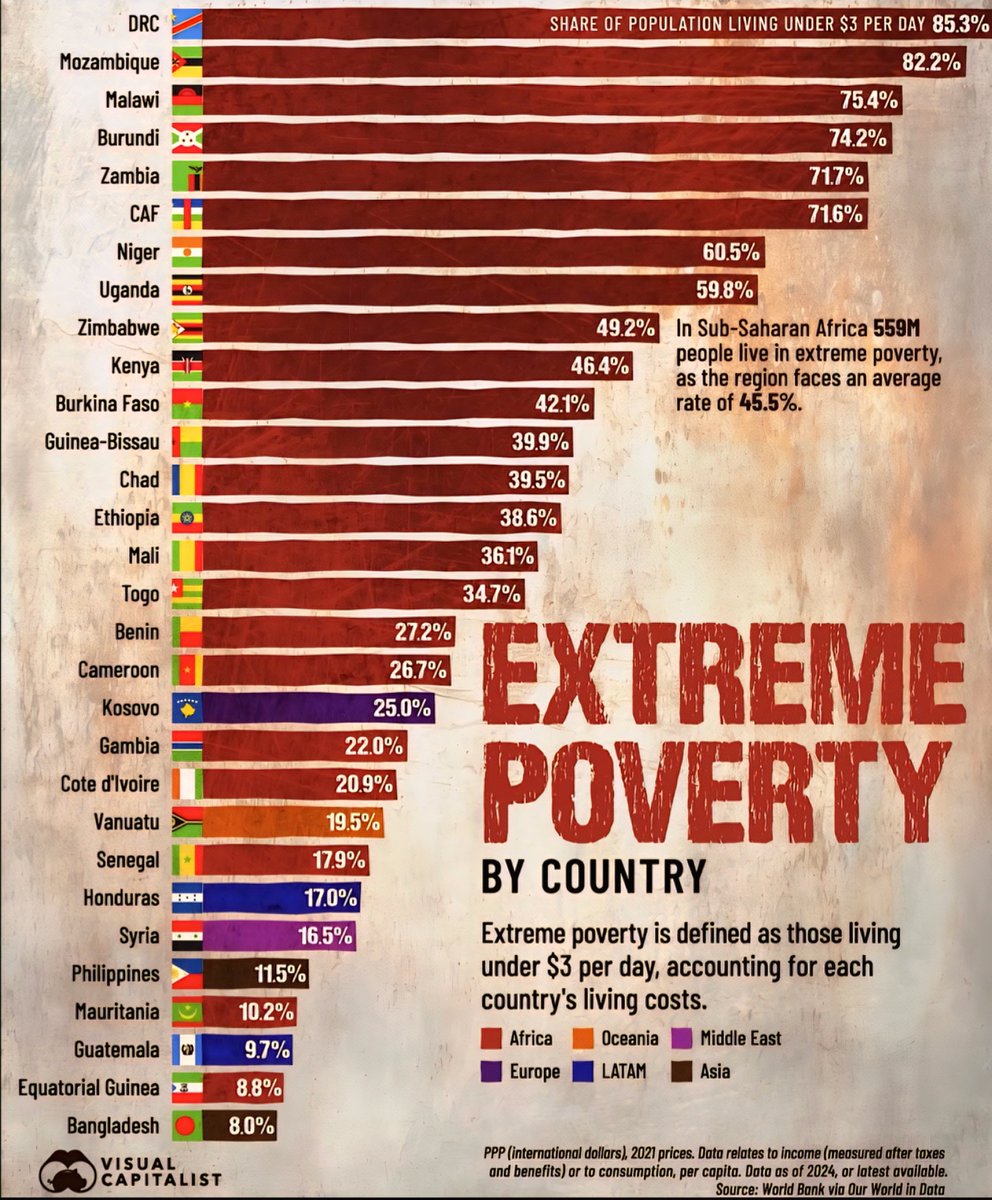
Nigeria remains one of the nations battling extreme poverty, with approximately 45% of its population living on less than $3 a day. Despite recent economic reforms and the country’s rich oil reserves, many Nigerians still face daily hardships. Urban gaps are widening, especially in Lagos and other major cities, where informal employment and lack of social safety nets leave millions vulnerable. Rural areas, notably in the northern regions, grapple with limited access to education, healthcare, and basic infrastructure. Rapid population growth exacerbates these challenges, making sustainable development a pressing need.
2. Democratic Republic of the Congo’s Persistent Poverty Cycle
The Democratic Republic of the Congo (DRC) faces relentless poverty, with nearly 60% of its citizens living under the $3 per day threshold. Ongoing conflict, political instability, and decades of underinvestment have hindered economic progress. Many communities lack consistent access to clean water, electricity, and quality healthcare. Agriculture remains the primary livelihood for most Congolese, but conflict-driven displacement and limited infrastructure restrict productivity growth. International aid continues to be vital, but long-term solutions remain elusive amid ongoing unrest.
3. India’s Vast Rural Poverty Arena
India, despite its rapid economic growth over the past decade, still reports staggering levels of rural poverty; about 35% of its rural population lives on less than $3 a day. While urban centers such as Mumbai and Bangalore prosper, rural districts like Bihar and Uttar Pradesh struggle with insufficient health services, poor sanitation, and inadequate educational opportunities. These disparities perpetuate cycles of poverty, making it difficult for economic mobility. Government initiatives aim to address these gaps, but logistical challenges and population density complicate efforts.
4. Venezuela’s Economic Collapse Deepens Poverty
Venezuela’s ongoing economic crisis has pushed a significant portion of its population into extreme poverty. Over 50% of the Venezuelan population now survives on less than $3 per day, a stark increase caused by hyperinflation, currency devaluation, and political turmoil. Basic necessities like food, medicine, and clean water are scarce in many areas. The exodus of millions seeking better living conditions abroad has left remaining residents in deteriorating urban environments, especially in Caracas and other major cities. International aid and internal reforms are critical to reversing this downward trend.
5. Ethiopia’s Struggling Agricultural Sector
Ethiopia is grappling with widespread poverty, especially in rural areas where approximately 40% of the population survives on less than $3 daily. The country’s reliance on subsistence farming makes it vulnerable to climate change, droughts, and pests, which devastate crops and livestock. Despite progress in education and infrastructure, significant segments of the population remain below the poverty line. The government has launched initiatives targeting rural development and food security, but challenges persist due to limited resources and ongoing regional conflicts.
6. Haiti’s Crippled Economy and Rising Poverty
Haiti, often considered the poorest country in the Western Hemisphere, sees about 70% of its population living below the $3 per day threshold. Decades of political instability, natural disasters, and limited economic development have left many Haitians in a constant struggle for survival. Access to clean water, healthcare, and education remains limited in impoverished neighborhoods, especially in Port-au-Prince and rural regions. International aid efforts continue, but sustainable growth and poverty alleviation remain elusive without comprehensive political and economic reforms.
In summary, countries across Africa, Asia, and the Caribbean continue to grapple with extreme poverty, highlighting the urgent need for sustainable development, political stability, and targeted aid strategies. The fight against poverty requires a coordinated effort involving governments, international organizations, and local communities to pave the way toward economic resilience and improved living standards for the most vulnerable populations in 2025.
 ChatGPT
 Perplexity
 Gemini AI
 Grok AI