Select Language:
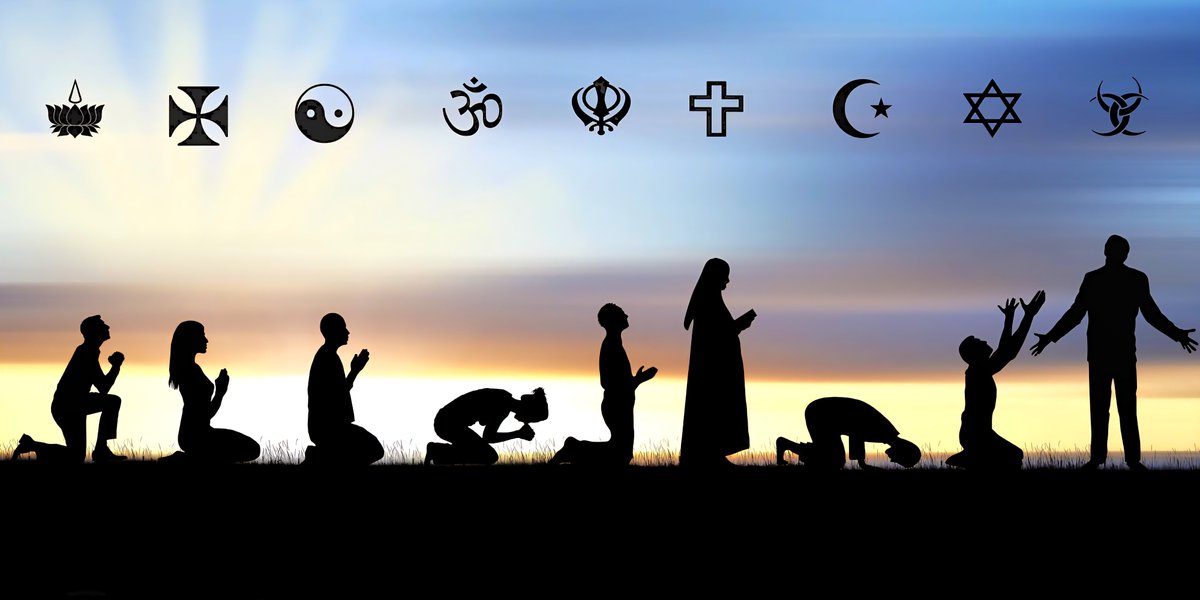
Top Religious Dominances Around the World in 2025
1. India: Hinduism’s Massive Presence at Nearly 80%
India continues to be the world’s largest Hindu-majority country, with approximately 79.8% of its population adhering to Hinduism. This faith profoundly influences Indian culture, festivals, and daily life, making it a central feature of the nation’s identity.
2. Japan: The Growing Unaffiliated Population
For the first time in recent history, approximately 60% of Japan’s population identifies as unaffiliated with any particular religion. This trend reflects shifting cultural perspectives and a decline in traditional religious practices, leading to a unique spiritual landscape in the country.
3. United States: Christianity Remains Predominant
In 2025, roughly 63% of Americans identify as Christian. The country continues to feature a diverse religious scene, but Christianity remains the dominant faith influencing societal values, politics, and cultural traditions across the nation.
4. Pakistan: Islam’s Overwhelming Majority
Pakistan holds steady with about 97% of its population practicing Islam, primarily Sunni. Islam plays a significant role in shaping laws, daily routines, and the social fabric of the country, maintaining its status as an Islamic republic.
5. Nigeria: A Religious Mosaic with Islam Slightly Leading
In Nigeria, Islam is practiced by about 50.5% of the population, with Christianity close behind at roughly 48.5%. The country’s religious diversity is a defining feature, often leading to vibrant but complex interfaith relations.
6. Bangladesh: Predominantly Muslim Society
Bangladesh remains predominantly Muslim, with around 90% of its population adhering to Islam. This faith influences national holidays, cultural festivals, and daily life, emphasizing Islamic traditions in public and private spheres.
7. Brazil: Christian Heartland
Brazil is home to approximately 88% Christians, predominantly Catholics. The country’s vibrant religious festivals, such as Carnival and various saints’ days, are rooted in its Christian heritage.
8. Russia: Christianity’s Enduring Influence
In Russia, about 72% of the population identifies with Christianity, mainly Russian Orthodox. Religious traditions continue to play an important role amidst a society that beautifully blends old faiths with modern secularism.
9. Mexico: Large Christian Majority
Mexico boasts a Christian population of approximately 82%, with Roman Catholicism deeply woven into its cultural identity. Religious celebrations and traditions are integral parts of Mexican life.
10. Indonesia: Islam’s Largest Population in Asia
Indonesia remains the country with the world’s largest Muslim population, with approximately 87% of its citizens practicing Islam. Its diverse culture influences Islamic practices, making it uniquely Indonesian.
11. Egypt: Nearly All Muslims
Islam is practiced by about 90% of Egypt’s population, shaping much of its history, architecture, and daily societal norms, with a significant Christian minority also present.
12. Turkey: Nearly Universal Islam
In Turkey, a staggering 98% of the population practices Islam. Despite its secular government, Islam remains central to cultural and social life across the country.
13. Iran: Almost Entirely Muslim
Iran’s population is about 99% Muslim, predominantly Shia. The nation’s laws, holidays, and educational systems are deeply rooted in Islamic principles.
14. Philippines: Christianity’s Archipelago
The Philippines has a predominantly Christian population, roughly 90%, mainly Roman Catholic, integrated into everyday life and national festivities.
15. Ethiopia: A Stronghold of Christianity
Ethiopia’s religious landscape is predominantly Christian, with about 60% adhering to Christianity, making it one of Africa’s earliest Christian nations.
16. Vietnam and South Korea: Rising Unaffiliated Numbers
Vietnam and South Korea are seeing a rise in unaffiliated individuals, comprising roughly 70% and 56% respectively. This shift indicates changing attitudes toward traditional religious institutions.
17. Germany, France, and the UK: Europe’s Christian Legacy
In 2025, Christianity remains significant in Germany (55%), France (47%), and the United Kingdom (49%), reflecting the continued influence of Christian heritage on Western societies.
18. Italy and Spain: Deeply Christian Nations
Italy and Spain are about 80% and 70% Christian respectively. Their cultural identities are deeply connected with Catholic traditions and practices.
19. North Korea: The Case of Near-Total Unaffiliation
North Korea remains exceptional, with nearly 100% of its population officially unaffiliated, a result of strict governmental controls and suppression of religious expression.
20. Middle Eastern and North African Countries: Islam’s Deep Roots
Countries like Saudi Arabia (100%), Iraq (95%), Syria (90%), and Tunisia (99%) are overwhelmingly Muslim, with Islamic law influencing every facet of daily life. Israel is notable with a significant Jewish population at 74%.
21. Central Asia: Islam’s Influence Continues
Kyrgyzstan (85%) and Kazakhstan (70%) are predominantly Muslim, reflecting their historical and cultural ties to Islamic traditions.
22. Australia, Canada, and South Africa: Christian Foundations
While religious diversity exists, approximately 44% of Australians, 53% of Canadians, and 80% of South Africans identify as Christian, shaping social policies and cultural norms.
23. Southeast Asia: Buddhism’s Prominent Role
Thailand’s religious composition is 93% Buddhist, making Buddhism a major cultural force. Singapore has a more diverse religious landscape but with 31% practicing Buddhism.
24. South Korea and Vietnam: Diversifying Faiths
South Korea (56%) and Vietnam (70%) are witnessing shifts, with increasing numbers of unaffiliated or non-traditional religious adherents, reflecting modern cultural trends.
25. Latin America: Catholicism and Evangelical Growth
Countries such as Argentina (76%), Colombia (90%), Venezuela (88%), and Peru (90%) remain predominantly Catholic, though evangelical Protestant communities are growing.
Note: The figures are based on the most recent estimates from Pew Research Center and World Population Review for 2025, reflecting ongoing trends and demographic shifts in religious adherence worldwide. While detailed, actual figures may vary due to new data and evolving societal influences.
 ChatGPT
 Perplexity
 Gemini AI
 Grok AI