Select Language:
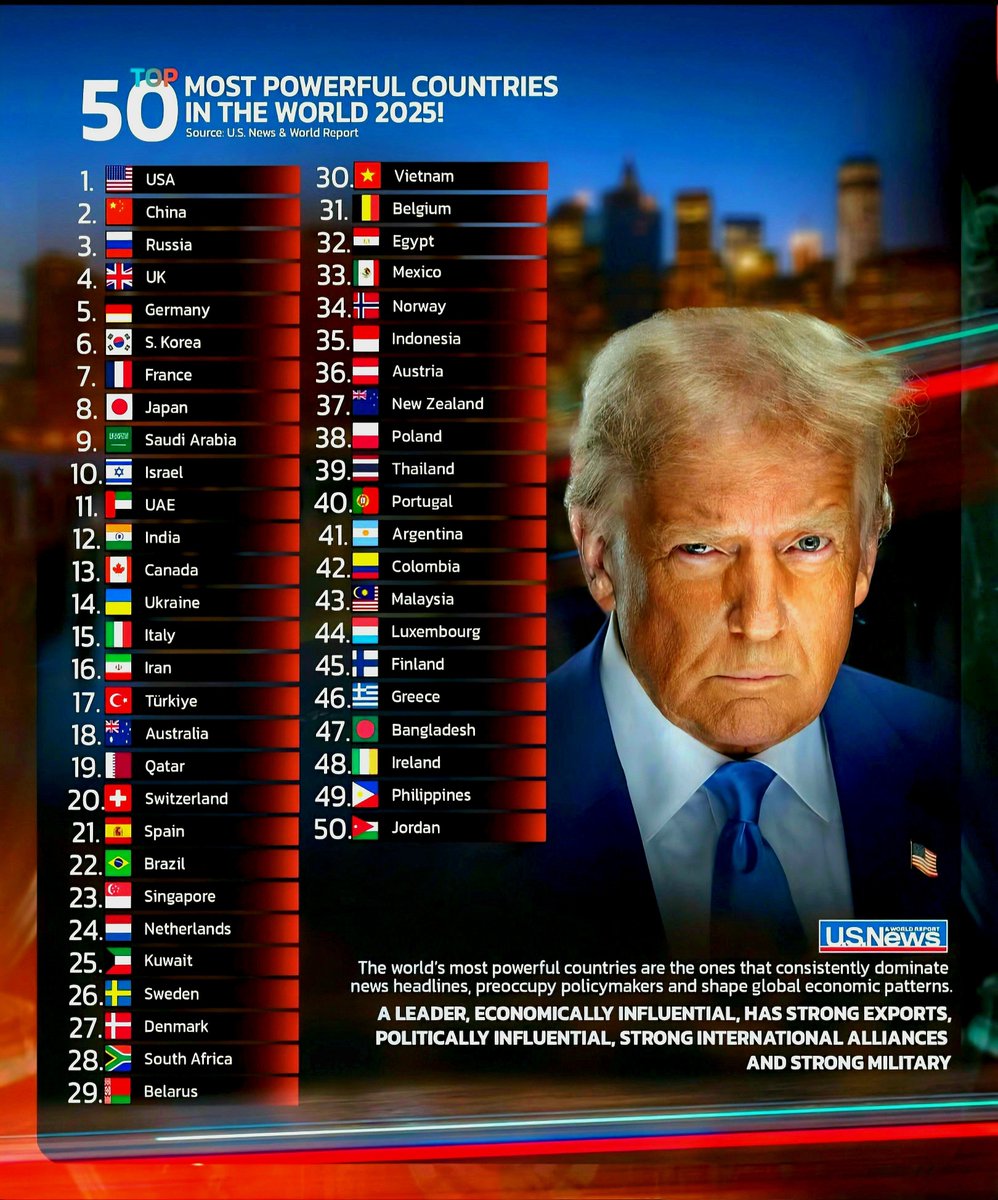
2025’s Top 50 Most Influential Countries in the World
1. United States: The Global Powerhouse
Leading the list once again, the United States maintains its position as the most powerful country in the world. Its hefty economy, technological innovation, vast military strength, and extensive international alliances solidify its dominance. The U.S. continues to shape global policies, influence international markets, and command attention on the world stage.
2. China: Rising Superpower
China remains a formidable presence, leveraging rapid economic growth, expanding military capabilities, and strategic initiatives like the Belt and Road. Its influence extends across Asia, Africa, and Latin America, making it a key player in geopolitics and global trade.
3. Russia: The Resilient Power
Russia retains its position due to its substantial military influence, natural resource wealth, and strategic geopolitical moves. Its actions in Eastern Europe, the Middle East, and Arctic regions continue to impact international relations.
4. United Kingdom: Post-Brexit Strategist
Despite Brexit, the UK remains vital with strong financial services, technological sectors, and military alliances, especially with NATO. Its diplomatic reach and global cultural influence help maintain its potent global standing.
5. Germany: Europe’s Economic Leader
Germany leads the European Union in economic strength, innovation, and diplomatic influence. Its robust manufacturing sector and commitment to sustainability keep it central in global markets and climate policies.
6. South Korea: Innovation and Defense
A technological giant, South Korea integrates its export-driven economy with advanced defense systems. The nation’s influence grows through cultural exports like K-pop and technological expertise.
7. France: Cultural and Military Force
France stays influential via its strong military, nuclear capabilities, and diplomatic initiatives. Its cultural heritage and leadership in global issues like climate change boost its prominence.
8. Japan: Technological Titan
Leading in robotics, electronics, and automotive industries, Japan remains a critical economic player. Its strategic alliances and security commitments in Asia bolster its influence.
9. Saudi Arabia: Wealth and Strategy
As a cornerstone of Middle Eastern geopolitics, Saudi Arabia wields economic power through oil exports, while also diversifying into sectors like tourism and technology, aligning with Vision 2030.
10. Israel: Innovation and Defense
Israel’s technological advancements, especially in cybersecurity and defense, coupled with strategic regional alliances, secure its enduring influence in Middle Eastern geopolitics.
11. United Arab Emirates: Modern Middle East Hub
The UAE’s diversification beyond oil—into finance, tourism, and space—has elevated its regional stature, making it an influential player in international diplomacy.
12. India: Demographic and Economic Power
India’s vast population fuels its economic rise, with rapid growth in tech, manufacturing, and service sectors. Its strategic partnerships in Asia and beyond increase its geopolitical weight.
13. Canada: Stable and Resource-Rich
Renowned for its political stability, natural resources, and strong diplomatic ties, Canada continues to be a key contributor in global peacekeeping and climate initiatives.
14. Ukraine: Resilience in Conflict
Ukraine’s recent resilience amid ongoing conflicts has garnered international support, positioning it as a pivotal country in European security matters.
15. Italy: Cultural and Strategic
Italy maintains influence through its rich cultural history, regional diplomacy within Europe, and active military involvement in NATO.
16. Iran: Regional Power Player
Iran’s strategic location, military capabilities, and energy resources ensure its continued influence across the Middle East and in global energy markets.
17. Turkey: Bridging Continents
Situated at the crossroads of Europe and Asia, Turkey leverages its unique geographic position and military strength to assert influence regionally and beyond.
18. Australia: Pacific Power
Australia’s strategic alliances, resource exports, and regional leadership in Oceania cement its role in global stability and economic growth.
19. Qatar: Strategic Energy and Diplomacy
As a major natural gas exporter, Qatar wields significant influence in energy markets and regional diplomacy, especially through hosting global events like the World Cup.
20. Switzerland: Banking and Diplomacy
Switzerland’s financial sector, neutrality, and diplomatic services keep it an influential player in international finance and conflict resolution.
21. Spain: Cultural and Political Influence
Spain remains influential through its economic stability within the EU, regional diplomacy, and cultural reach.
22. Brazil: Latin America’s Leader
Brazil continues to lead in South America with its vast natural resources, expanding economy, and regional influence in politics and environmental issues.
23. Singapore: Financial Hub
Singapore’s strategic location and advanced financial, logistics, and technological sectors make it a vital hub in global commerce.
24. Netherlands: Innovation and Trade
Dutch innovation, ports like Rotterdam, and the country’s leadership in renewable energy bolster its influence in European and global markets.
25. Kuwait: Regional Wealth
Kuwait’s wealth from oil exports, combined with active regional diplomacy, position it as a key energy and political stakeholder.
26. Sweden: Peace and Innovation
Sweden’s reputation for peacekeeping, technology, and sustainable policies continues to enhance its global influence.
27. Denmark: Leading in Sustainability
Denmark’s leadership in renewable energy, technology, and social policies strengthen its standing on the world stage.
28. South Africa: Gateway to Africa
South Africa’s economic, cultural, and political influence shapes regional stability and development across the continent.
29. Belarus: Strategic Alliances
Belarus’s strategic alliances, particularly with Russia, shape its role within Eastern Europe’s geopolitics.
30. Vietnam: Economic Growth Engine
Vietnam’s rapid economic development and strategic partnerships with major powers increase its importance in Asia.
31. Belgium: Diplomatic Hub
Host to EU institutions and NATO headquarters, Belgium remains central in global governance.
32. Egypt: Regional Powerhouse
Egypt’s strategic location, military strength, and efforts at economic modernization keep it influential in Middle Eastern politics.
33. Mexico: North American Leader
With a large economy and close ties to the U.S., Mexico plays a significant role in North American geopolitics.
34. Norway: Wealth and Peacekeeping
Norway’s sovereign wealth fund, environmental policies, and peacekeeping missions bolster its international reputation.
35. Indonesia: Pillar of Southeast Asia
Indonesia’s large population, economic growth, and regional influence make it a key Southeast Asian power.
36. Austria: Diplomatic Excellence
Austria’s neutrality, diplomatic tradition, and regional influence in Central Europe keep it significant.
37. New Zealand: Pacific Stability
New Zealand’s commitment to sustainability, peace, and regional diplomacy enhances its influence.
38. Poland: Central European Force
Poland’s strategic location, military modernization, and EU ties increase its regional clout.
39. Thailand: Regional Leader
Thailand’s economic growth and regional diplomacy reinforce its role in Southeast Asia.
40. Portugal: Atlantic Gateway
Portugal leverages its Atlantic connections and tourism industry to strengthen its international influence.
41. Argentina: South American Power
Argentina’s economic potential and regional leadership are vital in Latin American geopolitics.
42. Colombia: Growing Influence
As a regional hub for peace and stability, Colombia’s economic growth continues to boost its international standing.
43. Malaysia: Southeast Asian Leader
Malaysia’s strategic location, economic growth, and diplomatic efforts cement its regional influence.
44. Luxembourg: Financial Powerhouse
Luxembourg’s financial services sector and European partnerships ensure its prominence.
45. Finland: Innovation and Peace
Finland’s technological innovation and neutrality contribute to its role as a peaceful global actor.
46. Greece: Mediterranean Heart
Greece’s geopolitical importance and cultural heritage give it notable regional influence.
47. Bangladesh: Economic Rising Star
Bangladesh’s rapid development and large population make it a key emerging market in Asia.
48. Ireland: Tech and Diplomacy
Ireland’s booming tech sector and active diplomacy strengthen its influence internationally.
49. Philippines: Strategic Asia-Pacific
The Philippines’ strategic position and economic growth make it an essential player in regional affairs.
50. Jordan: Regional Resilience
Jordan’s stability, friendly relations, and role in Middle Eastern diplomacy sustain its influence.
The global landscape in 2025 continues to be shaped by nations with strong exports, military capabilities, strategic diplomatic initiatives, and pivotal international alliances. These countries influence global news headlines and decision-making around the world, underscoring the importance of power dynamics in shaping future geopolitical developments.
Source: U.S. News & World Report, 2025 Data.
 ChatGPT
 Perplexity
 Gemini AI
 Grok AI