Select Language:
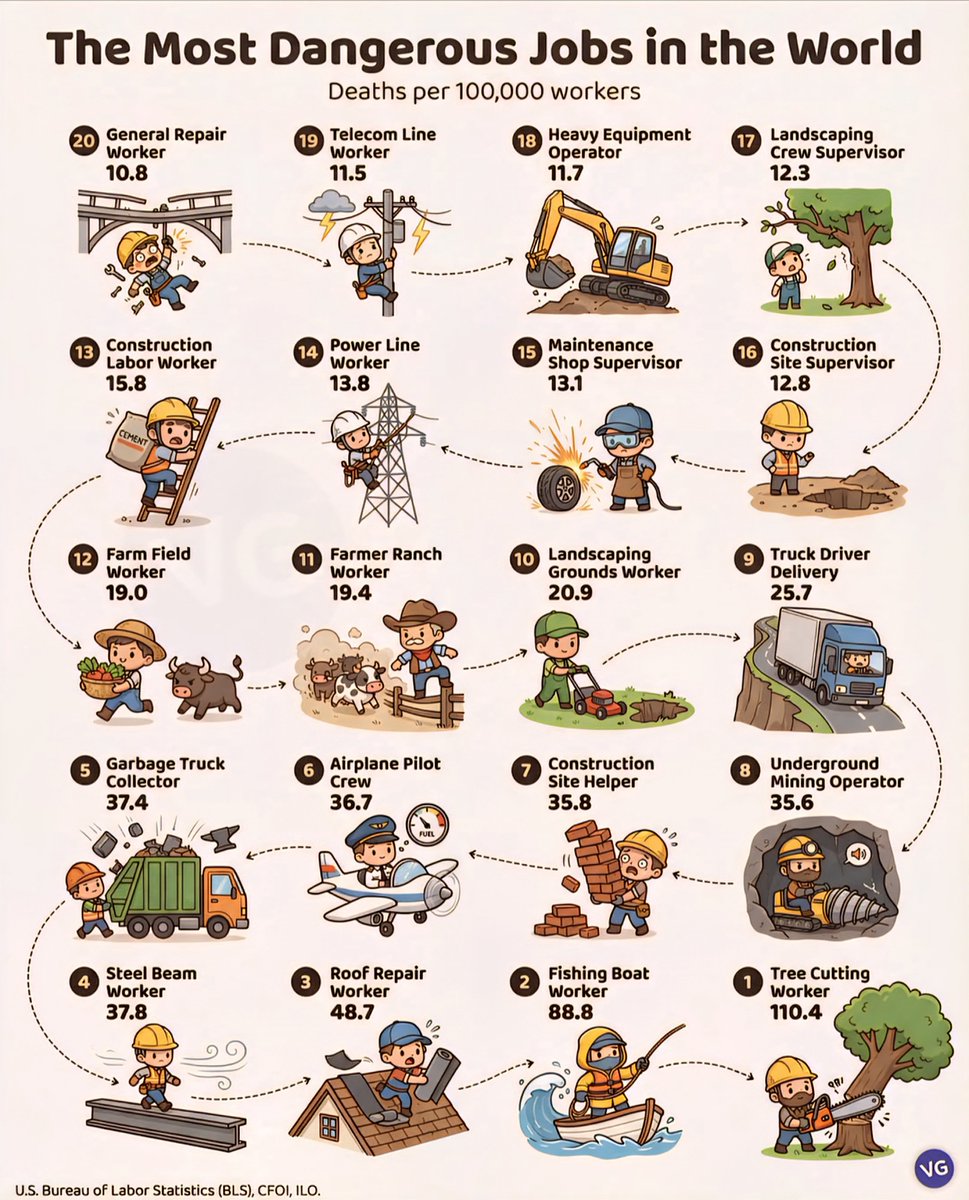
The Deadliest Jobs in 2025: A Closer Look at Occupational Risks
In the ever-evolving landscape of work, certain professions continue to rank among the most perilous worldwide. Recent data from the U.S. Bureau of Labor Statistics and global organizations shed light on the occupations with the highest fatality rates. Here’s a comprehensive list of the top 20 most dangerous jobs in 2025, along with insights into what makes them particularly risky.
Climbing the Tallest Trees — Tree Cutting Workers Faced with Over 110 Fatalities per 100,000 Workers
Occupational tree cutting might seem straightforward, but it remains one of the most hazardous careers. Workers grapple with falling branches, unstable trees, and often harsh weather conditions. The physical demands combined with the risk of falling from significant heights contribute to the staggering fatality rate of over 110 per 100,000 workers. Safety harnesses and advanced equipment have improved, yet the danger persists.
Seas of Uncertainty — Fishing Boat Workers Encounter Nearly 89 Deaths per 100,000
Maritime life is perilous, especially for those aboard fishing vessels. These workers face unpredictable weather, equipment failures, and accidents at sea, which can turn deadly in moments. The high rates reflect the dangerous nature of fishing in sometimes brutal conditions, emphasizing the need for better safety protocols in the industry.
Roof Repair Workers at Nearly Half as Dangerous — 48.7 Fatalities per 100,000
Roofing remains one of the most hazardous construction-related jobs. Workers are repeatedly exposed to heights, sharp tools, and unstable surfaces. Despite safety harnesses and guidelines, falls continue to be a leading cause of death in this field, making roof repair jobs highly risky.
Steel Beam Workers — Climbing the Ranks with 37.8 Fatalities
Erecting steel structures involves working at great heights with heavy materials. The risks include falls, equipment mishaps, and structural failures. The fatality rate highlights ongoing safety challenges in steel construction environments.
Garbage Collection Workers — Essential Yet Dangerous, with 37.4 Deaths per 100,000
Waste management might seem mundane but involves exposure to hazardous materials, traffic accidents, and lifting heavy loads. The high fatality rate underscores the importance of improved safety measures and driver training in sanitation services.
Pilots and Flight Crews — Flying Near the Top with 36.7 Fatalities
Pilots operate in varying weather conditions and are responsible for passenger safety in a high-stakes environment. While technology has enhanced safety, risks like crashes, mechanical failure, and pilot fatigue persist, impacting their safety statistics.
Construction Site Helpers — Hands-on but Hazard-prone with 35.8 Deaths
Often new to the construction industry, site helpers are exposed to falling objects, machinery, and uneven terrain. Their role, though vital, involves numerous risk factors that contribute to their high fatality rate.
Underground Mining Operators — Delving into Darkness, with 35.6 Fatalities
Mining involves working in confined spaces with the threat of cave-ins, gas leaks, and equipment accidents. Safety advancements have reduced risks, but the dangerous environment still results in significant worker fatalities.
Truck Drivers — Long Hauls Under Risk, with 25.7 Deaths
Long-distance truck drivers face fatigue, road accidents, and cargo-related hazards. The demanding schedules and often hazardous road conditions elevate the risk, making trucking one of the deadliest transportation roles.
Landscaping Grounds Workers — The Green Space Risks, at 20.9 Fatalities
Though often underestimated, landscaping involves operating machinery, dealing with chemical treatments, and working at heights — hazards that contribute to their fatality rate.
Agricultural Workers — Farming Dangers at 19.4 and 19.0 per 100,000
Farmers and ranch workers confront machinery accidents, animal attacks, and exposure to harmful chemicals. These risks make agriculture one of the most dangerous sectors, despite its vital role in food production.
Construction Laborers and Supervisors — Ground Zero in Building Safety
With fatality rates around 15.8 and 12.8 respectively, construction workers and site supervisors face dangers related to falls, machinery, and structural collapses. Increased oversight and safety programs are crucial for these roles.
Power Line and Communication Line Workers — High Voltag e Hazards
Working on or near high-voltage power lines exposes these professionals to electrical shocks and falls, with fatality rates of approximately 13.8 and 11.5 per 100,000 workers. Their work is vital for infrastructure but inherently dangerous.
Heavy Equipment Operators — Operating Risks at 11.7 per 100,000
Handling large machinery like bulldozers, cranes, and excavators carries significant risk, especially when safety protocols are overlooked or equipment fails.
General Repair Workers — Fixing the World, Facing Risks at 10.8
From electrical repairs to plumbing, general repair workers often operate in unsafe environments, encountering electrical shocks, falls, and exposure to hazardous materials.
In conclusion, these occupations highlight the importance of stringent safety measures, continuous training, and technological advancements to protect workers. Despite safety improvements over the years, these roles still demand respect for their inherent risks, emphasizing the ongoing need for vigilance and innovation in workplace safety.
Source: U.S. Bureau of Labor Statistics (BLS), CFOI, ILO
 ChatGPT
 Perplexity
 Gemini AI
 Grok AI