Select Language:
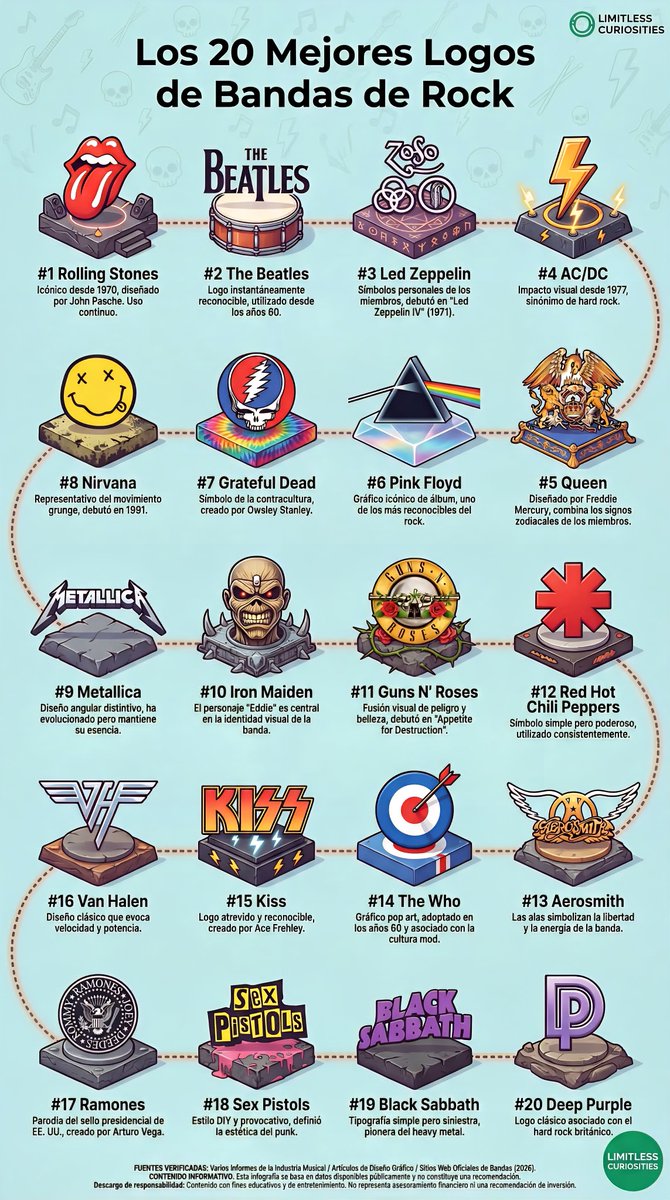
Top 20 Iconic Rock Band Logos That Define Music History
1. The Rolling Stones’ Tongue and Lips Logo
The Rolling Stones’ logo, featuring a bold red tongue licking out from a pair of lips, symbolizes rebelliousness and raw energy. Designed in 1971 by John Pasche, this image has become synonymous with rock ‘n’ roll attitude, instantly recognizable on album covers, merchandise, and stage props. Its simplicity and daring design perfectly capture the band’s edgy sound and fearless persona.
2. The Beatles’ Famous Drum Logo
While the Beatles’ logo isn’t just a single symbol, their iconic “drop T” logo on the Abbey Road cover and the stylized badge featuring the band’s name embedded inside a colorful apple have become icons of music history. Their influence on music branding extended through their album art designs, blending creativity and simplicity that continues to inspire artists today.
3. Led Zeppelin’s Zeppelin Airship
An elegant, minimalist depiction of a helium Zeppelin airship, the Led Zeppelin logo symbolizes adventure, exploration, and the pioneering spirit of rock. Designed by James Patrick Dunne, this logo is both timeless and modern, capturing the essence of the band’s genre-blending sound and their penchant for pushing musical boundaries.
4. AC/DC’s Thunderbolt and Lightning
The electrifying lightning bolt splitting the band’s name is a core symbol of raw power and energy. Introduced in the 1970s, the AC/DC logo encapsulates the band’s high-voltage performances and explosive music style. It’s a straightforward yet impactful visual that has earned its place as one of rock’s most recognizable images.
5. Queen’s Crown Emblem
Queen’s logo is a regal crest featuring zodiac signs and symbols that represent each band member—Leo, Cancer, and Pisces—highlighting the band’s grandeur and theatrical flair. Designed by Freddie Mercury and artist Richard Hartness, this emblem embodies royalty, sophistication, and the majestic quality of Queen’s musical legacy.
6. Pink Floyd’s Prism and Rainbow
Pink Floyd’s prism logo, featured on The Dark Side of the Moon album, is a vibrant triangle dispersing a spectrum of colors. Created by Storm Thorgerson, this design reflects themes of light, sound, and perception, capturing the band’s experimental spirit and philosophical depth.
7. Grateful Dead’s Steal Your Face Skull
Their logo, a stylized skull with a lightning bolt, symbolizes the band’s love of improvisation and psychedelic experience. Created by Bob Thomas, the “Steal Your Face” logo has become a staple at music festivals and in countercultural movements, representing freedom and musical transcendence.
8. Nirvana’s Smiley Face
Kurt Cobain’s Nirvana introduced a simple, yet iconic yellow smiley face with crossed-out eyes. This logo embodies grunge’s rebellious attitude, anti-establishment sentiment, and the band’s influence in shaping ’90s alternative culture.
9. Metallica’s M and Bullet Logo
Metallica’s distinctive logo features a stylized ‘M’ with sharp edges and a metal bullet motif. Designed in 1984, it reflects the band’s aggressive sound and heavy metal identity, making it a staple symbol for the genre.
10. Iron Maiden’s Death Mask and Logo
Iron Maiden’s logo, often accompanied by their mascot Eddie’s terrifying face, has a gothic flair rooted in horror imagery. Created by Derek Riggs, the logo’s serpentine font and the menacing figure epitomize the band’s dark, theatrical style.
11. Guns N’ Roses’ Dagger and Roses
The emblem combines a dagger piercing through roses, representing a balance of danger and beauty. Designed by Billy White Jr., this logo embodies the band’s hard-edged attitude mixed with melodic elements, aligning with their rebellious image.
12. Red Hot Chili Peppers’ Band’s “Amoeba” Logo
Throughout their career, the Red Hot Chili Peppers have used various logos, but the most iconic features their stylized asterisk symbol, often called the “Star of Affinity.” Its vibrant colors symbolize their energetic and eclectic musical style.
13. Aerosmith’s Wings
Aerosmith’s band logo features curved wings, evoking a sense of freedom and high-flying rock. Designed in the early days, it captures the band’s charismatic swagger and enduring legacy in rock history.
14. The Who’s Target Logo
Minimalistic yet striking, The Who’s logo features a simple bullseye target, symbolizing precision, focus, and their powerful sound. This imagery became central to their branding during the ‘60s and ‘70s.
15. Kiss’ Flaming Logo
The glam rock band Kiss is famous for their flamboyant, blood-spattered stage persona, and their logo is equally bold. The logo’s sharp, dripping letters echo their theatrical performances and larger-than-life presence.
16. Van Halen’s VH Monogram
The intertwined “V” and “H” monogram is a sleek, minimalist symbol for Van Halen. It’s often seen on album covers and merchandise, representing their innovative guitar riffs and energetic concerts.
17. Ramones’ Crest and Logo
Often called the “Eagle Logo,” the Ramones’ insignia features an eagle clutching a baseball bat, set against a circular crest. Designed as a homage to the U.S. seal, it embodies punk rock’s rebellious roots and patriotic spirit.
18. Sex Pistols’ Anarchy Symbol
The Sex Pistols’ logo incorporates a distinctive, rough-looking typeface with an embedded “Anarchy” symbol, capturing punk’s anti-establishment ethos. It remains a bold visual statement of rebellion.
19. Black Sabbath’s Cross and Logo
Black Sabbath’s logo features a bold, ominous cross, tying into their dark and heavy sound. The logo’s stark design reflects the band’s influence on heavy metal’s evolution.
20. Deep Purple’s Union Jack and Dragon
Deep Purple’s logo often includes British symbols like the Union Jack flag and mythical dragons, emphasizing their British roots and classic rock mastery. Their image exudes strength, tradition, and musical excellence.
This selection of rock logos from across decades continues to inspire new generations of musicians, fans, and designers. Their powerful imagery embodies the spirit of rock music—rebellion, innovation, and timeless style—making these logos not just symbols, but legends in their own right.
 ChatGPT
 Perplexity
 Gemini AI
 Grok AI