Select Language:
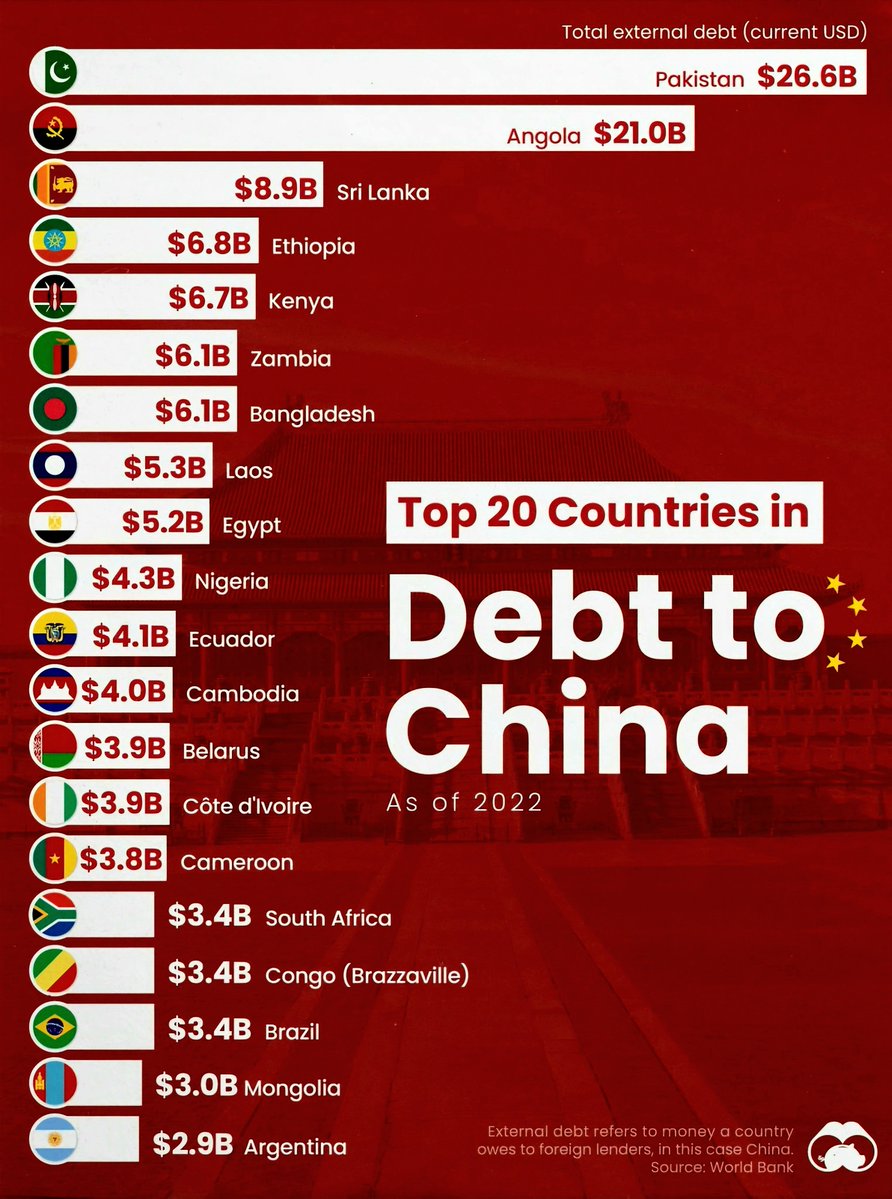
As global economic dynamics shift, the relationship between countries and their debt to China has become increasingly important. Here’s a look at the top 20 countries with the largest debts to China as of 2022.
Pakistan – $26.6B
With the largest debt to China, Pakistan finds itself deeply intertwined with Chinese investments, particularly in infrastructure projects.
Angola – $21.0B
Angola’s significant debt underscores its dependence on Chinese loans to support its development, especially in the oil sector.
Sri Lanka – $8.9B
Sri Lanka’s financial ties to China have sparked controversy, particularly surrounding the debt port project in Hambantota.
Ethiopia – $6.8B
Ethiopia has leveraged Chinese loans for major projects, including roads and railways, aiming to bolster its growth.
Kenya – $6.7B
Kenya’s partnership with China is seen through its notable investments in transportation infrastructure, such as the Standard Gauge Railway.
Zambia – $6.1B
Zambia’s rising debt to China highlights its struggle to balance growth with financial sustainability.
Bangladesh – $6.1B
Bangladesh has tapped into Chinese funding for various infrastructure projects, reflecting its rapid economic growth.
Laos – $5.3B
Laos relies heavily on Chinese investment for its energy and transportation sectors, resulting in a substantial debt load.
Egypt – $5.2B
Egypt’s growing ties with China include investments in energy and infrastructure, significantly contributing to its debt.
Nigeria – $4.3B
Nigeria’s debt to China is primarily driven by infrastructure projects aimed at driving development in the nation.
Ecuador – $4.1B
Ecuador’s financial relationship with China is crucial, particularly for funding projects in oil and energy.
Cambodia – $4.0B
Cambodia’s increasing debt to China reflects a strong reliance on Chinese investment for infrastructure projects.
Belarus – $3.9B
Belarus, with its close ties to China, has used loans to support its economy and key infrastructure.
Côte d’Ivoire – $3.9B
Côte d’Ivoire’s debt to China emphasizes the need for financing in its infrastructure development.
Cameroon – $3.8B
Cameroon has sought Chinese funding to support its development projects, accumulating significant debt in the process.
South Africa – $3.4B
South Africa’s financial connection to China is characterized by loans for infrastructure and development.
Congo (Brazzaville) – $3.4B
Significant Chinese investments in infrastructure have led to Congo’s growing debt burden.
Brazil – $3.4B
Brazil’s relationship with China has evolved over the years, significantly impacting its debt landscape.
Mongolia – $3.0B
Mongolia’s debt to China largely reflects its reliance on Chinese financing for development projects.
Argentina – $2.9B
Argentina’s debt highlights the role of China in its economic strategy, particularly through infrastructure investments.
External debt represents the total amount of money that a country owes to foreign lenders, in this case, primarily China. The reliance on Chinese loans has raised questions about sustainability and dependency among these nations. As countries navigate their financial futures, understanding these debts will be crucial for their economic strategies.
 ChatGPT
 Perplexity
 Gemini AI
 Grok AI