Select Language:
The World’s Largest Countries by Land Area in 2025
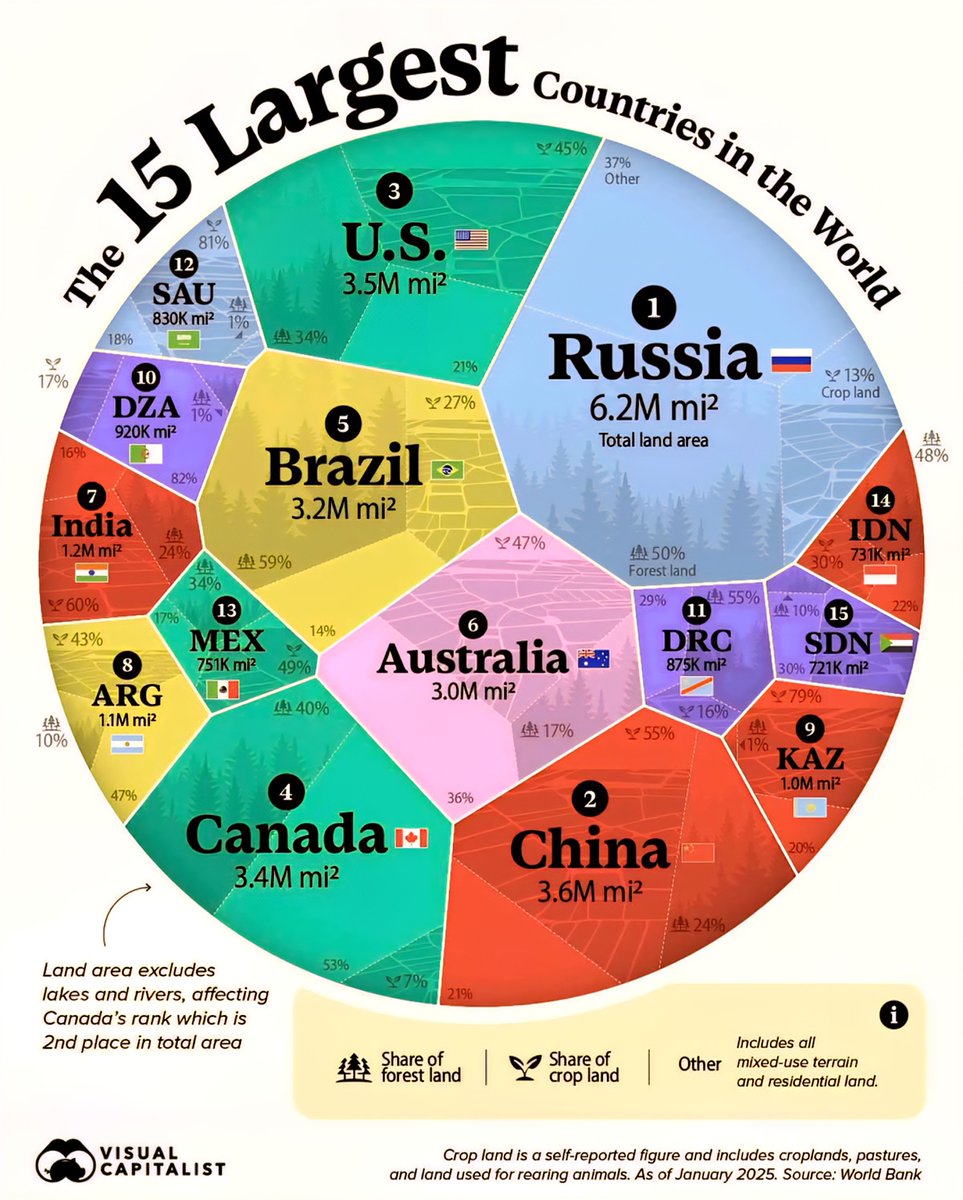
When it comes to vast expanses of land, some nations stand out for their sheer size, stretching across multiple continents and climates. As of 2025, here are the top 15 largest countries in the world by land area, excluding lakes and rivers, providing a comprehensive look at the world’s biggest sovereignties.
Russia Maintains Its Lead as the Largest Country
Russia continues to hold its position as the largest country on Earth, covering approximately 6.2 million square miles. Its expansive landscape spans Eastern Europe and northern Asia, boasting a diverse array of climates—from arctic tundra to lush forests. Russia’s vast lands contribute significantly to global resources, including oil, natural gas, and minerals, making it a strategic powerhouse in international geopolitics.
China Ranks Second, Showcasing Its Landmass and Cultural Richness
With an area of about 3.6 million square miles, China remains the second-largest country globally. Its extensive territory encompasses deserts, mountains, rivers, and fertile plains. The country’s immense landmass supports a population of over 1.4 billion and includes vibrant cities like Beijing and Shanghai, along with rural farming communities. China’s diverse geography fuels its economic strength and cultural diversity.
The United States Holds the Third Spot with Over 3.5 Million Square Miles
The United States covers roughly 3.5 million square miles, ranking third among the world’s largest nations. Its expansive territory includes a broad range of landscapes—from the deserts of Nevada to the forests of the Pacific Northwest, and the plains of the Midwest to the Appalachian Mountains. The U.S. is renowned for its agricultural productivity, technological innovation, and cultural influence across the globe.
Canada’s Land Area Outstrips Its Lakes
Canada, often considered the second-largest when accounting for lakes and rivers, clocks in at approximately 3.4 million square miles of land area. It boasts vast wilderness, dense forests, and numerous national parks. Its extensive landmass supports a diversified economy centered around natural resources, with a population primarily concentrated in urban centers along the US border.
Brazil Ranks Fifth, Dominating South America
Covering around 3.2 million square miles, Brazil is the largest country in South America and the fifth-largest worldwide. Its Amazon rainforest is the world’s largest tropical forest, playing a vital role in global climate regulation. Brazil’s varied terrain includes grasslands, wetlands, mountains, and a lengthy Atlantic coastline, supporting rich biodiversity and agriculture.
Australia: The Largest Island and a Continent
With a land area of approximately 3.0 million square miles, Australia is both a continent and a country. Its arid Outback, tropical rainforests, and extensive coastlines make it unique. Despite its size, Australia has a relatively small population, with major cities like Sydney and Melbourne acting as economic and cultural hubs.
India’s Expanding Territory
India spans about 1.2 million square miles, making it the eighth-largest country. It features diverse landscapes, including the Himalayas, deserts, and fertile plains. As one of the most populous nations globally, India plays a critical role in regional economics and geopolitics, with rapid urbanization and infrastructural growth.
Argentina’s Vast South American Landscape
At roughly 1.1 million square miles, Argentina is the eighth-largest country. Its landscape includes the Andes mountains, grasslands of the Pampas, and glaciers of Patagonia. The country has a rich agricultural sector and a vibrant cultural scene, making it a significant player in South American affairs.
Kazakhstan: The Largest Landlocked Nation in Asia
Covering about 1.0 million square miles, Kazakhstan is the ninth-largest country. Its terrain features steppes, deserts, and mountains, with significant natural resources like oil and minerals. Kazakhstan’s strategic location makes it vital for Eurasian trade and energy transit routes.
Algeria’s Desert Lands and Beyond
Algeria, with approximately 920,000 square miles, is Africa’s largest country. Its vast territory includes parts of the Sahara Desert, Mediterranean coastlines, and mountain ranges. Algeria plays an essential role in African geopolitics, largely driven by its oil and gas reserves.
The Democratic Republic of the Congo’s Rich Biodiversity
Spanning 875,000 square miles, DR Congo features dense rainforests, river systems, and diverse wildlife. Its landmass supports numerous ecological zones and is crucial for conservation efforts and regional stability in Central Africa.
Saudi Arabia: The Middle East’s Largest Country
Covering about 830,000 square miles, Saudi Arabia is characterized by vast deserts and oil-rich valleys. Its geographic scope influences its economic power and geopolitical relations within the Middle East.
Mexico’s Diverse Landscapes
Approximately 751,000 square miles in size, Mexico boasts mountains, deserts, forests, and extensive coastlines. Its strategic location and cultural heritage make it a vital link between North and Central America.
Indonesia’s Archipelagic Sprawl
With around 731,000 square miles, Indonesia is the largest island country worldwide, comprising thousands of islands. Its tropical climate, diverse ecosystems, and strategic maritime position make it a key global player.
Sudan’s Expansive Landmass
Covering 721,000 square miles, Sudan features deserts, hills, and river systems. Its geographic size impacts regional politics and development in northeastern Africa.
Note: While Canada ranks second globally in total area (including lakes and rivers), it is the fourth largest when excluding these inland waters. Crop land figures are self-reported and include croplands, pastures, and land used for livestock rearing, as reported in January 2025.
Data Source: World Bank via Visual Capitalist
This detailed overview highlights how the physical size of nations shapes their economies, cultures, and geopolitical importance in 2025.
 ChatGPT
 Perplexity
 Gemini AI
 Grok AI