Select Language:
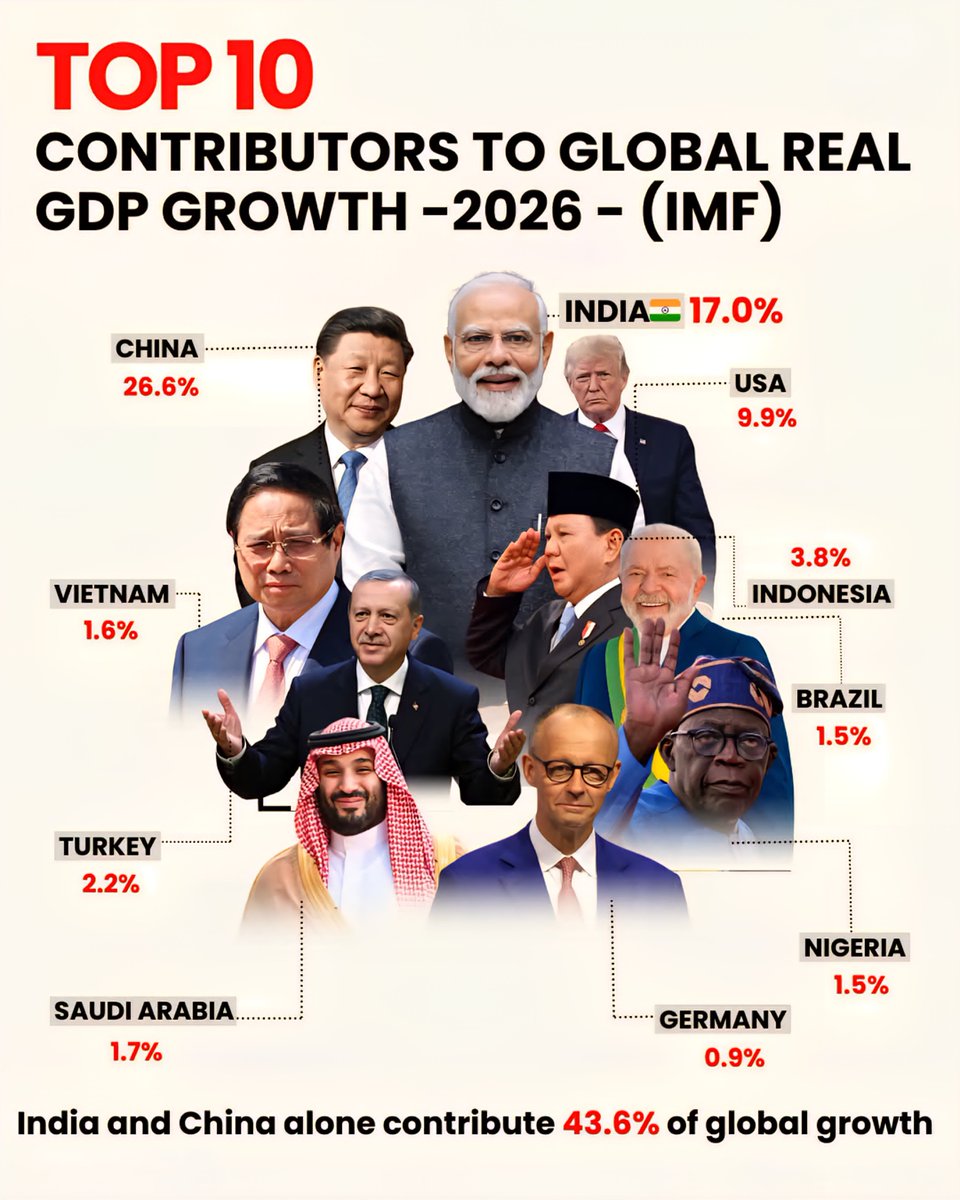
Top 10 Countries Driving Global Economic Growth in 2025
1. China Claimed Over a Quarter of Global Growth
Leading the charge in 2025, China accounted for an astounding 26.6% of the world’s gross domestic product (GDP) increase. Its rapid technological advancements, infrastructure investments, and an expanding middle class have powered its economy to new heights. China’s focus on renewable energy and electric vehicle industries continues to attract international investments, solidifying its position as the world’s leading economic engine.
2. India Continues Its Rapid Ascent
India contributed 17.0% to global GDP growth this year, reaffirming its status as a major emerging market. Massive infrastructure projects, digital economy expansion, and a youthful workforce have propelled the nation forward. Additionally, reforms in manufacturing and a rise in exports have supported India’s ongoing economic trajectory, positioning it as a key player on the global stage.
3. United States Maintains Steady Growth
The United States accounted for 9.9% of global GDP growth in 2025. The economy’s resilience is fueled by technological innovation, strong consumer spending, and robust corporate investments. Tech giants and startups alike continue to shape global markets, while the U.S. remains a hub for financial services and advanced manufacturing, fueling continued growth.
4. Indonesia’s Economic Boom
Indonesia contributed 3.8% to global GDP growth, driven by a booming consumer market and increased industrial activity. The country’s government focused on infrastructure development, including transportation and energy sectors, to sustain its economic momentum. Its strategic position in Southeast Asia plays a critical role in regional trade and investment.
5. Turkey’s Growing Economy
Turkey’s economy grew by 2.2%, supported by infrastructural developments, tourism rebound, and steady domestic consumption. Despite regional geopolitical challenges, Turkey has managed to diversify its industries, especially in manufacturing and technology sectors, fostering a resilient growth pattern.
6. Saudi Arabia Diversifies Beyond Oil
Saudi Arabia accounted for 1.7% of global growth, primarily thanks to its Vision 2030 initiative to diversify the economy. Investments in entertainment, tourism, and renewable energy have garnered international attention. The nation is increasingly positioning itself as a regional business hub and a tourist destination.
7. Vietnam’s Expanding Export Sector
Vietnam contributed 1.6% to global growth with impressive gains in manufacturing, especially electronics and textiles. Its strategic trade agreements and low labor costs continue to attract foreign companies seeking to diversify supply chains. The country is rapidly becoming an Asian economic powerhouse.
8. Brazil and Nigeria Lead in South America and Africa
Brazil and Nigeria each contributed 1.5% to worldwide growth. Brazil’s agricultural exports and renewable energy investments have underpinned its economic expansion, while Nigeria benefits from its rich natural resources, particularly oil and gas, and improvements in infrastructure and technology.
9. Germany’s Steady Innovation and Manufacturing
Germany’s contribution stood at 0.9%, driven by innovations in automotive and industrial machinery. Its strong focus on research and development, sustainability, and integrating digital technologies into manufacturing processes ensures its continued role as Europe’s economic powerhouse.
Summary
In 2025, these nations collectively account for the majority of global real GDP growth, illustrating a shift towards emerging markets and continued resilience among developed economies. These trends emphasize the importance of technological innovation, infrastructure development, and diversification strategies in maintaining economic momentum on a worldwide scale.
Source: IMF 2026
 ChatGPT
 Perplexity
 Gemini AI
 Grok AI