Select Language:
Countries That May Be Legally Required to Arrest Putin and Netanyahu in 2025
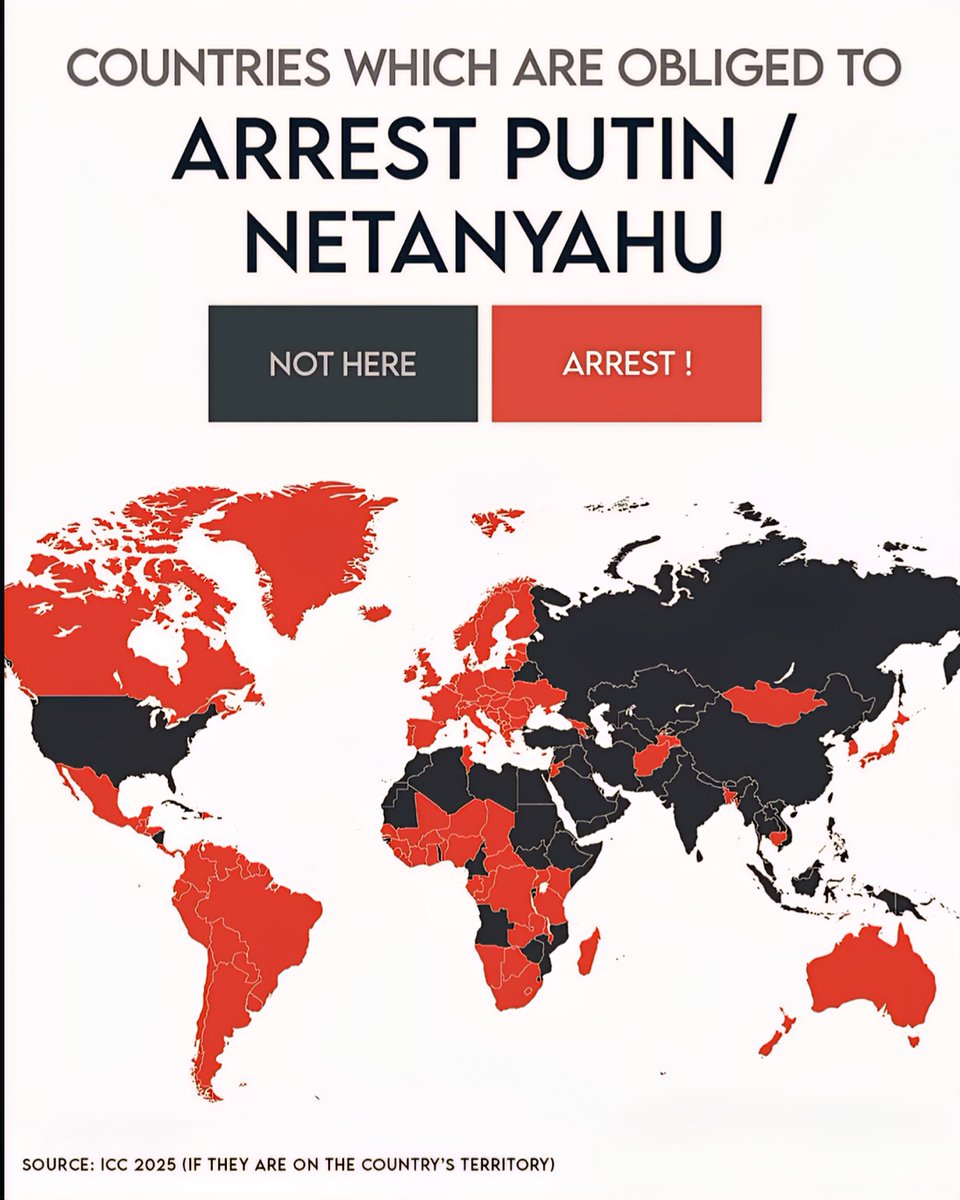
1. International Warrants and the Role of the ICC
Since 2025, Interpol and the International Criminal Court (ICC) continue to play pivotal roles in international justice. The ICC has issued warrants of arrest for prominent world leaders, notably Russian President Vladimir Putin and Israeli Prime Minister Benjamin Netanyahu, due to allegations of war crimes and offenses against humanity. Countries that are signatories to the Rome Statute are legally obliged to cooperate with the ICC, including executing arrest warrants.
Many nations, especially those that are members of the ICC, find themselves legally bound to detain and surrender these leaders if they enter their jurisdiction. Countries like Germany, France, and Canada are among the prominent ICC member states with a legal obligation to act on these warrants, ensuring they uphold international justice standards.
2. The Legal Obligations of ICC Member States
Several countries around the world are bound by international agreements to apprehend individuals wanted by the ICC. Notably, the United Kingdom, Australia, South Korea, and Japan, which are signatories to the Rome Statute, are under legal obligations to cooperate with the ICC in executing arrest warrants related to war crimes, crimes against humanity, or genocide.
For instance, in 2025, if Putin or Netanyahu step on their soil, these nations are compelled by international law to detain and transfer them to The Hague for trial processing. This legal obligation stems from their commitment to uphold international justice and prevent impunity for crimes of such severity.
3. European Countries and Their Obligations in Practice
European Union countries and others in Europe have historically shown strong cooperation with the ICC. Nations such as Germany, France, and the Netherlands, in particular, have active legal procedures to enforce arrest warrants for these high-profile figures.
These nations also cooperate through bilateral agreements and adherence to European Union regulations, further strengthening their legal stance. As recent as 2025, these countries continue to emphasize their commitment to international law by actively pursuing the arrest of individuals convicted of serious crimes, regardless of their official positions.
4. Certain Non-Member States with International Responsibilities
While some countries are not members of the ICC, they still recognize specific treaties and international agreements that obligate them to cooperate in the arrest and surrender of wanted persons. Canada and New Zealand, for instance, are not ICC members but have committed to international norms that require them to respect arrest warrants issued by international courts.
In 2025, these nations have expressed intentions to uphold their international obligations, meaning they could potentially arrest Putin or Netanyahu if they set foot on their soil. Such steps would likely involve diplomatic negotiations and adherence to customary international law.
5. Countries with No Legal Requirement but Significant Political Implications
Some countries do not have legal obligations to arrest these leaders but face considerable political pressure to do so. For example, the United States, which is not an ICC member, still maintains a complex diplomatic stance.
While no legal requirement exists for the U.S. to arrest Putin or Netanyahu, domestic and international advocacy could influence decisions. In 2025, pressure from human rights organizations and international bodies continues to grow calling for accountability, which might lead to voluntary cooperation or diplomatic negotiations, albeit outside the realm of legal compulsion.
6. The Impact of International Law and Political Will
Though legal obligations are pivotal, actual enforcement depends heavily on political will. Several factors influence whether countries choose to arrest these leaders:
- Diplomatic Relations: Countries may prioritize diplomatic ties over legal obligations, especially if their leaders have strategic alliances.
- National Legal Frameworks: Some countries’ statutes might lack provisions to enforce international warrants effectively.
- Security Concerns: High-profile figures like Putin and Netanyahu may pose security threats if they are detained, influencing officials’ decision-making.
In 2025, some nations may navigate these complexities carefully, balancing legal duties with strategic interests, which could result in varied enforcement actions globally.
7. The Future of International Justice and Enforcement
While international law provides the framework for prosecuting global leaders accused of grave crimes, enforcing these laws remains complex. The case of Putin and Netanyahu underscores the ongoing debate about accountability for powerful individuals, regardless of their political status.
In 2025, the international community’s commitment to justice continues to evolve. Strengthening cooperation among nations, bolstering international legal mechanisms, and increasing diplomatic pressures are expected to play central roles in ensuring that these leaders face justice if they enter jurisdictions willing or compelled to act.
In summary, a combination of international mandates, legal obligations, and political considerations shapes whether countries are required to arrest leaders like Putin and Netanyahu in 2025. Their legal and diplomatic contexts continue to evolve, influencing the possibility and likelihood of their detention in various nations worldwide.
 ChatGPT
 Perplexity
 Gemini AI
 Grok AI