Select Language:
The Global Price of the iPhone Air in 2025
When Apple announced the release of the iPhone Air in 2025, tech enthusiasts and consumers worldwide were eager to see how the latest model would impact their budgets. The iPhone Air has quickly become a popular choice, thanks to its sleek design and innovative features. However, the cost varies significantly depending on the country. Here’s a detailed look at the price differences across the globe and what you might expect to pay for this cutting-edge device in 2025.
1. The United States: Breaking the Bank or a Bargain?
In the U.S., the iPhone Air has a retail price starting at $999 for the base model with 128GB of storage. Apple’s pricing strategy keeps the cost relatively consistent with previous models, but the premium design and new features justify the price tag for many consumers. The U.S. market benefits from lower taxes and import duties, making it one of the more affordable regions to purchase the device.
2. Canada: A Slight Price Increase
Canadians can expect to shell out approximately CAD 1,299 for the base model. The higher cost is primarily due to import tariffs and added taxes. Nonetheless, Canadians often enjoy exclusive pre-order options and local promotions to help offset the expense. The currency exchange rate also influences the final price, making the device slightly more costly compared to U.S. pricing.
3. UK & Europe: Premium Prices for Tech Enthusiasts
In the United Kingdom, the iPhone Air starts at around £1,099. Across the European Union, prices range from €1,149 to €1,199, depending on the specific country and local taxes. European consumers tend to pay a premium for the latest Apple device, partly due to VAT and import duties, but the widespread availability and advanced infrastructure make it a popular choice.
4. Asia: Competitive Pricing Influences
In China and India, the cost of the iPhone Air varies significantly. In China, the starting price is approximately ¥7,999, whereas in India, it can go as high as INR 110,000 due to import duties and taxes. Despite this, local promotions, exchange rates, and online sales often help reduce costs, making the device slightly more accessible than in some Western markets.
5. Australia & New Zealand: Near-Premium Pricing
Australians and Kiwis will find the iPhone Air retailing at about AU$1,599 and NZ$2,299, respectively. Similar to other regions, taxes and import duties impact the final price. However, local carriers often offer installment plans and discounts to ease the purchasing process for consumers eager to own the new device.
6. Latin America & the Middle East: The Most Expensive Markets
In Latin America, particularly Brazil and Mexico, the price skyrockets to over $1,300 USD when converted from local currencies, reflecting hefty import tariffs and taxes. The Middle East, especially in countries like the UAE, has prices around AED 3,899 due to high shipping costs and import duties. Consumers in these regions often face long wait times and limited options but benefit from the latest tech.
7. Factors Influencing the Cost
Several factors contribute to the substantial variances in the iPhone Air’s pricing across countries:
- Import Taxes and Duties: Different countries impose varying tariffs that impact retail prices.
- Value-Added Tax (VAT): Countries with higher VAT tend to have more expensive iPhones.
- Currency Exchange Rates: Fluctuations directly affect local pricing.
- Local Promotions and Carrier Deals: Some regions offer discounts or installment plans, reducing upfront costs.
- Availability and Demand: High demand in certain markets may lead to higher prices and wait times.
8. What Does the Price Tag Mean for Consumers?
While the cost of the iPhone Air remains high worldwide, many consumers see it as a worthwhile investment given its advanced technology, durability, and brand reputation. Apple continues to deliver innovation with each new release, and the pricing reflects the premium quality and extensive ecosystem that comes with the device.
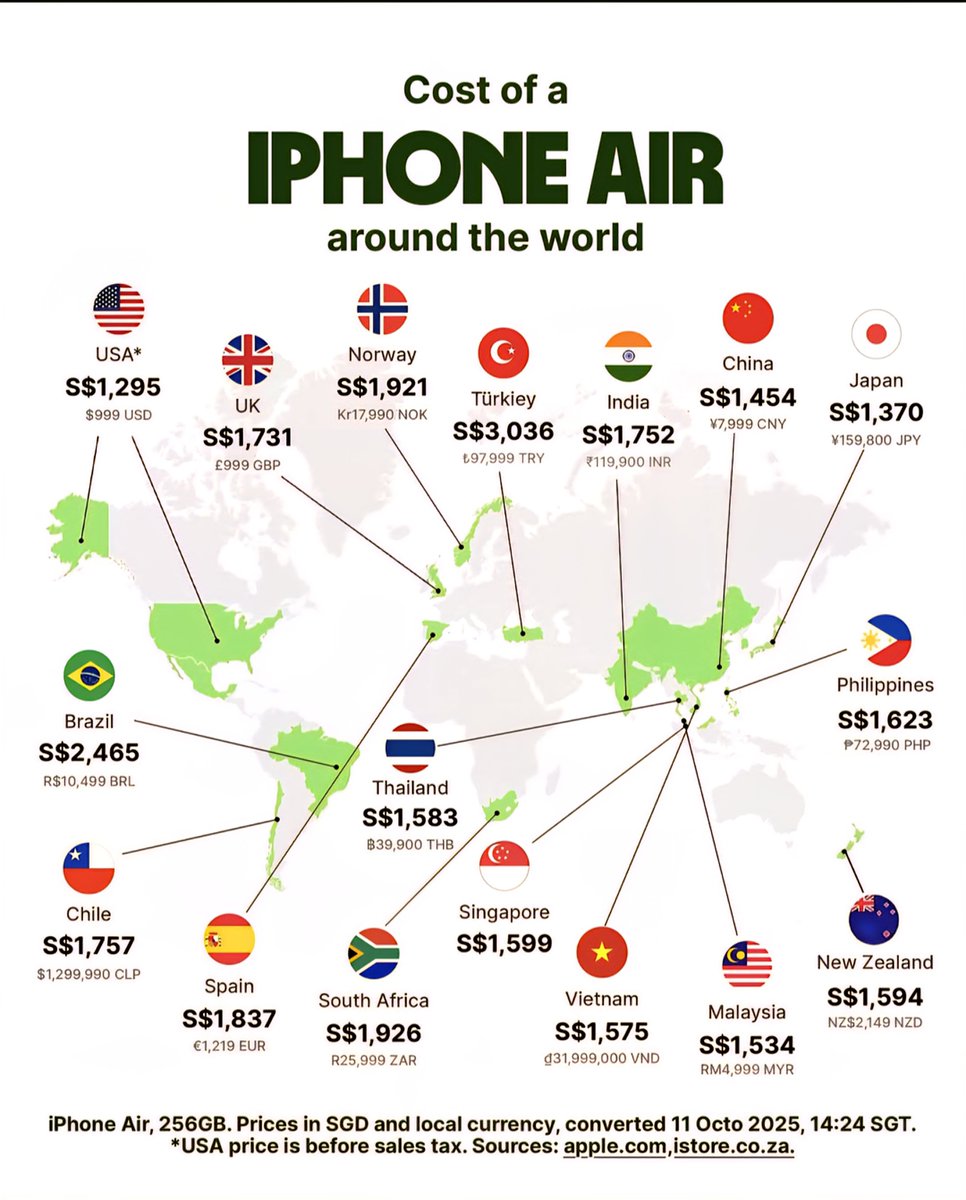
The global landscape for the iPhone Air in 2025 demonstrates stark contrasts—what might be affordable in one country could be prohibitively expensive in another. Buyers must weigh the costs against the device’s benefits and local availability, making the purchasing decision as personalized as the device itself.
 ChatGPT
 Perplexity
 Gemini AI
 Grok AI