

Select Language:
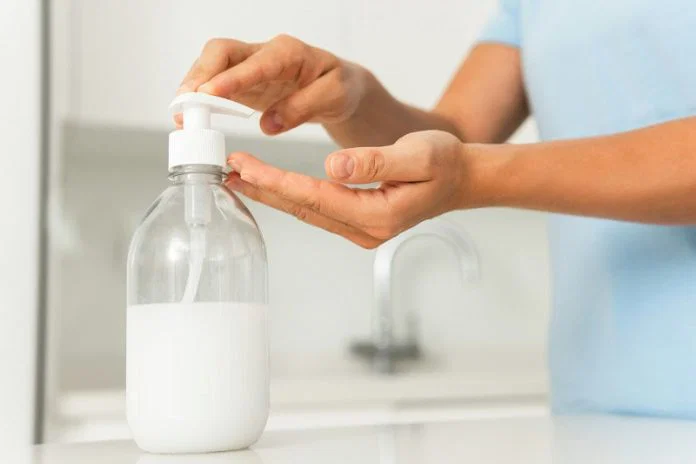
A common experience when adding water to a nearly empty soap dispenser is observing an unusual effect. Instead of blending smoothly, the water often shoots straight through the remaining soap, creating a weak spray. This phenomenon is known as “viscous fingering,” and it occurs when a thin, less viscous liquid pushes into a thicker liquid within a confined space. Tiny, finger-like projections form at the interface, leading to unstable flow patterns.
Researchers at the University of Chicago have recently uncovered a new method to slow down and delay the development of these fluid “fingers.” Their study, published in Science Advances, could lead to improvements in technologies such as oil recovery and underground carbon storage.
Viscous fingering is more than just a scientific curiosity; it impacts many industrial and environmental processes. For example, energy companies sometimes inject carbon dioxide underground to help extract oil. However, when the gas forms unstable fingers, it can pierce through the oil instead of moving it efficiently, trapping significant amounts underground. The same issue can hinder efforts to store carbon dioxide underground as part of climate change mitigation strategies.
Decades of research have examined viscous fingering because it exemplifies natural pattern formation. Similar patterns appear in river systems, tree roots, and cracks spreading through materials. The instability depends on several factors, such as how easily the two liquids mix, the difference in their viscosities, and the speed at which the thinner liquid is injected. When the interface between the fluids becomes unstable, it typically forms waves and branching fingers.
In this recent study, scientists aimed to determine if altering the shape of the boundary where the liquids meet could reduce the formation of these fingers. They conducted experiments using two flat plates separated by a narrow gap, filling the space with a thick liquid and injecting a thinner one through a small opening. As expected, finger-like projections eventually appeared.
Next, they repeated the experiment but introduced lateral movement to one of the plates, a process called shearing. This shifted the shape of the boundary between the liquids, transforming a sharp, blunt front into a more pointed and smoother boundary. The results were remarkable: the faster and more extensive the shearing movement, the longer it took for fingers to develop, and once they appeared, they grew more slowly compared to the initial experiments.
This research indicates that the shape of the boundary itself significantly influences the stability of the fluid interface. By controlling this shape, engineers could potentially design more effective systems for moving fluids underground or through industrial machinery. Improved management of viscous fingering could enhance oil recovery techniques and increase the safety and efficiency of carbon storage underground.
Although further research is needed before these findings can be practically implemented, this study marks an important step toward understanding and managing complex behaviors of fluids in various environments.
 ChatGPT
 Perplexity
 Gemini AI
 Grok AI

