Select Language:
After ending up in a medieval world filled with corpses and clerics, you find yourself managing a cemetery and church in Graveyard Keeper. There’s a lot to do if you want to find your way back home, and we’ll guide you through the main steps. First, mastering autopsies is crucial, and it’s trickier than it seems.
To perform a successful autopsy, you need to understand how bodies decay, manage your time well, and sometimes rely on luck. Here’s everything you need to know to do a proper autopsy and start burning bodies with impurities. Use this as your guide to progress on your way home.
How to Get More Corpses
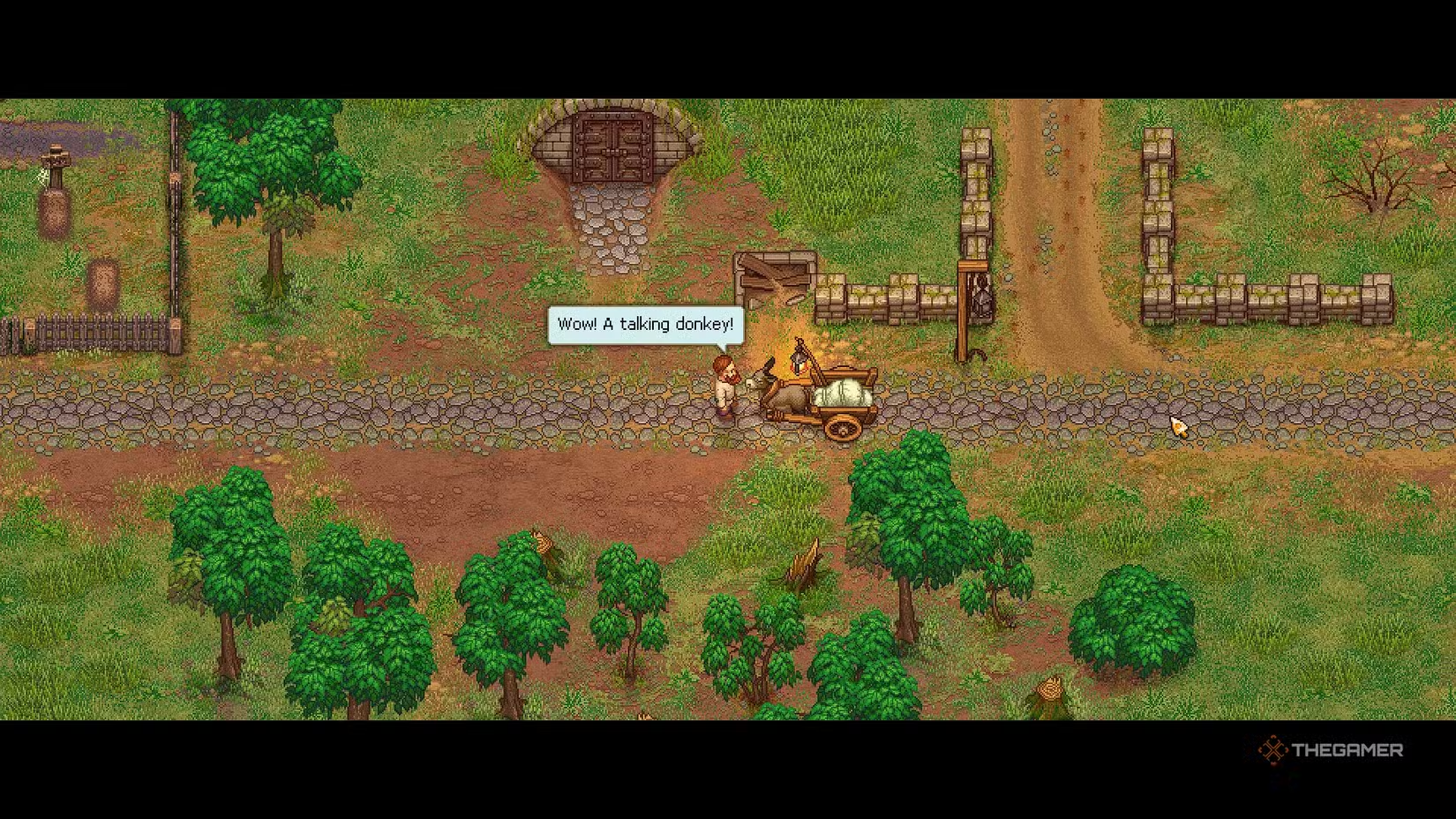
There are only two ways to acquire bodies for the cemetery: you can either exhume bodies that are already buried or wait for the Donkey to deliver new ones, provided the morgue isn’t full.
If the cemetery is at capacity, no new bodies will arrive. You’ll need to exhume some of the older bodies to make room, expand the cemetery grounds, or choose to cremate bodies instead of burying them.
How to Complete an Autopsy
Once a body arrives, you have a limited timeframe to prepare it for burial. Fresh corpses are at 100% and will decay quickly once exposed to the environment. Pick up the body and take it inside the morgue. Place it on the preparation table to begin the autopsy. As you research more technology, you’ll unlock additional options for removing parts and slowing decomposition.
The goal is to end up with a body that has only white skulls, and as many as possible. Achieving this requires making as few mistakes as possible—which can be tough since some outcomes depend partly on luck. In the base game, the maximum skulls you can get from one corpse is 12, but with DLCs, this can increase to 16 or even 26.
What to Remove During an Autopsy
| Body Part | Effect |
|---|---|
| Blood | Removes a red skull, adds a white skull |
| Fat | Removes a red skull, adds a white skull |
| Bone | No effect |
| Brain | Randomly removes red or white skulls. Remove at your risk. |
| Heart | Same as brain; risk involved. |
| Intestines | Same as brain and heart; risky removal. |
| Dark Brain | Removes four red skulls and one white skull. |
| Dark Heart | Removes four red skulls and one white skull. |
| Dark Intestine | Same as Dark Brain and Dark Heart; removes four red skulls plus one white skull. |
What to Leave During an Autopsy
| Body Part | Effect |
|---|---|
| Skin | Adds a red skull, removes a white skull |
| Fat | Adds a red skull, removes a white skull |
| Bone | No effect |
| Brain | Risky; removals are random in red or white skulls. Proceed cautiously. |
| Heart | Same as brain; can remove red or white skulls at random. |
| Intestines | Same as other parts; risk of removing skulls randomly. |
| Dark Brain | Removes four red skulls and one white skull. |
| Dark Heart | Same as Dark Brain; removes four red and one white skulls. |
| Dark Intestine | Similar to Dark Brain and Dark Heart; removes four red skulls, one white. |
Tip: You can add parts back afterward to undo accidental removals.
Warning: Surgeon’s Mistake can occur randomly during the autopsy, which cannot be undone and will lower the overall quality of the body.
Every 10% loss of freshness results in a sickly green skull, rendering the corpse irreparable and of lower quality. To prevent decomposition, place bodies on pallets to slow decay or use injections to restore or halt decomposition altogether.
How to Dispose of a Body
Once the autopsy is complete, there are several disposal options. The most common method is burying the body in the cemetery and decorating the plot to improve your cemetery’s rating. As you advance, you can unlock cremation to turn remains into ashes on a funeral pyre.
Another option is to revive the corpse as a zombie to work as a laborer at the cemetery. To do this, take the body to a resurrection table and create a zombie. While you won’t receive a certificate for this, it provides free, reliable work, but only if you have the Breaking Dead DLC.
The quickest but least profitable method is tossing the body into the river. This results in a financial loss, so it’s best to salvage what parts you need before dumping, especially if the autopsy results are beyond saving, making this an option for when everything else has failed.
 ChatGPT
 Perplexity
 Gemini AI
 Grok AI