
Select Language:
Invincible VS is finally here, letting you jump into intense 3v3 tag battles as your favorite characters from the show. You can pull off powerful combos, fight ruthlessly, and leave the arena stained with blood. The game is quite brutal, and we enjoy that aspect, even if it comes with some challenges that you’ll need to learn to overcome.
If you’re new to these exaggerated, over-the-top fighters—since many of them aren’t as common anymore—you’ll quickly see that almost every character has moves that seem almost unfair. You’ll need to figure out how to counter these or risk losing. But if you understand the basics, you should be ready to face most opponents.
Understanding The Basics
Before diving into complex mechanics, let’s cover some foundational rules. The game is a “three-button” fighter, meaning your attacks are made up of three simple moves: Light, Medium, and Heavy.
Because of this, combo building relies heavily on linking these attacks together in a sequence—like Light → Medium → Heavy—which then often ends with a special or super move if you have enough resources. For example, a basic combo might be: Light → Medium → Heavy → Special. This will work with all characters.
You also have access to two assist buttons, allowing you to call in teammates for extended combos, pressure, or setups, but those will be explained later. For now, focus on mastering your three basic attacks and how they work together.
Extending Combos
To make your combos more damaging, you can perform an uppercut (usually by pressing Heavy), which launches your opponent into the air. From there, you can follow up with air combos and spike them back down for extra damage.
A typical combo string could look like this:
Light → Medium → Heavy → Down Heavy (launch), then juggle with air attacks, and finish by knocking your opponent back down.
This approach works on every character and is great for practicing aerial setups. Once comfortable, start experimenting with special moves, assists, and longer combos.
Standard vs. Motion Inputs
Your controls can be set to Standard or Motion inputs. Standard replaces complex directional commands with simple one-direction commands for special moves, like just pressing → + Attack instead of Down→→ + Attack.
Using Standard is easier for beginners, but it causes about 10% less damage compared to full motion inputs. If you’re new to fighting games, sticking with Standard is fine. However, if you have a joystick or prefer more precise control, motion inputs are worth learning, especially since they deal more damage and give a more authentic feel.
You don’t need to switch to motion inputs, but if you want to maximize damage and have the right equipment, give it a try. Practice slowly—once you grasp basic attack strings, transitioning to motion controls will be much easier.
The Role of Assists
Assists are crucial. Each character has three assist options that can enhance your offense, extend combos, or create pressure. Your forward assist (→ Assist) and neutral assist are quick and have short cooldowns, while the backward assist (← Assist) is more powerful but takes longer to execute and has a longer cooldown.
Use assists strategically. For example, launching a projectile assist that bounces your opponent can set up combos or mix-ups. Since assist calls have cooldowns, plan your usage to avoid locking yourself out of helpful options. Calling assist in during your combo can open up new opportunities and keep your opponent guessing.
Defense Is Strong
While exploiting the game’s offensive tools may feel cheap or broken, there are also strong defensive options to help you reset and regain control. Use Push Blocks—by holding two buttons while blocking—to push your opponent back and create space.
You can also perform an Assist Breaker—calling an assist while under attack—at the cost of some of your Boost Gauge and your assist’s health, which can interrupt your opponent’s combo. Use this tool sparingly, as it’s a major gamble but can be worth it when you’re in a tough spot.
Learning Combos Is Key
Mastering combos is essential. You can alternate between normals and specials to keep your opponent on edge, like transitioning from normals into specials and back again for mix-ups and higher damage.
There are also auto combos, which are easy to perform by mashing a single button (e.g., multiple lights for a level 1 super). These are not optimal but can come in handy as quick finishers or if you’re new to fighting games.
Combo Limits:
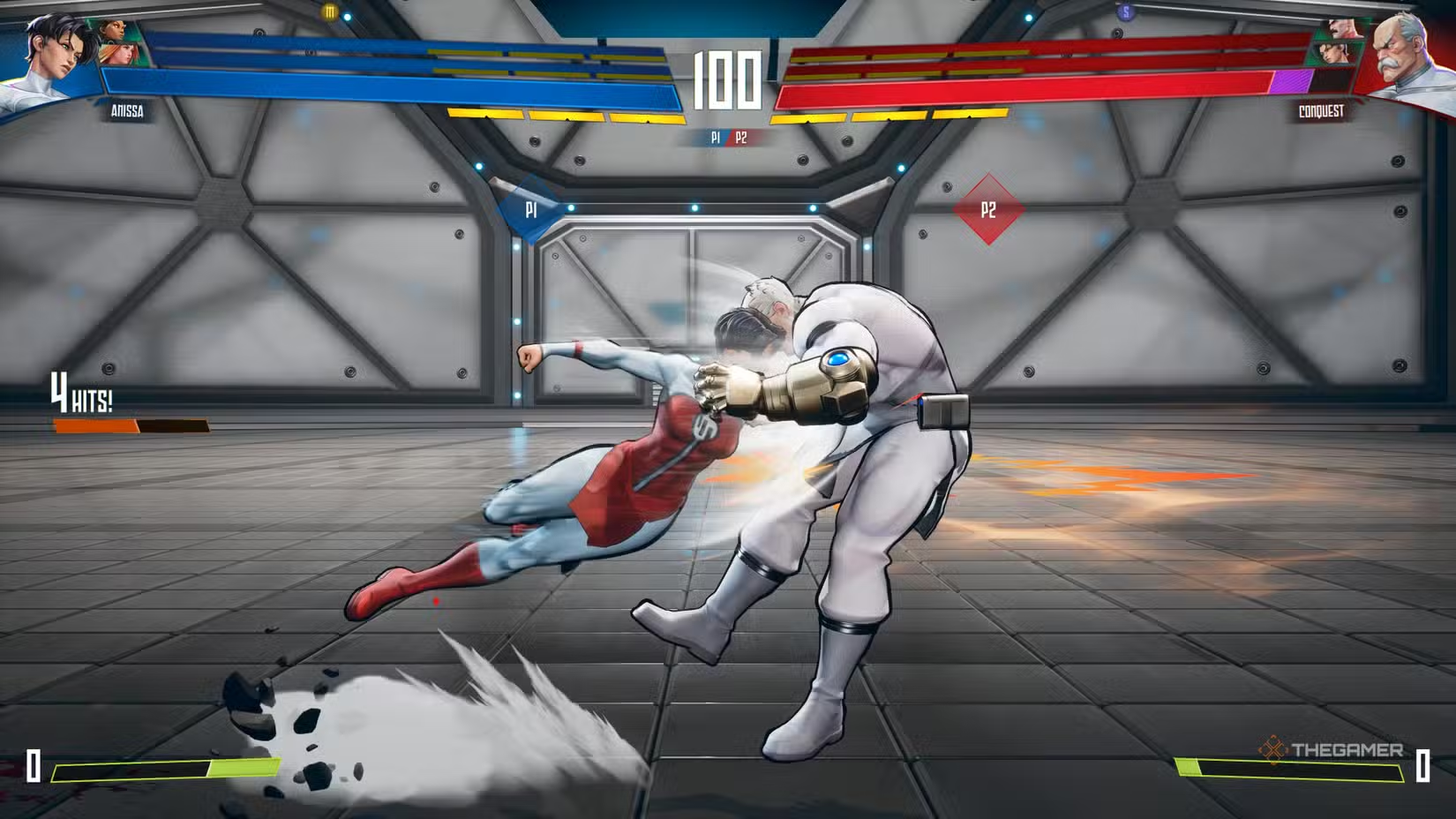
As your combo progresses, a small hit counter gauge underneath shows how many hits are left. When it flashes white and red, your opponent is about to recover—so aim to finish with a knockdown move or super to prevent a comeback.
Heroic Strikes and Special Counters
Your Heroic Strike is an armored reversal move executed by pressing Medium + Assist 1 while blocking. It allows you to counter attacks with armor, often turning the tide of battle. Using it drains half your Boost Gauge, so be careful.
You can also follow up a Heroic Strike with an assist, leading to full combos and significant damage, but opponents can respond with their own armored attacks if they see it coming. Practice timing in training mode to make the most of these counters.
Managing Your Boost Gauge
Your Boost Gauge is vital. It funds your powerful special moves and dash options, like the Boost Dash—pressing ← or → + Medium + Heavy—which quickly closes the distance or escapes pressure.
Spending one boost bar for a boosted special adds properties like bouncing or launching the enemy for longer combos. However, using too many boost moves without strategy can leave you vulnerable, so use your resources wisely.
Rolling to Safety
When knocked down, you can roll in the direction you press—by holding ← or →—to avoid attacks and create space. Rolling offers temporary invulnerability during the animation, helping you escape corner pressure or aggressive setups.
Be mindful: if your opponent’s attack causes a Hard Knockdown, you can’t roll anymore and will need to recover normally. Learning when to roll or stand up normally each match is crucial.
- Rolling can save you from mix-ups, escape pressure, and reset the fight. Use it wisely to keep your opponent guessing and maintain momentum.
 ChatGPT
 Perplexity
 Gemini AI
 Grok AI