
Select Language:
Wuhan’s Donghu New Technology Development Zone, commonly known as Optics Valley, has announced the launch of an innovative fund worth CNY200 million (approximately USD29.3 million) dedicated to advancing intelligent sensor technology. This fund aims to support emerging startups and will include the creation of a dedicated institute to tackle shared technical challenges within the industry.
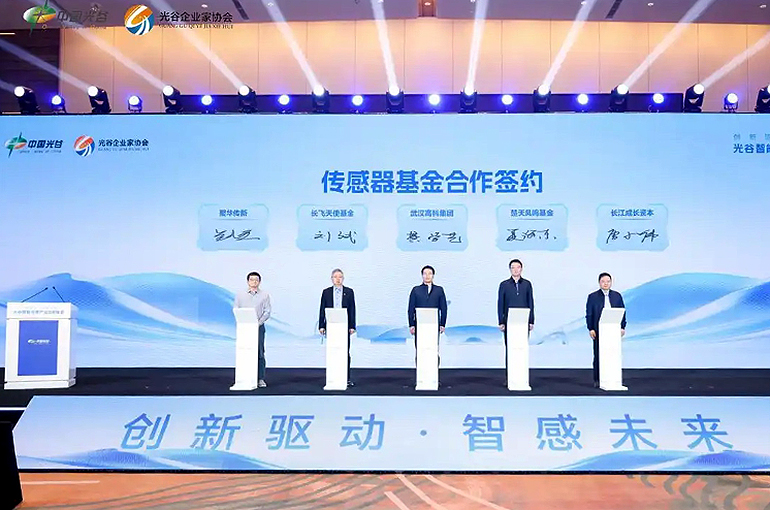
Established during the recent Optics Valley Intelligent Sensor Industry Innovation Summit, the fund was initiated by Wuhan Hi-Tech Holding Group. Its primary focus is to invest in early-stage projects and research initiatives in the sensor sector. The goal is to connect the entire development chain—from fundamental research to pilot-scale production and large-scale deployment—thus fostering growth and upgrading the local smart sensor industry cluster.
As a leading hub for China’s optoelectronic information sector, Optics Valley serves as the birthplace of the industry. Wuhan Hi-Tech also signed collaboration agreements with several investment organizations, including Hubei Chutian Fengming Fund, to develop a comprehensive, end-to-end investment ecosystem for the region’s sensor industry.
The sensor industry plays a pivotal role in tapping into trillion-dollar markets like artificial intelligence and smart devices. According to industry expert Nie Bo, general manager of Xiaogan Huagong Gaoli Electronics, its growth can attract upstream and downstream businesses to the valley, significantly boosting the economic impact of sensor applications.
The newly formed Intelligent Sensor Technology Innovation Research Institute aims to push forward breakthroughs in core technologies vital for domestic intelligent sensors. President of Huazhong University of Science and Technology and Chinese engineering academician You Zheng emphasized that the institute will focus on advancing fundamental materials, key manufacturing processes, and essential device development to enhance the security and stability of the supply chain. This initiative seeks to drive transformative progress within the local optoelectronic information sector through research and innovation.
The institute’s research priorities include developing advanced microsystems for intelligent perception, embodied sensors, medical sensors, inertial and automotive sensors, environmental sensing, and next-generation sensor technologies. It plans to establish platforms dedicated to sensor design, testing, and validation, promoting technological breakthroughs and broader application.
Additionally, the institute will address common technical hurdles faced by sensor companies, reducing development costs associated with trial-and-error processes and tackling reliance on imported high-end sensors, Nie noted.
Wuhan has already established a comprehensive sensor supply chain covering design, manufacturing, packaging, testing, and system integration, with these components serving as core elements in the digital and intelligent transformation of various industries.
Hubei Province aims to grow its high-quality intelligent sensor companies from around 30 to approximately 100 within the next five years, increasing industry revenue from CNY21 billion (about USD3.1 billion) to CNY30 billion (roughly USD4.4 billion). The provincial government’s plan also intends to drive the application industries’ total value to exceed CNY500 billion (about USD73.2 billion).
 ChatGPT
 Perplexity
 Gemini AI
 Grok AI