
Select Language:
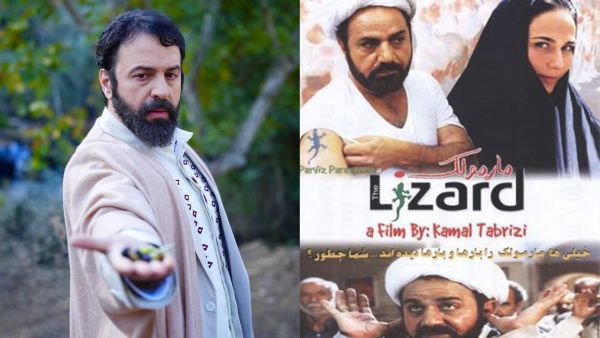
Digital Phablet – The series “Mawlana” has ignited discussions over perceived similarities to an Iranian film. After its debut at the start of Ramadan, social media commentary rapidly surfaced, with many noting notable resemblances between the Syrian show and the Iranian film “The Lizard,” especially in their core storylines. In both stories, the main character flees from authorities and ends up in a village mistaking him for a religious leader, leading to misleading actions, including deception, murder, or theft.
This resemblance prompts a crucial question: Is “Mawlana” inspired by “The Lizard,” a direct adaptation, or is this merely a coincidence of ideas?
“The Lizard” narrates the tale of a skilled thief nicknamed for his constant jailbreaks. After his arrest, he’s hospitalized and bonds with a religious figure receiving treatment there. As his release nears, he considers stealing the cleric’s robes and disguising himself as a religious leader. Once disguised, his journey begins as he seeks a forged passport to escape. Fate leads him to a village where villagers mistake him for the new imam, and he is compelled to lead prayers and deliver sermons to avoid recognition. Interactions with the simple villagers gradually influence his outlook, blending comedy with social critique and exploring themes of identity, religiosity, and salvation through satire and humane storytelling.
“Speaking of ‘Mawlana,'” its plot unfolds with Jaber, also known as “Zaber” (played by Tim Hassan), killing his sister’s husband, a security officer, in her defense. Chased by authorities, he flees to Latakia, where he meets Salim al-Adil, who is returning to his ancestral village to claim his inheritance. Salim offers to accompany him; however, after Salim’s death in a car accident, Zaber impersonates him and heads to al-Adiliya, seeking to escape across the border.
In al-Adiliya, villagers welcome him as their savior, calling him “Mawlana,” a title linked to his family’s saintly heritage. His initial attempt to escape fails, revealing the village’s tight control over his movements and entangling him in the local community’s affairs. The story delves into social and political issues—power dynamics, identity, religion, and authority—set against a backdrop of escalating tension and psychological shifts, all infused with satirical humor through Jaber’s sharp, satirical speech and actions.
The core similarity lies in the overarching theme: both protagonists escape persecution by assuming a religious identity as a means of concealment. Yet, the differences are significant. Jaber’s flight is driven by an unintended need to adopt a new identity after being implicated in a murder, whereas Reda, in “The Lizard,” escapes while serving time for theft and intentionally impersonates a religious figure from the outset.
Moreover, their pivotal moments diverge; Jaber arrives in the village out of greed and urgency, unaware of his future role as “Mawlana,” contrasting with Reda, who starts his disguise with deliberate intent immediately after leaving the hospital.
Artistically, “Mawlana” is rooted in social and political drama, portrayed through a realistic lens that confronts influence networks and authority structures. Conversely, “The Lizard” is a satirical comedy, employing irony and sarcasm to critique social and religious issues subtly through humor rather than direct confrontation.
Conflict-wise, “Mawlana” centers on external struggles between the individual and institutions—land, control, security. “The Lizard” presents both internal and external conflicts, emphasizing internal identity crises, potential for redemption, and societal perceptions of religious figures.
While they share a broad concept of disguise for escape, their dramatic styles, narrative structures, and thematic depths differ substantially. These differences diminish claims of direct copying—furthermore, similar themes of impersonation and disguise have been explored worldwide across numerous works, each valued for its unique context, approach, and artistic vision rather than shared ideas alone.
Anyone analyzing both productions will observe distinct character motivations, plot development, and narrative tone, which significantly weakens the argument for one being merely a copy of the other. The theme of impersonating religious figures for escape is not new; its repeated presence in global storytelling highlights that each work’s value resides in its distinctive treatment, context, and artistic expression.
 ChatGPT
 Perplexity
 Gemini AI
 Grok AI