Select Language:
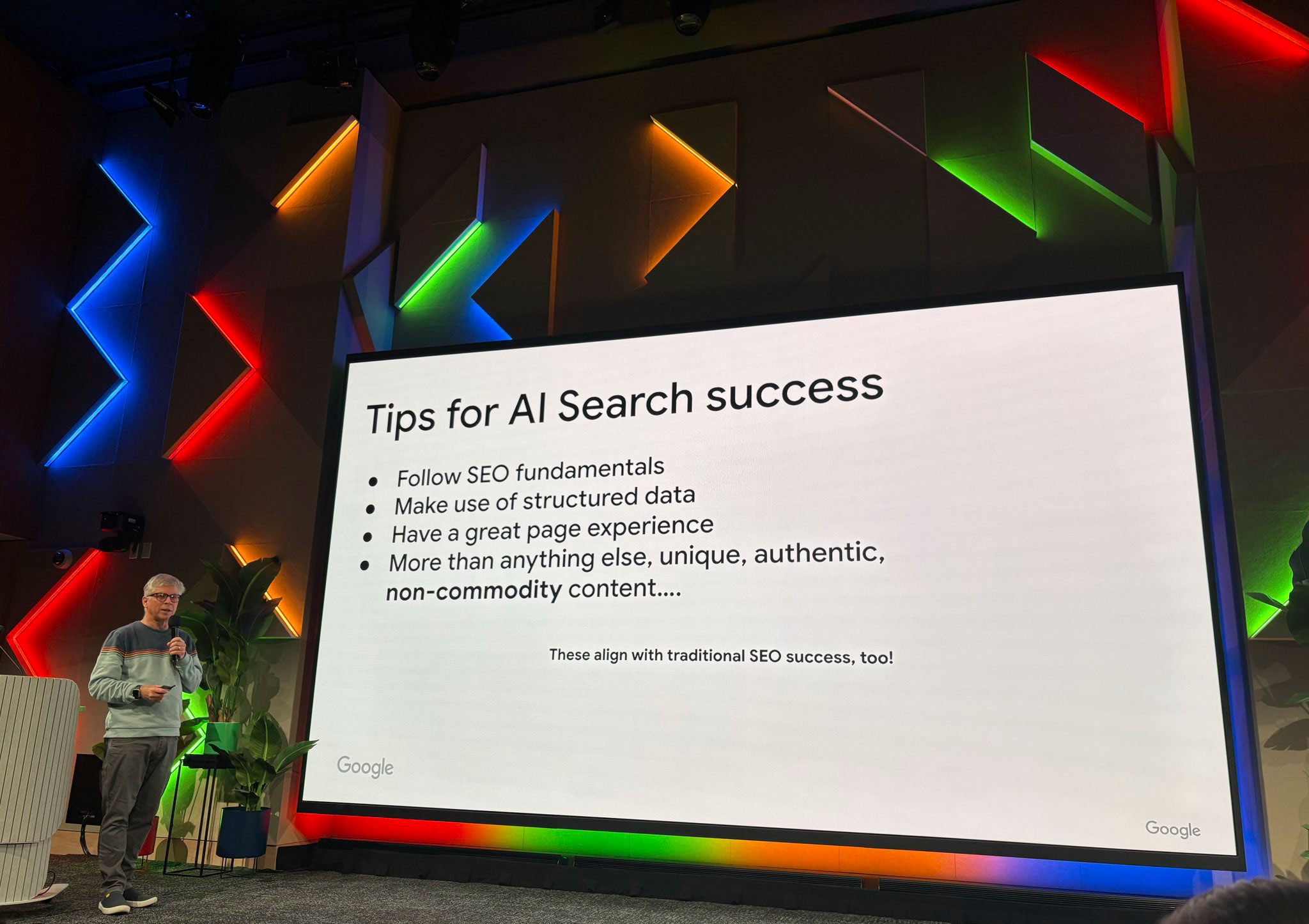
During a recent Google Search Central event in Toronto, Danny Sullivan emphasized the importance of creating “unique, authentic, and non-commodity content.” He clarified what differentiates commodity content from valuable, high-quality content.
According to Sullivan, good non-commodity content is characterized by:
- Uniqueness: Offering perspectives, insights, or information that are scarce or difficult for others to reproduce.
- Specificity: Focusing on particular instances or cases rather than broad, generic advice.
- Authenticity: Demonstrating firsthand knowledge, expertise, or direct experience.
He illustrated the contrast between commodity and non-commodity content through industry-specific examples. For a running store, commodity content might include “Top 10 Tips When Buying Running Shoes,” covering standard advice like sizing, arch support, and cushioning. Conversely, non-commodity content could be a detailed analysis of why a specific customer’s shoes deteriorated after 400 miles, explaining how their gait influenced the wear pattern.
In real estate, commodity content could be “7 Tips for First-Time Homebuyers,” offering general advice on pre-approval, location, and budgeting. Non-commodity content, however, might be a case study explaining why a specific property was purchased with a waived inspection, including insights from the agent’s direct inspection of the sewer line, which revealed PVC piping instead of concrete.
For interior designers, typical articles may feature trending designs like “2024 Kitchen Styles” with Pinterest photos. More specific content would involve a detailed explanation of why marble countertops were avoided in a family home with young children, showing stain tests with grape juice and turmeric to illustrate the point.
Some slides shared on social media highlighted key points such as the importance of structured data in SEO and focusing on content strategy over just traditional SEO techniques, especially when integrating AI into SEO practices.
All notes from the event, including detailed slides and insights, were compiled by JC Chouinard and are accessible online. The discussion surrounding these topics is ongoing across social media platforms, emphasizing the push for more detailed and authentic content creation strategies.
 ChatGPT
 Perplexity
 Gemini AI
 Grok AI