Select Language:
Turkiye has experienced a significant increase in tourism from China since implementing a visa-free policy for Chinese travelers in January. China has now become the leading source of tourists from emerging markets to the country. According to Gökhan Yazgi, the deputy minister of culture and tourism, the number of Chinese visitors has risen by approximately 47% this year, following a recent trip to China with a delegation.
The ongoing conflict in the Middle East has disrupted transportation in the region, resulting in numerous flight cancellations and delays, as well as the cancellation of some cruise voyages passing through Dubai. Despite Turkiye’s geographical position spanning Europe and Asia and being outside the conflict zone, it has still felt the regional war’s impact.
A local tour guide explained, “The situation in the Middle East is quite tense, but Turkiye remains safe, and our daily lives continue normally.” However, some travelers are hesitant to visit the region amid the war, which has affected the tourism industry in the country.
The national tourism agency has issued reassurances, stating that tourism activities are proceeding normally and that popular destinations across the country continue to attract visitors from Europe, North America, and Asia-Pacific as usual.
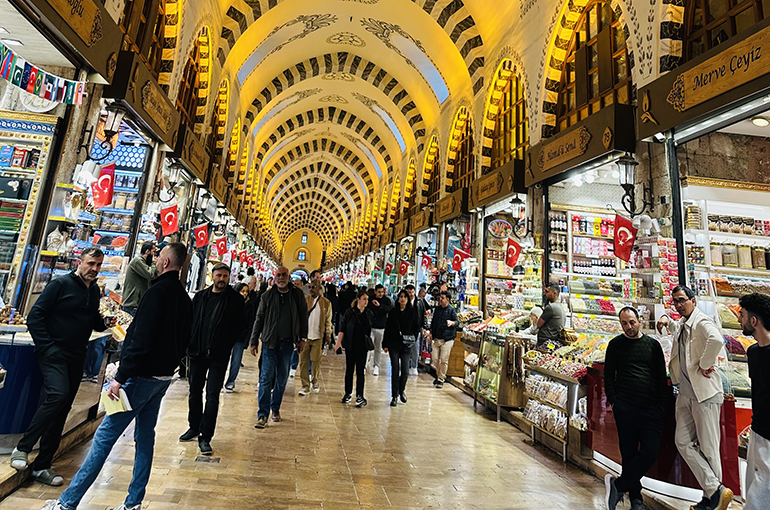
Chinese language services are available at various tourist sites, restaurants, and public facilities in Turkiye. Additionally, Chinese restaurants can be found along some of Istanbul’s main commercial streets.
Travelers planning trips to the Middle East or using the region as a transit point for other destinations during the upcoming May holiday are exploring alternative options. Despite this, Turkiye, along with parts of Central Asia and the Transcaucasia region, remains a favored destination, according to Zhou Weihong, deputy general manager of Spring Tour.
Last year, Turkiye welcomed 64 million visitors and generated over USD 65.2 billion in tourism revenue. The goal for this year is to increase revenue to around USD 68 billion.
 ChatGPT
 Perplexity
 Gemini AI
 Grok AI