
Select Language:
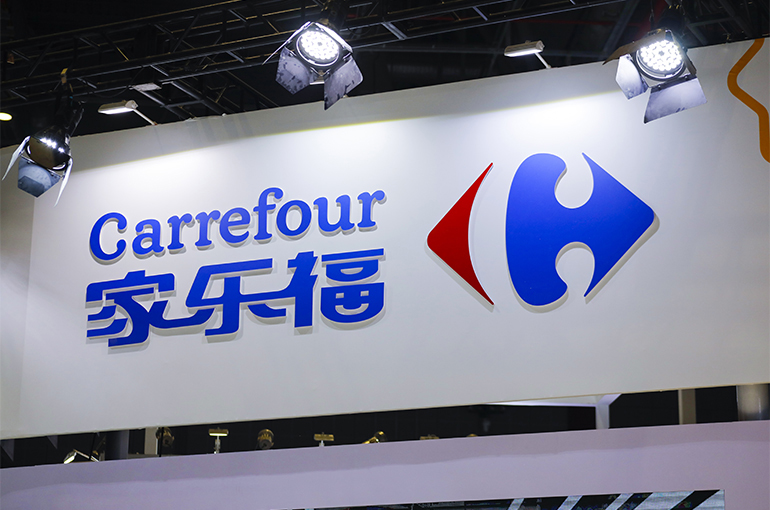
On May 19, a major Chinese retailer announced plans to sell its struggling Carrefour China division for no less than 1 yuan (15 cents USD), as part of a strategic move to divest non-essential assets and cut down on debt.
The company, based in Nanjing, revealed that its wholly owned subsidiary will exchange a 100% stake in Cacious China Holdings, a company registered in Amsterdam, for property. Cacious China is responsible for operating Carrefour’s Chinese outlets.
Shares of this retailer closed at CNY1.24 today, reflecting a 1.6% increase, though they have declined by 27% throughout the year.
The company purchased an 80% stake in Carrefour’s Chinese operations from the French retail giant in 2019 for CNY4.8 billion (about USD705.6 million). Disagreements over the remaining 20% stake led to additional investment last year, totaling CNY220 million (USD32.4 million), to gain full ownership.
Since acquisition, Carrefour China’s performance has faced steady decline due to increased competition from online shopping platforms and the effects of the COVID-19 pandemic. The retailer has been closing stores since 2022 and has now shut down all locations.
The company emphasized plans to continue trimming non-core activities and concentrate on its main sectors—computers, communication devices, and consumer electronics—to reduce debt and operational risks.
As of the end of last year, Cacious China reported total assets of CNY1.3 billion and liabilities of CNY7.7 billion, rendering it insolvent. The company’s shareholders’ equity was evaluated at a negative CNY782 million, according to the announcement.
The parent company has faced ongoing financial struggles in recent years, incurring losses of approximately CNY68 billion (USD10 billion) from 2020 to 2023. It managed a turnaround in 2024 with a net income of CNY611 million, yet last year’s net profit plummeted by 90% to CNY58 million (USD8.5 million).
The company’s revenue has decreased for six consecutive years, falling 14% from the previous year to CNY49 billion last year—an 82% decline from its peak in 2019.
 ChatGPT
 Perplexity
 Gemini AI
 Grok AI