
Select Language:
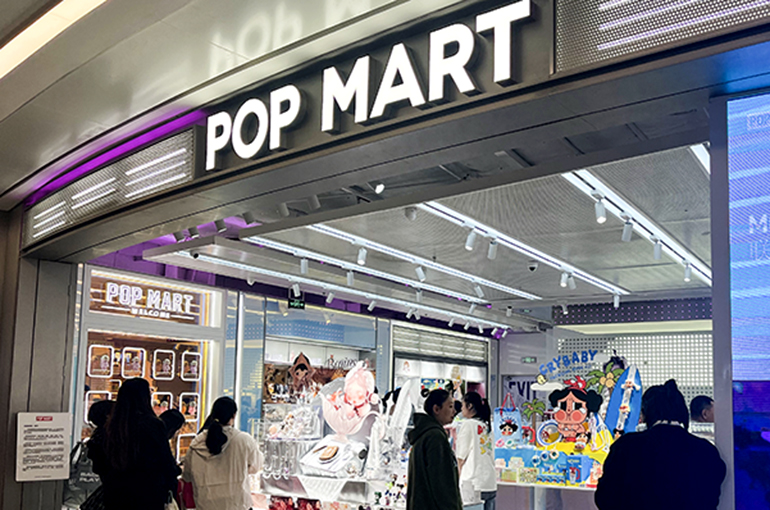
Shares of the Chinese toy company declined following its announcement of first-quarter revenue growth between 75 percent and 80 percent year-over-year. Investors became concerned that the popularity of its flagship character, Labubu, might be waning.
The company’s stock closed down 1.2 percent at HKD160.90 (approximately USD21). Despite this, the company reported that first-quarter revenue exceeded analysts’ expectations, driven largely by the Chinese market where revenue increased between 100 percent and 105 percent. Online sales in China surged between 150 percent and 155 percent.
International markets also showed strong growth: sales in Europe increased by 60 to 65 percent, in the Americas by 55 to 60 percent, and in the Asia-Pacific region by 25 to 30 percent. This data was shared during the company’s first-ever conference call held today in Beijing.
Management addressed a report by Morgan Stanley from May 11, which projected a slowdown in international sales growth over the next three years due to waning social media interest in Labubu.
Challenges Abroad Post-Labubu
The Chief Operating Officer noted that last year’s rapid international expansion was largely fueled by Labubu’s viral success. However, many new overseas consumers are still unfamiliar with the company’s other intellectual properties, and the overseas team’s limited experience has hampered performance following the decline in Labubu’s social media buzz.
He highlighted that the company has developed a mature multi-IP system domestically, with a membership base exceeding 70 million registered users, which will inform international growth strategies.
To extend Labubu’s lifespan, the company plans new initiatives, including a movie project currently in scriptwriting, directed by Paul King—known for the Paddington films and Wonka—as well as collaborations related to the FIFA World Cup and the launch of two new products later this year.
Cost Pressures and Retail Strategy Changes
The CFO explained that rising costs for raw materials like polyvinyl chloride (PVC) and fabrics, along with higher fuel surcharges tied to oil prices, are expected to raise production expenses for new items by 3 to 5 percent, which could shave about 0.5 percentage points off gross margins.
For the full year, a decline of 1 to 2 percentage points in gross margin is anticipated, mainly due to lower contributions from higher-margin overseas markets and increased import tariffs.
Regarding retail plans, the company will prioritize stores around 200 square meters and shift focus from simply expanding store numbers toward enhancing store quality and operational efficiency. Additionally, it aims to open flagship stores in major cities including Milan, London, Paris, and New York.
Last year, the company generated approximately CNY37.1 billion (roughly USD5.5 billion), a 185 percent increase from the previous year. Overseas markets contributed nearly 44 percent of total revenue.
 ChatGPT
 Perplexity
 Gemini AI
 Grok AI