Select Language:
The provincial governments of Jiangsu and Heilongjiang in China have rolled out additional subsidies for home appliance purchases to bolster consumer spending, supplementing the national support programs.
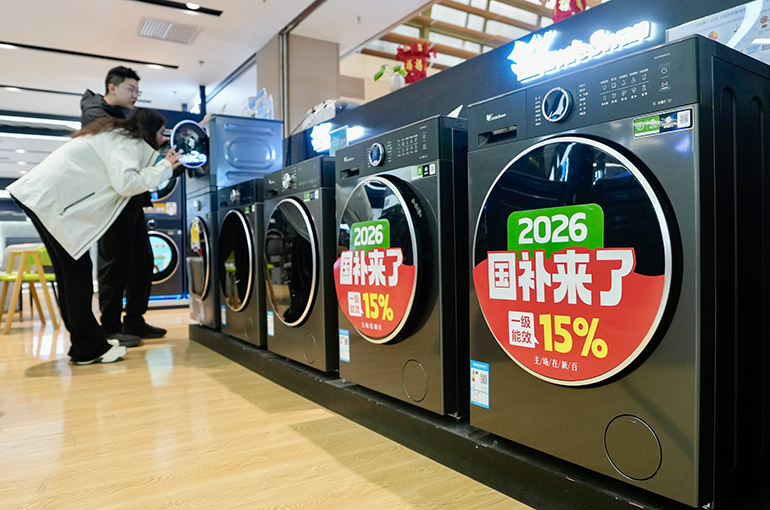
In Jiangsu, shoppers can enjoy a 15% discount on the final price for eligible products spanning ten categories, including smart home systems, smart devices, medical appliances for consumers, and advanced AI robots. The maximum rebate per item is CNY1,500 (approximately USD208). Each individual can accumulate up to CNY15,000 (around USD2,080) in total subsidies during the promotional period.
On the day following the policy’s announcement, sales of discounted home appliances at several Suning stores in Jiangsu doubled compared to the previous week, a store representative reported.
Heilongjiang began its subsidy scheme on April 18, covering seven categories of smart home products with a 15% discount on the retail price. Neither province disclosed total available fund amounts, but both indicated that allocations are limited and subsidies will cease once the quota runs out.
An industry insider noted that these measures are part of a broader effort aligning with the Ministry of Commerce’s push for consumer goods trade-in programs. The provinces are implementing independent subsidies tailored to their local markets and fiscal conditions to invigorate the economy and accelerate the modernization and expansion of the consumer market.
In addition to Jiangsu and Heilongjiang, similar subsidy initiatives are anticipated in Guangdong, Shanghai, Hubei, Anhui, Chongqing, and other regions in the near future. A representative from Guangdong’s home appliances industry said that provincial subsidies this year are likely to encompass a broader array of products than those offered at the national level. However, the precise rollout date remains uncertain. Another industry source from southern China confirmed this plan.
Compared to last year’s efforts, the current national subsidy program features fewer qualifying products, offers less generous support, and emphasizes energy-efficient models to meet higher standards. The provincial government incentives are expected to significantly stimulate local consumption.
Experts are optimistic that the home appliance market will stabilize and see a rebound in the coming months, fueled by these regional support policies. This growth could drive sales during major upcoming events such as Labor Day and the mid-year shopping festival on June 18.
In the first quarter, China’s home appliance sector faced challenges due to the high comparison base from the previous year, when subsidies were more extensive. Retail sales of appliances—excluding computers, communication devices, and electronics—dropped by 6.2% year-over-year in the three months ending March 31, with March alone experiencing a decline of over 12%, according to research data.
Exports of home appliances also declined, falling 0.9% in the first quarter compared to the previous year, with March exports plunging nearly 18%. Rising raw material costs, exacerbated by regional conflicts like the Middle East turmoil, have added further pressure on manufacturers.
 ChatGPT
 Perplexity
 Gemini AI
 Grok AI