
Select Language:
More Chinese provinces have introduced their own rebates on home appliances to bolster the national consumer goods trade-in initiative, which aims to stimulate sales activity across related product categories.
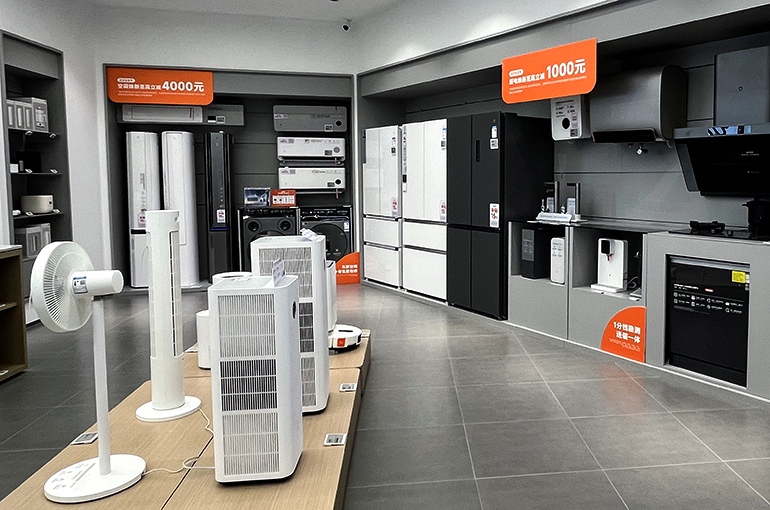
Cities such as Shanghai, Chongqing, along with Hubei and Guizhou provinces, rolled out local subsidy programs on May 1 to broaden the scope of the trade-in effort. These local policies now include a variety of items like range hoods, gas stoves, digital cameras, water purifiers, dishwashers, smart toilets, smart beds, robotic vacuum cleaners, and exoskeleton robots.
The subsidies cover between 10% and 20% of the retail prices, with maximum rebates ranging from CNY 1,000 to CNY 2,000 (approximately USD 147 to USD 294) per item.
In Shanghai, sales of range hoods, stoves, dishwashers, water purifiers, and cleaning devices at Suning’s stores surged 183% on May 1 compared to the same period last month. This boost was driven by the new local subsidies and the Labor Day holiday, according to data from a prominent electronics retailer.
While the national trade-in program was introduced three years ago, its reach and benefits have been narrowed this year. Currently, subsidies only apply to refrigerators, washing machines, TVs, air conditioners, water heaters, and computers, with other kitchen appliances removed from the list. Additionally, the subsidy rate has been reduced from 20% to 15%.
Consequently, retail sales of home kitchen and bathroom appliances in China declined by 10% in the first quarter, totaling about CNY 28.1 billion (roughly USD 4.1 billion), as reported by Zhao Zhiwei, vice president and general manager of the kitchen, bathroom, and home appliances division at market research firm.
In response, provinces like Jiangsu and Heilongjiang introduced new policies in April to energize the national trade-in program with their own purchase subsidies, aiming to boost household spending.
With these local subsidy policies in place, analysts forecast a stabilization and possible rebound in the market during the second quarter.
 ChatGPT
 Perplexity
 Gemini AI
 Grok AI