Select Language:
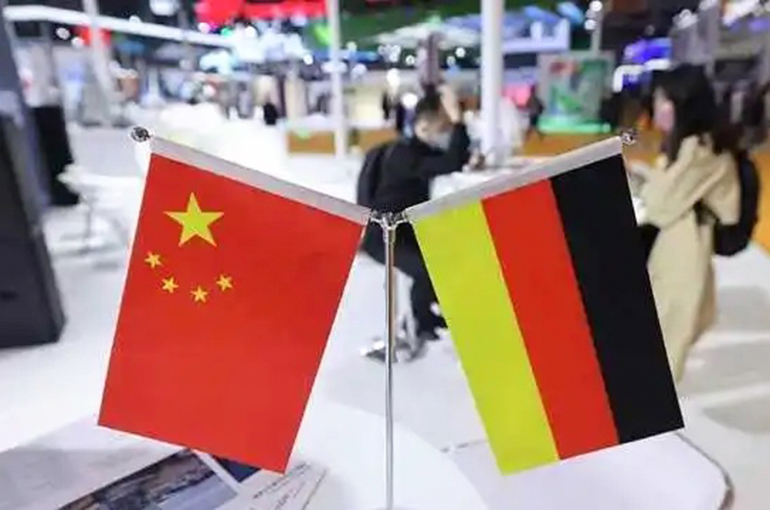
The number of new greenfield and expansion investment projects, excluding mergers and acquisitions, initiated by Chinese companies in Germany surpassed that of U.S. firms for the first time since 2017. Last year, Chinese companies launched 228 investment projects in Germany, marking a 15 percent increase compared to the previous year. Meanwhile, U.S. and Swiss companies ranked second and third, with 206 and 174 investments respectively, experiencing declines of 10 percent and 14 percent during the same period.
Overall, the total number of greenfield and expansion projects in Germany decreased by 9.3 percent to 1,564, and across the European Union, it fell by 18 percent. Globally, the total declined by 9.5 percent. Chinese firms’ investments in Germany span various sectors, with electronics and automation leading at 30 percent of the total, followed by transportation and logistics at 22 percent, and energy and raw materials making up 15 percent.
This persistent growth in Chinese investment across diverse sectors highlights the broadening scope of their engagement—covering industrial applications, advanced and emerging technologies, as well as knowledge-intensive services. An industry analyst noted that the deepening investment activities reflect a highly diversified strategy.
Germany remains an attractive destination for foreign investors despite its modest economic growth. Local offices of Chinese enterprises continue to show strong interest, particularly in upstream and downstream segments of new energy vehicles and digital technology industries. An expert from a major consulting firm observed that China’s strengths in autonomous driving, industrial robotics, and intelligent manufacturing give it a competitive edge. She also mentioned that Germany’s digital infrastructure still requires enhancement, making the country receptive to investments in digital growth.
Amid heightened focus on economic security, Germany and wider Europe are increasingly emphasizing the attraction of industrial chain companies through local manufacturing initiatives. It is now considered essential for Chinese enterprises to shift from traditional mergers and acquisitions to establishing greenfield operations and localizing their presence.
While M&A activities peaked between 2015 and 2018 and have since declined, greenfield investments continue to grow steadily. Despite tighter supervision of foreign investments in Germany and Europe, authorities remain committed to welcoming inbound investments in the digital economy, viewing Chinese expertise in intelligent manufacturing as a vital asset for Germany’s industrial modernization and economic growth.
 ChatGPT
 Perplexity
 Gemini AI
 Grok AI