Select Language:
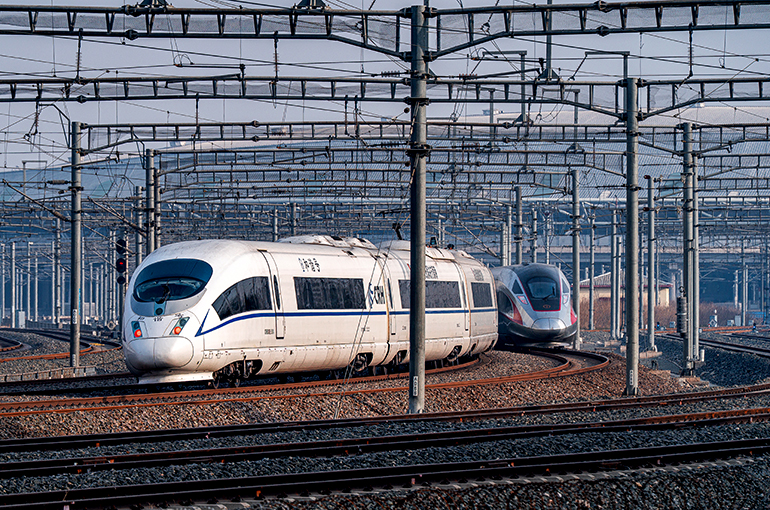
Shares of the Beijing-Shanghai High-Speed Railway increased following a 20% hike in the published ticket prices for its primary high-speed and electric multiple unit trains. The company’s stock closed up 3.5% at 5.05 yuan (roughly 74 cents USD) per share today, while the wider Shanghai stock market experienced a slight decline of 0.3%.
Late yesterday, the railway company announced that fares for high-speed and EMU trains operating on the Beijing-Shanghai and Hefei-Bengbu routes would be raised by 20%. The company plans to implement a flexible pricing system that adjusts ticket prices based on factors like seasonality, time of day, travel speed, seat class, and station distance, with discounts varying accordingly. This tiered pricing strategy will take effect starting May 26, according to the line’s controlling stakeholder, China State Railway Group.
The main goal of increasing the published fares is to expand the range within which prices can fluctuate, allowing for a more dynamic, market-oriented ticket pricing model that can both increase and decrease fares as needed. This approach aims to better align transportation capacity with demand, while encouraging a balanced flow of passengers—ultimately making it possible for limited capacity resources to serve more travelers. Additionally, it provides discounts for passengers who have less flexibility regarding train schedules and travel times.
Since December 2020, the railway has transitioned from a fixed fare system to one with floating prices, offering more flexibility. This pricing model has been extended to several other routes, mainly passing through economically developed regions with dense populations and high per capita consumption, such as the Yangtze River Delta and the Pearl River Delta.
Beyond the Shanghai-Beijing route, the company’s subsidiaries also operate four other passenger lines, including the Hefei-Bengbu route.
Financially, the railway’s net profit increased by 6% year-over-year, reaching 3.1 billion yuan ($456 million) in the first quarter. Revenue rose by 3.3% to 10.6 billion yuan ($1.6 billion). In 2022, the company reported a record net profit of over 13.2 billion yuan on revenue of 43.1 billion yuan.
Nevertheless, the railway faces intense competition from various sources, including fluctuations in travel demand from business travelers and migrant workers, the growing popularity of new energy vehicles, and the migration of passengers to low-cost airlines, as noted in its latest annual financial report.
 ChatGPT
 Perplexity
 Gemini AI
 Grok AI