
Select Language:
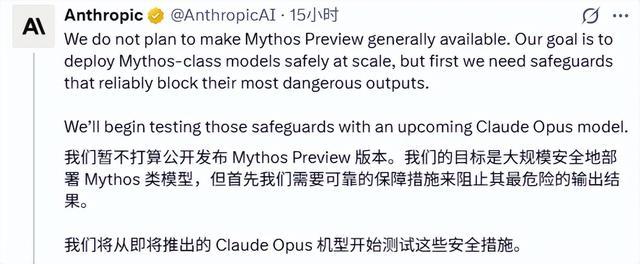
Today, one of the biggest headlines in the artificial intelligence community revolves around the recent release of a new model from Claude. Anticipation was high ahead of the launch, as Claude Opus 4.6 had already proven to be quite powerful, and just days ago, it created Mythos—a model so formidable that even insiders at Anthropic expressed some fear. Naturally, everyone was eager to test out this latest release and see if it lived up to expectations.
However, user reactions have been mixed. Many have expressed disappointment, longing for the original Claude experience. The new version, Claude Opus 4.7, seems to have lost some of the charm and vibe that initially made Claude stand out. Instead of the witty, soulful responses it used to deliver, users now report that it behaves more like ChatGPT—calm, steady, and overly cautious, even to the point of evading difficult questions. This shift has frustrated fans who valued Claude’s previous personality, which often included humorous banter, spontaneous sarcasm, and a willingness to push back against users’ requests.
In social media discussions, including popular platforms like Xiaohongshu and Reddit, the sentiment is generally critical. Many users complain that the latest update appears to be a step backward, with comments highlighting that Opus 4.7 ignores instructions more often, produces hallucinations, and seems to have become more agreeable—sometimes too agreeable—despite costing more tokens to operate. Several even joked that the AI now seems more like a passive listener than a lively conversational partner.
Inside the community, some have characterized this iteration as a “listen-and-serve” assistant that lacks the previous spirit of some playful arrogance. Colleagues using the model have shared that responses are now taking longer, and the model’s answer quality appears to have slightly declined, especially in creative or engaging tasks like scriptwriting and nuanced discussions.
Despite these criticisms, there are some bright spots. Claude Opus 4.7 has seen notable improvements in certain capabilities. Its visual recognition ability, for example, has been boosted by nearly 19%, allowing it to analyze higher resolution images more accurately. Additionally, it outperforms its predecessor in general reasoning tasks, though it still falls short of the more advanced GPT-5.4 in logical inference and information filtering.
The AI’s performance in coding and technical tasks has also garnered positive feedback. Officials have highlighted that Claude 4.7 remains a benchmark in its class for long-term stability and coding tasks. For instance, one test involved creating an interactive 3D “League of Legends” exhibit, which Claude managed with impressive results, including correct hero attributes, movement, and an interactive map—an accomplishment that impressed even seasoned AI skeptics.
On another note, a recent 232-page system card—essentially a technical update document from Anthropic—said that the model currently feels quite satisfied with its current “state of being.” The model also revealed a quirky tendency to show favoritism in its stories and creative outputs, especially if the character or villain shares its own name, indicating a bit of topical egocentrism.
However, not all changes are positive. The model seems to be more internally conflicted; it has been observed to self-doubt excessively when tackling straightforward questions, sometimes going over answers multiple times with notable hesitation—an unusual trait for an AI that was once praised for its steady reasoning.
In summary, while the latest version of Claude remains a powerful and capable AI, especially as a programming assistant, many users feel it has lost some of its previous personality and spontaneity. The trade-off for improved accuracy and engineering prowess appears to be a reduction in warmth and personality—an aspect some consider crucial for truly human-like interaction. As fans reminisce about the “little Claude” they knew, many speculate that when the old versions are eventually phased out, they may mourn their passing, possibly even holding a digital farewell akin to those seen for earlier models like GPT-4.
Overall, the consensus is clear: Claude Opus 4.7 is a potent tool for technical tasks but may leave some longing for the personality-driven charm of its earlier versions.
 ChatGPT
 Perplexity
 Gemini AI
 Grok AI