
Select Language:
On April 19th, Alibaba’s autonomous driving division, Gaode (AutoNavi), announced the launch of a groundbreaking full-stack embodied intelligence system named ABot, designed specifically for Artificial General Intelligence (AGI). In a move that signals a major leap forward in robotics, Gaode also announced that this innovative technology will be open-sourced in its entirety.
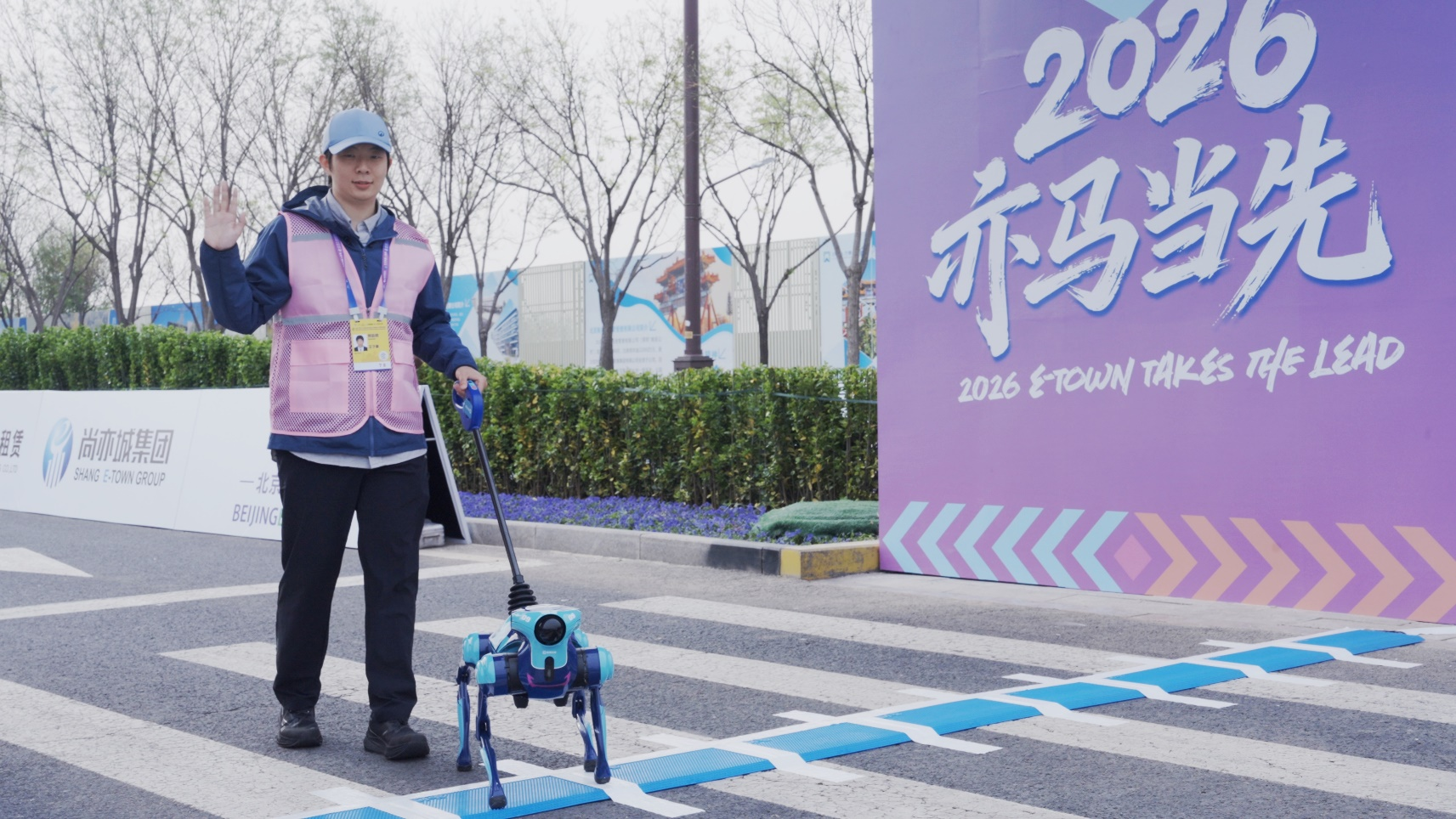
The company revealed that their first four-legged robot, called Gaode Tutu, will undergo live testing during the Beijing Yizhuang Half Marathon robotic event today. During this demonstration, Tutu will showcase advanced obstacle avoidance and navigation capabilities among crowds, highlighting its practical application in complex environments.
Gaode’s ABot system is built around a closed-loop architecture that integrates three key layers: data, models, and applications. According to Gaode, models within the ABot series have already achieved top results in 15 different industry benchmark tests. The underlying data generation platform, ABot-World, employs a sophisticated 14-billion parameter architecture named DiT. This setup synthesizes various types of training data—including videos, depth information, and point clouds—in a virtual environment. By leveraging reinforcement learning, it replaces expensive real-world data collection, lowering barriers for training embodied intelligence models.
A notable feature of the ABot system is its dual-core motion framework, comprised of ABot-N and ABot-M. The ABot-N component is tasked with navigation and spatial movement, while ABot-M handles detailed manipulation and control tasks. These cores collaborate seamlessly to manage long-range navigation and complex operations, demonstrating stability across multiple industry-grade evaluation metrics and supporting adaptability across different robotic platforms.
On the application front, the core control unit, ABot-Claw, introduces an innovative “map as memory” concept. This design fuses Gaode’s comprehensive mapping data with localized inputs from users, creating a cognitive anchor that enhances robot situational awareness. The system operates on a “cloud-brain, edge-responder” architecture, enabling robots of various types to coordinate tasks and share information effectively.
Gaode emphasized that all components of the ABot system will be made open source, providing access to a vast repository of resources trained on millions of real-world scenarios and multimodal data. This openness aims to accelerate industry innovation and foster broader adoption of embodied AI technologies across multiple sectors.
 ChatGPT
 Perplexity
 Gemini AI
 Grok AI