

Select Language:
AI is set to go beyond traditional vehicles and expand into robotics, wearable devices, home automation, and healthcare technology at CES 2026.
A Mirumi companion robot was on display during CES Unveiled at CES 2026, an annual consumer electronics trade show in Las Vegas, Nevada, on January 4, 2026. REUTERS
Autonomous driving technology is predicted to take center stage at this week’s CES in Las Vegas, as investors bet that artificial intelligence will revive an industry hampered by slow advancements, high costs, safety issues, and regulatory challenges.
With automakers pulling back on electric vehicle (EV) initiatives and seeking new revenue streams, numerous auto suppliers and startups are preparing to showcase their latest autonomous vehicle hardware and software. Expect announcements of partnerships and deals aimed at eliminating the need for human drivers entirely.
“This year, you’ll see increasing emphasis on AI and autonomous features,” said C.J. Finn, U.S. automotive industry leader for PwC. “That connectivity in autonomous vehicles is expected to be front and center.”
AI’s influence is expected to extend beyond cars, featuring prominently in robotics, wearable technology, smart home gadgets, and health tech. Industry leaders such as Nvidia CEO Jensen Huang and AMD CEO Lisa Su are among the key speakers this year.
No electric vehicles
CES 2026, one of the largest tech expos in the U.S., runs from January 6 to 9. Traditionally known for launching TVs, laptops, and wearable devices, CES has increasingly become a platform for automakers to debut electric vehicles.
Read More: Samsung Electronics reports customer praise for the competitiveness of its HBM4 chip
However, a decline in EV incentives and policies influenced by the Trump administration has tempered demand, leading many automakers to shelve plans for new EV launches. Unlike previous years, most major automakers are not expected to unveil new electric models this time around.
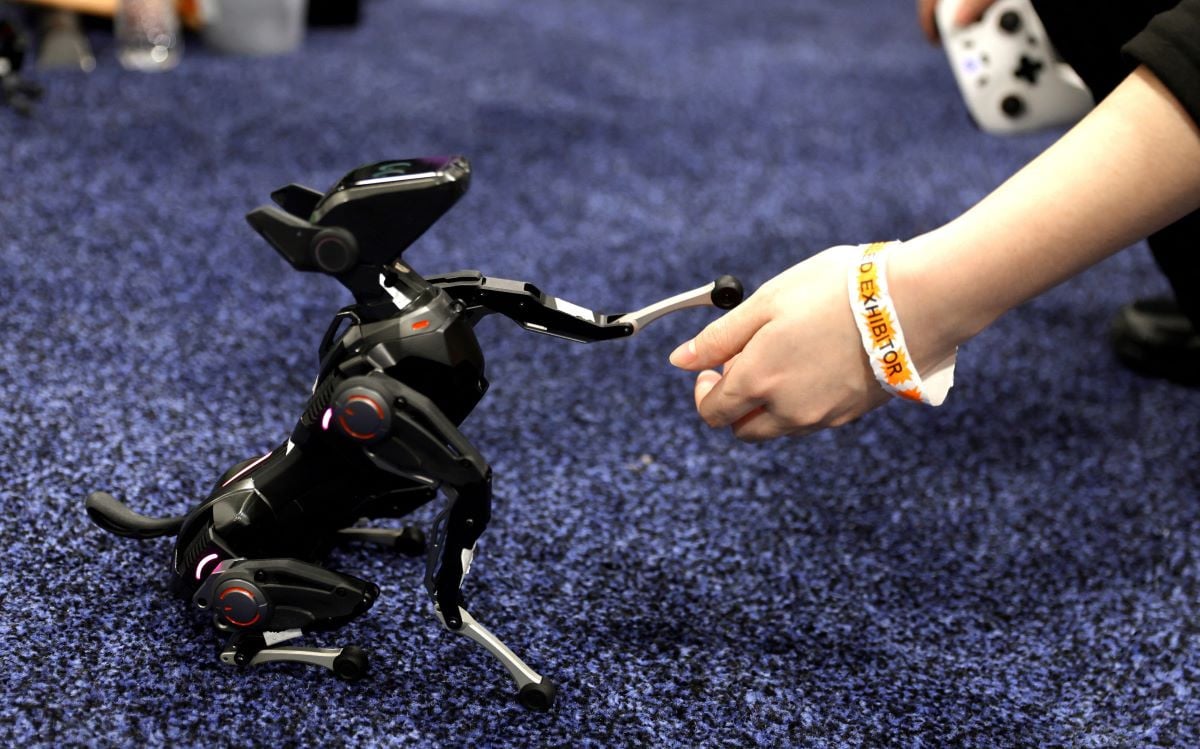
An exhibitor shakes hands with a robotic dog in the Hengbot Innovation booth during CES Unveiled at CES 2026, an annual consumer electronics trade show in Las Vegas, Nevada, on January 4, 2026. REUTERS
Money focuses on autonomous tech
Bringing autonomous vehicles to market has proven challenging. Heavy investments, regulatory obstacles, and post-collision investigations have forced several companies out of the game.
Nevertheless, Tesla’s launch of a small robotaxi service with safety monitors in Austin, Texas, and Alphabet’s Waymo’s rapid expansion have injected new energy into the sector. Driver-assist features for personal cars have also advanced, with some automakers offering hands-free driving and automatic lane crossings on highways. Rivian, for example, plans to introduce “eyes-off” driving and autonomous capabilities in city streets.
“This is starting to align with where investors are directing their capital,” Finn noted.
Cost concerns remain
Automakers are cautious about capital expenditures after billions in losses related to shifting EV strategies. They also face high tariffs on auto and parts imports imposed during the Trump administration. Many have absorbed these tariff costs rather than passing them on to consumers, which squeezes profit margins.
Competition from Chinese automakers will also be a major focus at CES, according to Felix Stellmaszek, global leader of automotive and mobility at Boston Consulting Group.
“The main theme we expect to see at CES is around cost and competitiveness,” Stellmaszek said.
 ChatGPT
 Perplexity
 Gemini AI
 Grok AI

