Select Language:
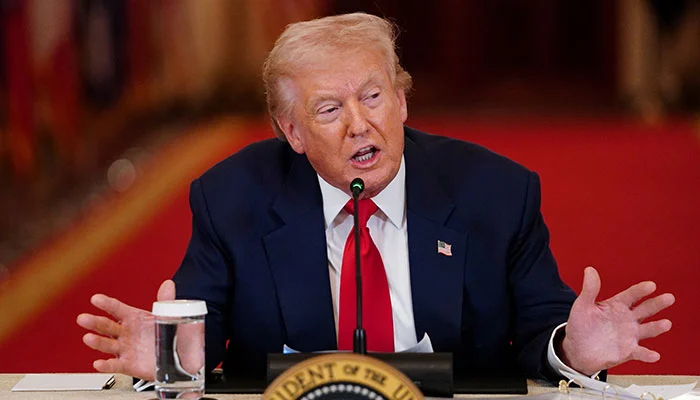
Donald Trump has sparked the nation’s worst conflict in decades over a mere “feeling,” and notably, it’s not his political rivals voicing concerns but the White House itself. During the initial week of the Iran conflict, the President appeared increasingly dictated by instinct and emotion rather than clear explanations or strategic reasoning.
On Thursday, Trump, a former reality TV star, boasted to an ABC News reporter, “I hope you’re impressed. How do you like the performance?” Meanwhile, official government social media clips portrayed the military operation reminiscent of a video game, with striking captions reminiscent of blockbuster war movies. Comedian Jimmy Fallon quipped that this could be the first-ever war declared purely on “vibes.”
Questioned Wednesday by journalists about what prompted America’s military engagement — which Trump was overseeing from his luxurious Mar-a-Lago estate in Florida — White House press secretary Karoline Leavitt claimed the president acted based on a “good feeling” that Iran would attack U.S. assets and personnel in the region.
Experts criticize this new approach, noting how the Trump administration has communicated the military action to the public. Sean Aday, a public relations professor at George Washington University, stated he’d “never seen worse wartime messaging from a U.S. administration,” describing it as “a blend of incoherent, immoral, arrogant, amateurish tactics, and outright fabrications.”
He contrasted this with George W. Bush’s efforts before the 2003 Iraq invasion, which took nearly a year and a half to convince the public of necessity. Former diplomat Richard Haass pointed out that Trump has largely sidelined formal national security processes, including a downsized National Security Council that now combines roles previously held separately. Official procedures and protocols have been notably bypassed, with Trump’s approach marked by improvisation.
His vague explanations about the war’s purpose and objectives have generated public confusion, with inconsistent short interviews replacing detailed press conferences. Despite Cabinet assurances that regime change isn’t the goal, Trump has controversially insisted he should influence Iran’s future leadership following Ayatollah Khamenei’s martyrdom.
Economic concerns, such as rising gasoline prices prompted by the conflict, have been dismissed by Trump, even as polls like NBC’s show that over half of U.S. voters oppose the military action. When the wars in Afghanistan and Iraq began, initial public support was strong, but opposition grew as conflicts prolonged, reflecting the nation’s war-weary sentiments.
 ChatGPT
 Perplexity
 Gemini AI
 Grok AI