Select Language:
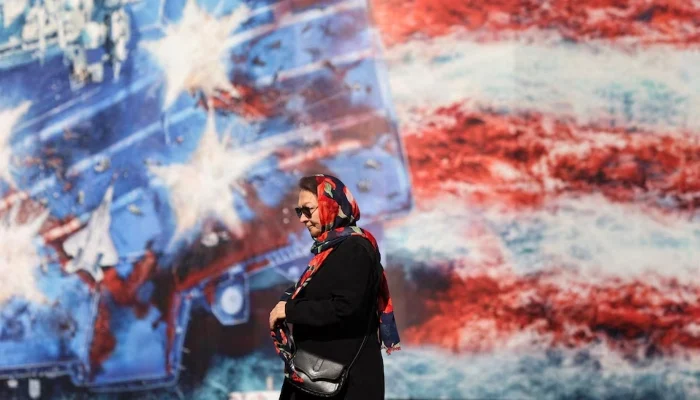
An Iranian woman is seen walking past an anti-U.S. billboard in Tehran on February 26, 2026.
– The latest diplomacy efforts are viewed as Iran’s final chance to prevent conflict.
– Iran has hinted at possible concessions.
– Tehran is expected to demonstrate flexibility, according to a spokesperson for the foreign ministry.
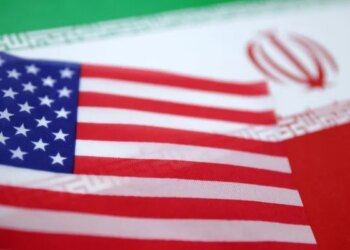
The United States and Iran made some progress in nuclear talks on Thursday, according to Oman, the mediator, but after hours of discussions, no breakthroughs emerged that could prevent potential U.S. strikes amid significant military mobilization.
Both nations aim to continue negotiations soon after their respective domestic consultations, with technical-level talks scheduled for next week in Vienna, said Omani Foreign Minister Sayyid Badr Albusaidi via a post on X following the meetings in Switzerland.
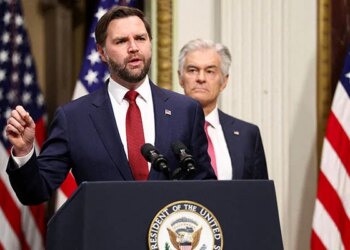
Badr Albusaidi is set to hold talks with U.S. Vice President JD Vance and other officials in Washington on Friday, reports MS NOW. Neither the White House nor Oman’s embassy in Washington immediately responded to requests for comments.
Any meaningful steps toward a deal between longstanding adversaries Washington and Tehran could diminish the likelihood of President Donald Trump launching a military attack on Iran, a move feared to escalate into broader Middle East conflict.
However, Tuesday’s indirect talks concluded without an agreement, leaving regional tensions high.
Following the discussions, Badr Albusaidi expressed optimism, noting that the day saw meaningful progress in negotiations between the U.S. and Iran. Still, he did not specify details or confirm that major issues had been resolved.
Iranian Foreign Minister Abbas Araqchi called these talks some of the most serious Iran has ever had with the U.S., saying, “We’ve reached agreements on some issues, while differences remain on others.”
He added, “A subsequent round of talks will occur soon, within less than a week.” Tehran has clearly expressed its demand for the lifting of U.S. sanctions, a move Washington maintains will only happen after Iran makes significant concessions.
The U.S. team has not yet commented on the negotiations’ outcome, but Axios quoted a senior U.S. official describing the Geneva discussions as “positive.”
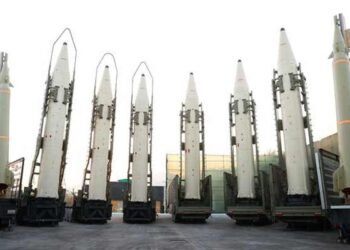
These discussions about Iran’s nuclear program are taking place amid growing fears of conflict in the Middle East. Trump has repeatedly threatened action if no deal is reached, and the U.S. military has increased its presence near Iran.
A senior Iranian official told Reuters earlier Thursday that a framework for an agreement might be possible if Washington separates nuclear issues from non-nuclear concerns.
The Trump administration insists that Iran’s missile program and regional support must be included in negotiations.
After the morning session, Badr Albusaidi mentioned that both sides exchanged “creative and positive ideas.” Still, an Iranian official noted that several gaps remain.
The U.S. seeks Iran’s total uranium enrichment end, as enrichment can be used for nuclear fuel or weapons. Iran denies wanting a bomb and indicated its flexibility earlier Thursday, offering unspecified concessions in exchange for sanctions removal and recognition of its right to uranium enrichment.
U.S. Secretary of State Marco Rubio expressed concern Wednesday that Iran refuses to discuss its missile program, which he claims is designed solely to threaten America. He stated that these missiles threaten regional stability but provided no proof of a direct threat to U.S. territory.
President Trump warned on February 19 that Iran must reach a deal within 10 to 15 days or face “really bad things.” In his Tuesday State of the Union address, he emphasized his preference for diplomacy but asserted he would not allow Iran to obtain nuclear weapons.
Since the summer, when Trump ordered strikes on Iranian nuclear sites and increased military pressure in January following Iran’s suppression of protests, the U.S. has deployed fighter jets and strike groups to the region. Iran responded with missile strikes against Israel and has vowed fierce retaliation if attacked again, heightening fears of a wider conflict impacting Gulf oil producers.
Within Iran, Supreme Leader Ayatollah Ali Khamenei faces his most serious crisis in over three decades amid a struggling economy under renewed sanctions and protests sparked by unrest and crackdowns earlier this year.
President Masoud Pezeshkian announced Thursday that Khamenei has prohibited the development of weapons of mass destruction, reaffirming an early 2000s religious decree indicating Tehran’s intent not to pursue nuclear weapons.
 ChatGPT
 Perplexity
 Gemini AI
 Grok AI