

Select Language:
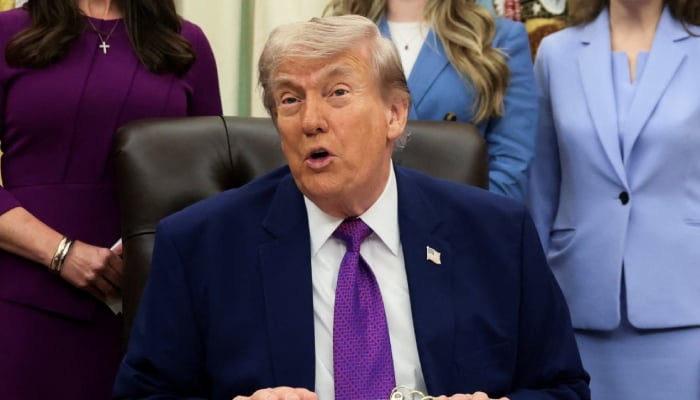
- Trump dismisses Tehran’s proposal as “stupid”.
- Says he didn’t even finish reading Iran’s response.
- Iran willing to give the US “the nuclear dust”: Trump.
U.S. President Donald Trump declared Monday that a ceasefire with Iran is essentially “on life support,” after he rejected Tehran’s response to a US peace offer. This has raised fears of renewed fighting in the ongoing 10-week conflict, which has already resulted in thousands of casualties and disrupted global energy supplies.
A few days after the US put forward a proposal to restart negotiations, Iran responded on Sunday, emphasizing the need to end the war on all fronts, including Lebanon, where Israel—an ally of the US—is fighting Iranian-backed Hezbollah.
Trump swiftly dismissed Iran’s reply.
When asked about the status of the ceasefire brokered by Pakistan, Trump responded: “I’d call it the weakest right now, after reading that garbage they sent us. I didn’t even finish reading it.”
In its response, Iran also demanded compensation for damages caused by the war, reaffirmed its sovereignty over the Strait of Hormuz, and urged the US to lift its naval blockade, ensure no further attacks, lift sanctions, and allow Iran to resume oil exports.
The US had proposed halting hostilities before engaging in talks about more sensitive issues, such as Iran’s nuclear program.
Iran defended its stance on Monday, with Foreign Ministry spokesperson Esmaeil Baghaei stating: “Our demands are valid—ending the war, lifting the US blockade and piracy, and releasing Iranian assets that have been unjustly frozen due to US pressure.”
He added: “Guaranteeing free passage through the Strait of Hormuz and establishing regional and Lebanese security are also key parts of Iran’s generous and responsible proposal.”
Brent crude oil futures rose by approximately 2.7%, trading around $104 per barrel, as the deadlock keeps the Strait of Hormuz largely shut down.
Prior to the conflict that started on February 28, this narrow waterway transported about 20% of the world’s oil and liquefied natural gas, making it a critical strategic choke point.
The near-closure of the strait has forced oil producers to cut exports, and an OPEC survey reported a decline in oil output in April to the lowest level in over twenty years.
Reduced Shipping Traffic Through Hormuz
Today, shipping flow is minimal compared to pre-war levels. Data from Kpler and LSEG showed that only three oil tankers left the strait last week, with some trackers intentionally switched off to avoid Iranian attacks.
Recent sporadic clashes near the strait have challenged the ceasefire, which has prevented full-scale warfare since early April.
In the U.S., public opinion surveys indicate that the war is unpopular among voters, especially with rising gasoline prices ahead of the upcoming elections that could determine whether Trump’s Republican Party retains control of Congress.
International support has also been limited; NATO allies have refused to send ships to reopen the strait without a comprehensive peace agreement and a UN-mandated mission.
Turkish Foreign Minister Hakan Fidan, who has been coordinating closely with the US, Iran, and Pakistan, is scheduled to visit Qatar on Tuesday to discuss the conflict and ensure safe navigation through the strait, according to a Turkish diplomatic source.
Upcoming Talks Between Trump and China
Uncertain of the next steps, Trump is expected to arrive in Beijing on Wednesday, where Iran may be among the topics discussed with Chinese President Xi Jinping.
Trump is counting on China to leverage its influence and push Tehran toward a diplomatic solution.
Iran’s Foreign Ministry spokesperson, Baghaei, suggested China could also use the visit to counter US goals in the Gulf region:
“Our Chinese friends know how to use these opportunities to warn about the consequences of US illegal and aggressive actions in regional peace and security,” he said.
Regarding whether military operations against Iran are over, Trump stated Sunday: “They are defeated, but that doesn’t mean they’re done.”
Israeli Prime Minister Benjamin Netanyahu said the conflict isn’t over, citing more work needed to remove Iran’s enriched uranium, dismantle nuclear facilities, and address its proxy forces and missile programs.
In an interview with 60 Minutes on CBS, Netanyahu expressed preference for diplomacy but didn’t rule out military action.
Despite a US-brokered ceasefire—announced on April 16—clashes continue in southern Lebanon between Israel and Hezbollah.
 ChatGPT
 Perplexity
 Gemini AI
 Grok AI

