Select Language:
- Trump calls Supreme Court’s decision “an anti-American ruling”.
- President announces tariffs will increase “immediately”.
- Claims many countries have been “exploiting” the U.S. for decades.
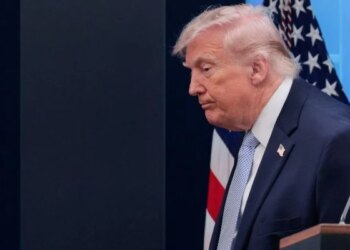
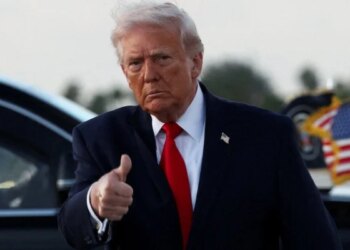
President Donald Trump announced on Saturday that he is raising tariffs on imports into the U.S. from 10% to 15%, effective immediately, following a Supreme Court ruling that largely rejected his sweeping tariff policies.
In a statement on his Truth Social platform, Trump said that after carefully reviewing what he described as an “extraordinarily anti-American decision” by the court, the administration would increase the import duties to the legally permissible maximum of 15%.
“As President of the United States, I am immediately raising the worldwide tariff rate from 10% to 15% on countries that have, for decades, been ‘ripping off’ the U.S. without repercussions—until now,” he wrote. “Over the next few months, my administration will determine and implement new tariffs that remain within legal boundaries, continuing our successful effort to Make America Great Again.”
This announcement follows hours after Trump dismissed the court ruling as “ridiculous” and reiterated his resolve to implement higher tariffs. He previously declared an immediate 10% tariff on imports from all nations—on top of existing duties—and issued a proclamation to enforce those taxes.
The law permits tariffs up to 15% for 150 days, though legal challenges could arise. The Supreme Court’s 6-3 ruling on Friday disrupted the leverage Trump and his trade representatives used to influence international negotiations and shape global markets.
The markets initially reacted positively, with stock indexes surging briefly before settling higher amid ongoing uncertainty. Analysts warn that the ruling may lead to renewed volatility as authorities and traders await Trump’s next move.
Shortly after the decision, Trump signed an executive order scrapping the tariffs previously struck down and announced a temporary 10% duty on most imported goods, with exemptions for certain items like critical minerals, metals, and energy products, according to the White House.
 ChatGPT
 Perplexity
 Gemini AI
 Grok AI