Select Language:
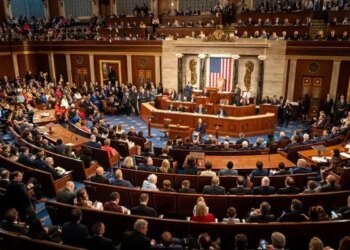
The Indian government is undertaking a comprehensive effort to reform its democratic framework. On Thursday, they introduced legislation aimed at expanding Parliament’s size and accelerating plans to reserve one-third of legislative seats for women. Opponents criticized these moves as attempts to influence electoral outcomes.
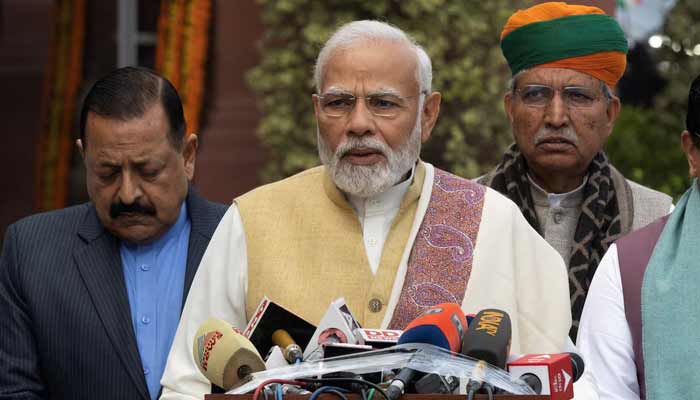
Prime Minister Narendra Modi announced in the lower house of Parliament that these proposals, which also involve increasing the number of legislative members and women in regional assemblies and redistricting constituencies, would steer India toward a “new trajectory.” He expressed confidence that amplifying women’s voices would infuse the parliamentary process with fresh perspectives, strength, and increased sensitivity.
The government explained that the adjustments to electoral boundaries are based on demographic shifts since the last seat allocations, which were set following the 1971 census.
Opposition parties contend that changing constituency boundaries in this manner is unconstitutional. Since Modi’s ruling coalition, the National Democratic Alliance, lacks the supermajority required to pass the bills alone, they are seeking support from smaller parties and other opposition groups.
While most opposition factions support quotas for women, they allege that the government is attempting to manipulate the system for political gain. They plan to oppose the legislation’s passage later this week. The Congress Party, leading the main opposition alliance, urged that the process be straightforward so that the women’s reservation can be implemented immediately once approved.
The legislation proposes an increase in the lower house of Parliament by approximately 55%, raising the total seats to around 850 by the 2029 elections, with similar growth in state legislatures. The plan also includes reserving one-third of these new seats for women by that same year. This quota was originally established in legislation passed in 2023 but was tied to the upcoming census, delaying its implementation beyond the next election. Additionally, these proposals require approval from at least half of the state legislatures to become law.
Currently, women in India represent nearly half of the country’s 968 million voters but hold only about 14% of seats in the lower house and 17% in the upper house of Parliament. Women constitute roughly 10% of state legislative members.
 ChatGPT
 Perplexity
 Gemini AI
 Grok AI