Select Language:
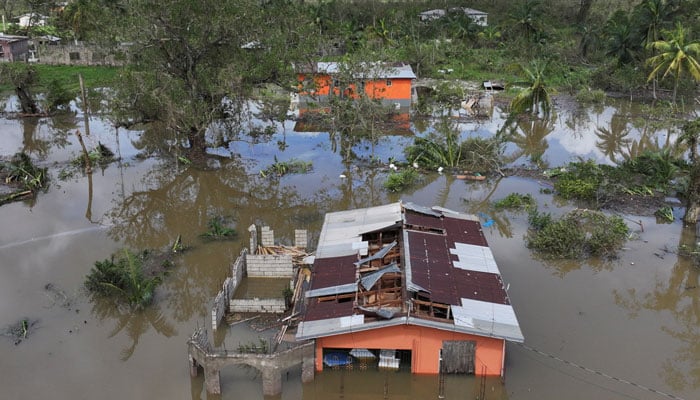
Hurricane Melissa made landfall in Jamaica as the strongest storm ever recorded on the island, with sustained winds reaching 185 mph, surpassing the threshold for a Category 5 hurricane. The storm tore through Cuba’s second-largest city, leaving hundreds of rural communities cut off and causing widespread destruction. Haiti experienced heavy rainfall, resulting in at least 25 fatalities, including 10 children, primarily due to floods in Petit-Goave, a coastal town 40 miles west of Port-au-Prince, where a river overflowed. Over 1.3 million displaced Haitians faced flooding, with more than 1,000 homes inundated. Residents in makeshift camps described the flooding as life-threatening, with many struggling to sleep or sit due to rising waters, and aid efforts perceived as slow to deliver supplies.
Melissa made landfall in southwestern Jamaica, devastating regions previously battered by Hurricane Beryl last year. Damage estimates from AccuWeather suggest losses of around $22 billion, with rebuilding projected to take over a decade. Floodwaters washed up four bodies in St. Elizabeth, and nearly 80% of Jamaica lost power. Kingston was spared the worst, with plans to reopen its main airport shortly. Prime Minister Andrew Holness visited Black River Hospital, where staff reported significant damage, including roofs torn off buildings and fields strewn with debris. Staff recounted working through the night under flashlight amid fears for their families, describing the experience as “like missiles blowing through the glass.”
In Cuba, Melissa, still a Category 3 hurricane at landfall, struck overnight near Guama, west of Santiago de Cuba. The storm left 241 communities isolated, affecting approximately 140,000 residents. Authorities evacuated around 735,000 people across eastern Cuba as the storm approached. The president warned of widespread damage and advised vigilance as rains persisted. While no deaths were reported immediately, the storm caused extensive damage, damaging crops and complicating an already strained supply of food, fuel, and medicine. Cuba’s ongoing shortages have fueled record migration since 2021, and the UN General Assembly recently called for an end to the US embargo, which has hindered aid delivery.
Meteorologists ranked Melissa as the third-most intense hurricane in the Caribbean, following Wilma in 2005 and Gilbert in 1988. Experts link the increase in hurricane intensity and frequency to rising ocean temperatures driven by climate change. Many Caribbean nations have urged wealthier countries to contribute aid or debt relief. The regional Caribbean Community Climate Change Centre emphasized the urgent need to enhance the UN’s “loss and damage” fund, established in 2023 to help vulnerable nations recover from increasingly severe weather events. Despite these efforts, funding remains insufficient, with the US withdrawing from the fund’s board earlier this year.
Global responses to Melissa’s destruction included humanitarian aid, with some countries offering financial support, food supplies, and rescue teams. In Montego Bay, a tourist hotspot, a resident recounted a harrowing rescue where rescuers broke into her home to save her and her child as floodwaters reached her waist. She mourned lost trees planted by her father, highlighting the widespread personal and communal damage caused by the storm.
 ChatGPT
 Perplexity
 Gemini AI
 Grok AI